Guest · with Maddie · 24:18
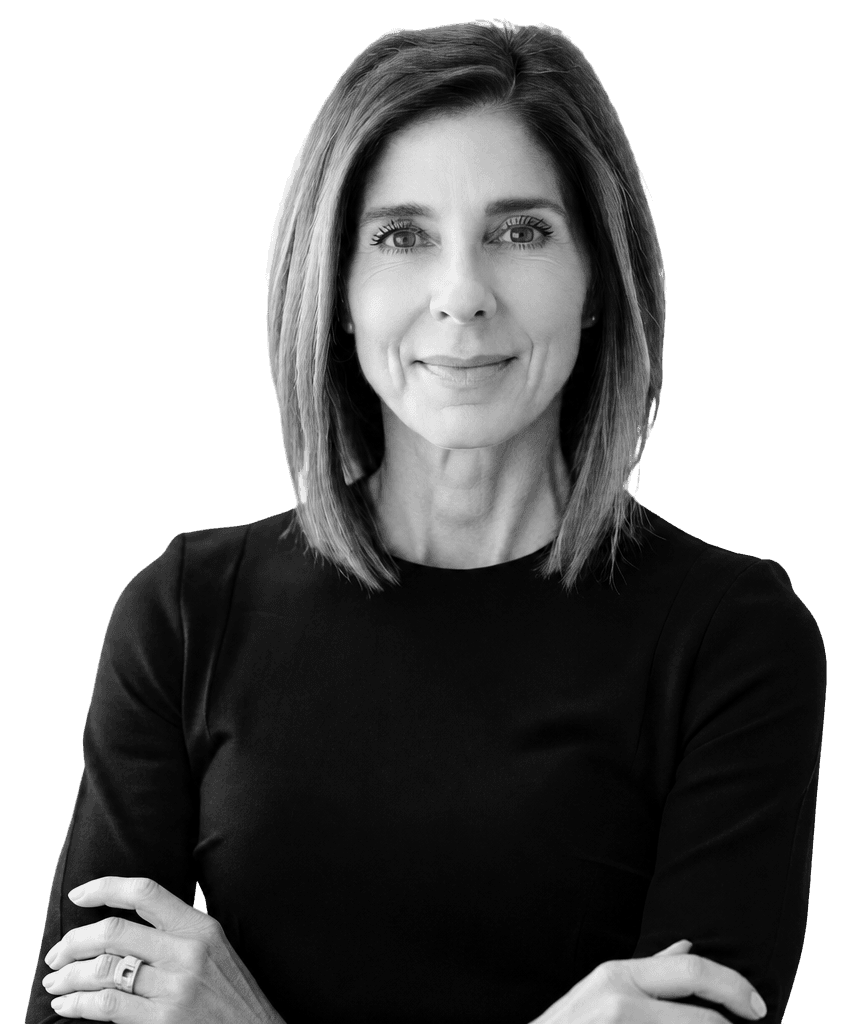
Amy Madden
Chief People & Culture Officer, PRO-spectus
Don't Skip the Basics: Building an HR Function From Scratch at a Fast-Growing Company
Key moments
Share Amy's words
About this conversation
Amy Madden is Chief People & Culture Officer at PRO-spectus, a fast-growing, PE-backed life sciences company where almost everyone works remotely. Before that she spent many years at Sodexo, working up from HR generalist to leading business transformation. She and Maddie talk about building culture when nothing happens by accident, the signs that growth is outpacing your culture, where to start when there's no ATS or job architecture, and a 90-day onboarding journey that checks more than how people feel.
Transcript
Read the transcript4,062 words
IntroWhen you're in an office, things like that happen by accident. You're hanging out, you're sitting around a table, you're collaborating physically in each other's spaces. And, um, in the remote environment, nothing happens by accident.
HostPerfect. Well, welcome to the Built by People podcast, Amy. We're so excited to have you on. Amy spent over 2 decades at Sodexo. Working up from HR generalist to leading business transformation across their healthcare org division. She's now Chief People and Culture Officer at Prospectus, a founder-led and PE-backed life sciences firm where she led the organization through two consecutive Great Place to Work certifications. Just a couple weeks ago, they were awarded Fortune's Best Workplace in Healthcare list, landing number 17. So again, thank you so much for coming on our podcast. We're so excited to have you on.
GuestOh, thanks for having me, Maddie. I am super excited to be here and, uh, to chat with you.
HostI love it. Okay, well, let's start off. What surprises people about shaping and sustaining culture when almost everyone works remotely these days?
GuestWell, uh, it's a good question. It's a hard question. And, The remote aspect makes things so unique. It causes us to be very intentional and purposeful. You may notice that we, I have my regular background on. So as an example, we don't use false or manipulated backgrounds so that we can really spend more quality time getting to know each other. And so that's something that's really important to us. And when you think about building culture in a remote environment, it ends up becoming so much more intentional. When you're in an office, things like that happen by accident. You're hanging out, you're sitting around a table, you're collaborating physically in each other's spaces. And, in the remote environment, nothing happens by accident. So there's potentially more opportunity for ambiguity to spread. Um, so we have to be very clear about expectations, communications, and how we genuinely show up for each other and for our patients, for our clients. So all of those aspects are really weaved through our entire life— employee lifecycle journey to really ground those cultural behaviors into all that we do every day. Yeah.
HostWell, it's amazing. I've never heard someone talk about like how intentional, you guys are about even your backgrounds. Like, I feel like that's huge too, of like, okay, well, like You know, some people are like, oh, it's a mess back there, you know? But like, it's like, so it's like even more personal when you do have that background of whatever it is. So
GuestReally is. And we start that at the interview process, so we do talk to our candidates about that and allow them time to acclimate and get ready so that they can really experience that throughout the entire, interviewing and selection process. Um, and I'm sure we'll talk more about kind of our onboarding and our, our first introductory period journey, but it just really gives us some nice quality time and gives you a chance to chitchat about, you know, where you're based, your home. You get to see pets. Oftentimes kids pop in. So, you know, it's anything and everything sometimes. Yeah.
HostAnd like, like you just said, like normalizing real life, like people that are working from home, like yes, their pets are gonna be barking and yes, their children might come running in and that is real life. And that is what, like, it go— like, I know we talked about this a little bit before when we weren't recording, but like how, like, your employees are not just employees, they're real people with real lives. So that's amazing. Really?
GuestThat is true. And, um, the other thing that's pretty unique is that we're about 90% female from an organization. Our founder and CEO is female, and, um, so there's a lot of excitement around that too. So it just really kind of helps to balance all of kind of the remote aspect while being able to have, you know, obviously your, your personal life with also having a successful career from the professional side.
HostWow, that's amazing. 90% women. That is fun. That's amazing. okay, so let's get into— Prospectus had 3 consecutive years being on the Inc. 5000 list, and you're sustaining, um, 95% monthly retention. At what point does— yeah, what time— what point, does rapid growth actually start threatening the culture that you've built?
GuestYou know, when I first started and was talking with team members, asking them what were some of their biggest concerns, what are some of the things that keep them up at night, and at that time we were smaller, it's been a few years now. But what I would hear over and over again is really, God, we love our culture. We love our culture. And we don't want that to really go away or disseminate or dissipate as we continue to grow. So a few things. One, I had to get us to articulate what does that even mean? We love our culture. People are nice. We love what we do. But how do we— what, like, what, how does that show up every day in the behaviors that we have kind of throughout not only the employee lifecycle, but also the patient lifecycle as we're working with our patients. We've grown really steady since our founding. In 2023, we partnered with Shore Capital Partners as our private equity partner, and in the 3 years since, our growth has skyrocketed. So there is a real expectation to continue to grow and a solid need to build upon what holds that growth up, because if you don't, everything implodes like a house of cards, really. So, my job is really to balance both, to stay flexible because when you scale this fast, that, you know, the plan just kind of keeps changing and tweaking a little bit. In a small company, culture spreads by proximity. We talked about that a little bit in the opening. You sit closer to the founder when you're smaller. You get to hear more about how decisions are made. You absorb that. When you grow fast and are remote like us, that really stops working. So, we can't continue to spread that culture through osmosis. It has to really be carried through by the managers, the system, the process, how we run our business every day. So, it's not— the threat isn't necessarily the growth itself, Maddie. It's really that gap between how fast you're growing and building the things that need to carry the culture to really kind of align both in parallel at the same time. And frankly, signals show up before that breaks. So, some examples of that are, you know, top performers that carry too much. The same couple people that are allowed to make decisions and/or that have traditionally made all the decisions in the past. And how do you kind of navigate through some of those changes? So, by the time managers are saying, "Oh, we need more processes," it's frankly too late. So, we have to kind of build ahead of that pain. And we have to do a lot of listening to determine what it is we're building and how we're building it.
HostYeah, that's amazing. Wow. How do you, how do you make sure that information carries like through the managers? I guess like How do you, how have you seen, that even the individual contributors are still in the know as much as managers, as much as they can be, I guess?
GuestSo, um, that's really a combination of building the infrastructure and architecture of how things are going to work. Kind of goes into another topic we were going back and forth on around like, where do you start? What do you create first? And for me, it's important for people to understand like, what are the expectations of their roles? And from there, then being able to keep tying that upwards to the overall vision of the organization. So ways in which we continue to keep that connection with our team members is through very purposeful and structured, you know, CEO quarterly updates. We have lots of different town halls, both in formal and informal ways. We do many different kinds of focus groups. We spend a significant amount of time on video all day long, as you can imagine, really being able to continue to communicate and align really what the role expectations are, what the performance of the organization. Something that's pretty special about Perspectus is that all of our employees are owners and we treat them as such. So as our CEO's given updates, um, I mean, she's talking to them like owners and explaining, you know, how we're doing financially and how we're performing against our goals and why we need to make tough decisions and getting their connection and buy-in to that. as an owner, you care about those results, right? And so if all of our team members understand that,
HostWow. Well, that's amazing. when you joined Prospectus in 2023, um, there was no ATS, no job archi— what
GuestIt's, it's a very different conversation.
HostArchitecture, no performance framework. Where did you start on day one?
GuestYeah, it's— well, to be honest, it wasn't like a shiny project. It was we did not have any of those processes or systems in place. And so, it's tempting to want to build everything out of the gate. And it's very hard to restrain yourself when you know what needs to happen and what needs to be built, but you also need to take the time to learn the culture and what's important to the organization before you build it, because you would end up building something in a vacuum. So first, we started frankly with competencies, like what does it take to be successful here in the different types of roles that we have, and really leveled those. So we took the same competencies and thread them through the whole organization and leveled them based on position. We then built job descriptions. We built an applicant tracking system. We started posting jobs. We started talking with our team members about posting jobs. From there, kept go— implemented performance management for the very first time, created performance goals together, really being able to take that thread concept of ownership, right? And then taking that through all the steps that me as an individual team member, how I contribute to the success of that through, through all of these processes that we were just talking about. So, Well, when I go into an organization or I'm starting with a group for the first time, I know what needs to happen. But what's fun about it is that each time it's totally different of how you do it, because it's totally based on the, you know, the personality of the organization, what's important to them, and really collaborating quite a bit. So one of our successes has been able to have individuals in the design process of frankly all of our solutions. So it really gives us a chance to design solutions built by individuals that will be utilizing those solutions. It's a much easier sell to peers and really gets a lot more engagement investment in the process.
HostWow, taking the time to learn from those that are going through it every single day is, I think, a huge, is a huge deal, right? I think it's overlooked. It's someone comes in and maybe had experience, like you said, doing this at a prior company and it's like, okay, well I know what to do. Right. like really like the employees are maybe just like screaming like, no, like, you know, like internally, like, no, this is, we need something totally different. And it, yeah, it is probably different than what they did before. So that's
GuestAnd you're trying to build a foundation while the organization is trying to grow, so there's a lot that comes into play around discipline, being very disciplined to stay focused on the task at hand and not, you know, we say, let's stay focused on the task, not on, you know, the other shiny objects that are like distracting us or seem like fun to do. Because everything seems fun to do when you can just simply do it versus needing to go through, you know, 10 layers of approval in a larger organization. So staying very disciplined, implementing really structured feedback loops, which, you know, were more informal in the past and really able to align that to the performance expectations and the roles. Well,
HostOkay. Wow. So how do you, suggest, like, how do you enable people to stay focused on that task? I guess, how do you stay focused?
GuestWe keep going back to what, what is the problem we're solving for? And when we root our conversation, and I realize this is like super low level and fundamental, but at the end of the day, if we're all trying to solve for different problems or trying to all answer different questions, then we all get a little bit unfocused. can really focus on the same, agree to what is the problem we're solving, or what is the question we're trying to answer, it makes it a lot easier to then get to an end result. And we, even in the P&C space, we, you know, have a great time designing different kinds of solutions and brainstorming, and we have to like stop ourselves and go back to, wait, what are we solving for right now? All these other great things are phenomenal and like really fun ideas, but how do we pace them and layer them in appropriately to kind of get us to that end goal? So that's really an approach that we take. We utilize a lot of metrics, data, KPIs to help us kind of forecast what might be our next steps based on where we are today and where we're trying to get to at the end.
HostWow. I love, I love hosting this podcast because I feel like I learn so much in every episode. I'm like,
GuestYou get to talk to some
HostI mean, everyone is so amazing that I talk to. Um, Destination PRO is a 90-day onboarding journey with knowledge checks and supervisor sign-off. What made you add the proficiency? validation piece rather than just a standard 90-day check-in.
GuestYeah. Well, when I started, we, uh, the organization had had a 90-day check-in, and So, I leveraged kind of this concept that people were already open to of having this check-in at some point. But oftentimes, that's more about how you feel, not necessarily how you're aligning to the performance expectations of the role. And what I was finding as we were, you know, talking with team members that either more recently joined or were trying to onboard new team members, there was complete and total inconsistency around expectations of what the job should be doing, how to onboard them, how to train them. So while we had various workstreams building out the tools and resources to, you know, of how our processes might work for specific clients, we coupled that with building and designing training tracks by role in our learning and development function. And we then incorporated that into a truly a 90-day experience. We happen to be working on phase 2 of that right now that looks at months 4 through 12, and what does that experience look like? But we were able to wrap that experience in really clear, defined milestones throughout those 90 days relative to the role that someone is doing. So it could be a frontline individual contributor. It could be a, you know, first-time people leader. It could be an executive-level individual. And we customize that Destination Pro experience for kind of that appropriate position and leveling. There's a lot of engagement from the people and culture space, but the feedback that we get both from our people leaders and from our team members that are, you know, experiencing it and using it as a 90-day journey has been really phenomenal. It's helped us really keep team members aligned with, number one, how we communicate what they should be doing, and then how we assess someone's performance to that. Do they need more training? Everybody is unique and different, and sometimes people need to drill into certain areas in a different way, or maybe it takes them a little bit longer, or we need to review some different concepts that maybe we didn't necessarily have to do, or maybe we had to review other concepts. With a different person. And it really allows us to meet the team member where they are. It also gives them a chance to step back and reflect and say, "Gosh, do I want to do this? Can I live up to these expectations? Can I commit to delivering upon this?" And in this last year that we've rolled this out, we've, you know, really seen some very constructive experiences and examples where, you know, we've had a couple individuals say, "I, you know, really appreciate all of this, but I don't," I don't want to do this. And it has saved us in the long run by continuing to, you know, set someone up for success who maybe didn't ultimately want to do that, but also set others up for success that really wanted to thrive in that experience and that role that they're in. We're also starting to take the 90-day onboarding journey and the training tracks for by role to develop them into stretch assignments and learning plans for individuals that are trying to get to a next level. So we've already built in kind of the tools. If I'm here and I'm trying to get to here, this next level position, whatever that may be, there's an opportunity to use the tools that we've built as a way to grow and develop that, get that person, you know, exposure, especially in a small organization where— and in remote, like, it's hard to try out different things. But if you can maybe go through a training track that a new hire would for that particular role, you start to get more of that experience up front, which is pretty cool.
HostWow, that's amazing. It's like employees love, I mean, a huge thing is career development, right? Like people like need to feel like they have a future at a company and even maybe not in the role that they started in. And so that is huge of like, okay, what do I need to do if I wanted to get here one day? You know, like, and they can, and then they're able to kind of see, I mean, correct me if I'm wrong, but like they're able to see what, what kind of goes into the role and see if they even want to do that.
GuestWell, that's exactly it. Like, you may be really phenomenal in what you're doing today, and then you may explore these other opportunities and realize, you know what? This isn't what I thought it is, or I'm good with where I am. I don't want to, or maybe I want to go a different direction. So yeah, so that's pretty cool too. And career, you're right, career development is huge and it's hard when, like, you, you have to, in order to create new opportunities, you have to grow as an organization. In order to grow as an organization, you have to do what you do really, really well and people have to to be very grounded and understand how their performance impacts that growth. So they're all connected. And so, you know, we're finding different ways to really get some exposure and experience to some of our team members. So we're excited as well. That's kind of one of our newer projects.
HostWow, that is amazing. I've never heard of that before. I love that. well, tell me about more of your top priorities right now.
GuestSo because we're scaling fast and we're private yet, private equity backed, you know, it's more about continuing the infrastructure that lets us kind of sustain that particular growth. Right now we're working with our leadership team on moving from being a doer to being a designer. So because we've been partnering with Shore, we partner with their learning and development arm, which is called Shore University. And we've had an awesome time creating some really curated content for our organization. So in the last year, a couple years, we've rolled out a leadership program, which we branded Lead Like a Pro, and then an entire change management certification. We introduced a whole lot of frontline learning and learning paths for our frontline this last year with a Summer Learning Series, and we're taking that through the winter and into '27. We spent in the beginning a lot of time working with, you know, truly value creation and service excellence and really setting those expectations. And as we're moving forward and, and as you mentioned, just kind of those top priorities, it's really working with our teams in how do we take that to consistently be great. Like, we can all be good, but how do we consistently be great? Because that's what's truly going to get more patients access to the therapies that they need, which is the business that we're in every day. Like, we are a group of individuals that are constantly breaking down barriers to get patients access to the care they need. And there's a whole host of ways in which we do that. But it is very, you know, it's complex. There's compliance issues, there's various types of, you know, rigorous steps that we take in our day-to-day work. And so, so being able to bring the whole self through that process is what's, you know, so special and unique. In the people and culture space, we're working on processes and systems that frankly can make your life easier as you're interacting with our patients, making processes more reliable, more repeatable, more predictable in the operational space, which really allows our team members to showcase their personality and their service levels in interacting with the patients because they're not trying to recreate the wheel. They're not trying to think of a new way to do— how did I do it last time? Like, we've been spending so much effort as a, you know, an enabling function, not just in P&C, but in all of our, you know, kind of corporate functions to be able to help our team members get to those spaces to where they can spend that quality time. And a lot of times that also incorporates new technology, um, you know, whether it's various types of AI or other types of new technological platforms or solutions. It is again finding ways and creating ways to be— do things in a more reliable, predictable, and repeatable function and way so that, we really have that special interaction with our patients and our clients.
HostWow, that's so amazing. if you could leave one piece of advice for our community, something you'd wish you'd known earlier in your career, what would it be?
GuestSo this is not glamorous, Maddie, but I would say don't skip the basics. The basics are where, you know, everything comes together. And while everybody wants to do, you know, the amazing transformational stuff, you can't if you don't have the basics in place. And so Really being very purposeful about what those basics are and the process with which you are designing them and deploying them into the organization is truly what's going to make you successful in getting to those really fun and amazing programs and solutions to kind of take it to the next level.
HostWell, thank you so much for joining me on this podcast. It's been so fun chatting with you and meeting you. Um, and thank you so much for listening.
GuestOh, thank you, Maddie. I really appreciate it.