
Guest · with Maddie · 54:52
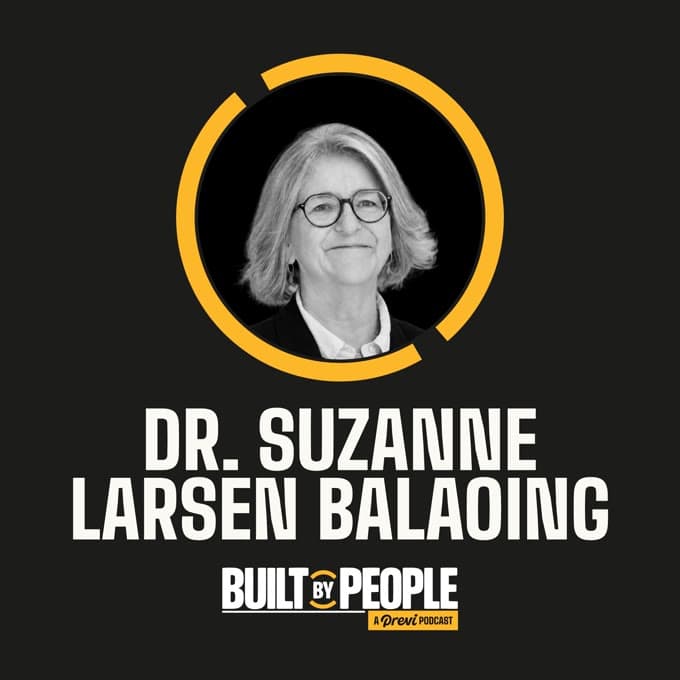
Dr. Suzanne Larsen Balaoing
Chief People & Culture Officer, Silverado
Do the Tedious Work
Key moments
In Dr.'s words
“What you measure is what you get, but also what you reward is what you get more of.”
“Purpose-filled work will never, ever lead you astray. Ever.”
“The most powerful thing we can do to people is see them, to really see them and to return kindness when we do, even if we don't like them.”
About this conversation
Dr. Suzanne Larsen Balaoing is Chief People & Culture Officer at Silverado, which provides memory care and end-of-life care. She's done physician HR at the Permanente Medical Group and worked at PRO Unlimited and 360 Behavioral Health. She and Maddie talk about the day the FBI showed up at her office, why "there's nobody to hire" usually isn't the real problem, what HR loses when a chatbot takes the easy questions, and replacing performance reviews with an impact report.
Transcript
Read the transcript10,395 words
IntroThe FBI showed up at my office and said, hey, you have someone on your payroll who we believe is a fake worker and the money is being funneled into, um, a terrorist organization in the Middle East.
HostOkay, just to warm up, what was, what's the wildest thing that's happened to you in HR that of course you're allowed to talk about?
GuestSo, I would say, I, and there's tons, like, some crazy stuff for sure. I think one of the most interesting and sobering one was actually a compliance problem. Which you don't usually hear about, but so we had, uh, we had taken on a bunch of workers in a very, very short period of time because the agency they worked for had closed doors overnight and they needed to get payroll done. And so we extended it, you know, an olive branch to this business that wasn't one of our clients and said, hey, we're happy to take this on until you can find an agency. 'Cause we, you know, manage contingent workers. So we did that and someone took a shortcut during implementation of that project and didn't check the, um, right-to-work paperwork. They just took on the old documents from the previous agency and assumed they were accurate. And about, um, 9 months later, the FBI showed up at my office and said, hey, you have someone on your payroll who we believe is a fake worker and the money is being funneled into, a terrorist organization in the Middle East. And so I conducted a forensic analysis, looked at all of this stuff, and of course it all came down to not checking the immigration paperwork. the, and there were a bunch of other red flags that nobody picked up on, which helped us change our internal controls. But for instance, this person was consistently logging 80 hours of work a week. Um, they're, they were a developer, so they were getting paid like $250 an hour at the time, and this was you know, 15 years ago. So that was a lot of money. And, what ended up happening was the manager who was over, the internal manager who had hired the agency worker for the project, suddenly didn't show up to work one day. And eventually his projects were reassigned to another internal manager and they figured out like, oh, this doesn't exist. What is this? We don't recognize this. And it had been going on for over 3 years. So the 9 months that we had plus about, 2.5 years before that. And I figured out it was almost $5 million that got funneled into this terrorist organization because someone didn't wanna, you know, take the time to do something that always feels like a really tedious task. Like, you know, roll your eyes. What's the big deal? Who cares? You know, that kind of stuff. But this is like, was so dramatic. But I think maybe the funnest part of the whole story was when I was done with the forensic analysis and I had handed it over to the guy I was working with, the FBI. He was like, hey, you wouldn't by any chance want to come work on our cybercrime division? Which, I was like, hard pass, don't want to work for the FBI, but thank you so much for the compliment. I appreciate the vote of confidence, right?
HostThat just shows how great of a worker you are. Wait, that is the craziest story.
GuestAnd I have so many like that, I can't tell you, Maddie. Like, it's one of the things in my family, like, sometimes they'll corral me. We're on camping trips, like, tell us a story, tell us a story. Like, we have just stories. Most of them are terrible, you know, racism or sexism or stuff like that. Like stuff that's really just ugly and, difficult. But that one is sort of like, that's a cautionary tale if I ever heard one. Just
HostThe tedious work. Do the tedious work, it'll
GuestThe tedious work cuz it freaking matters.
HostYes. Oh my gosh,
GuestOf removing bureaucracy. Nobody likes it. Nobody likes to be on the receiving end of bureaucracy. Everyone likes to be on the backside of that window that you get to control the flow and all of the work and all this stuff, but no one likes to be on the receiving end of it. And our job really at the end of the day is to enable the business, right? That's our job. The business is here to create value. We're here to help it create value. We're here to make sure that they have what they need when they need it in the places they need it. So that they can do that through people or removing obstacles that are creating barriers to creating value in the market. So, in that sense, I'm anti-bureaucracy, but when it comes to certain things, I tell that story a lot to my new staff, like, just remember, you don't want to be the one. You don't want to be the one that found out you just funneled millions of dollars into some terrorist organization.
HostOh my gosh, that is insane. I know, I would definitely be sitting with you next to a campfire asking you to tell me all those stories. Those stories are just so interesting to me. Like, you never know what is gonna happen.
GuestHad crazy things. So more of those in another podcast.
HostWe'll just have to do a specific episode for just Suzanne's crazy stories cuz that is
GuestI'll say one more thing, Maddie. I, when I worked at Kaiser Permanente, well, they, the Permanente Medical Group, I was, I did physician HR at that time. And my, I always had a physician liaison that worked the cases with me and was sort of the leadership over the physician side. And I did an HR side and I had one who it, he was the, um, chief of the emergency department. And at the time, HR was brand new to physicians. They had only just become employees. They had been partners before. So it was a whole new world for them. So they're learning a lot and he had never worked cases like this before. And they're always shocked, like the And those are the craziest, most dramatic cases, by the way, is in the healthcare sector. But he was always like, really, like, he finally, he looked at me one day, he goes, nobody would believe us. Nobody would believe us that this is how it is in HR. He goes, we need to make a show. He goes, remember that show ER where it was like the little heartbeat would come across? He goes, we need to make one that says HR. HR. He goes, we could write these scenarios up and people would not believe they were real. They would think they were fiction. And he's right.
HostWell, it's like Grey's Anatomy. It's like everyone, like that Grey's Anatomy show where it's like, there's no, I mean, and obviously it's dramatic, dramaticized because it's TV, right? But like these could literally be so real.
GuestThey— a lot of them are very accurate.
HostYes. It's crazy. okay, well let's talk about retention. So at Silverado, you moved retention up 30 percentage point. What specifically changed that?
GuestSo I have been with Silverado about, what, I'm a little over 3 years, right? So 3 and a quarter years. It'll, and it's actually, it's improved more than that now. Um, some from the time I wrote that in my bio or my resume or wherever, whatever I sent you. and really it comes down to diagnostics, right? Really understanding what is causing turnover. And we are unfortunately trained in American education systems to think of single causal, problems and solutions, right? We don't get a lot of really good training in critical thinking, and we don't get a lot of really good training in multi-causal problems. So for instance, with turnover, um, one of the very first things I did, I did a SWOT analysis for Silverado when I was in the interview process, and I mean, do something as simple as go to Glassdoor, right? And look at reviews and how they're written. And I can tell you without fail, I saw this at 360 Behavioral Health and I saw this at Silverado where some of the reviews are 5 and some of them are 1s, right? You get this huge range and these just absolutely emphatic and really energetic reviews of the company. Like, this is the best place I've ever worked. It's so amazing. And this is the worst and management's terrible and they never listen to us and blah, blah, blah. What that typically tells me is that there's really inconsistent management happening across sites, right? So Silverado and 360 are multi-site operations. We are scattered across a, a large geographic area. We have multiple clinics in 360. We have multiple communities and hospice sites at Silverado. So what that let me know is there are managers really dialing it in, rocking it in, doing everything they need to do, and I would— I said, I get— I would bet if I had access to your turnover numbers, I would see there are pockets where turnover is really low and pockets where it's outrageously high. And that was exactly the situation that I found when I got into the organization. So that's one thing. So the second part of that analysis is for those places where it's really high is why, because there's a number of reasons that can happen. And I always start with, how are we positioning the role when we recruit. So, to me, a person who leaves early was probably a misaligned hire. Like, I always look at hiring first. Are we hiring the people we need to do the actual things we need to do, and they come with those skills or capabilities and heart to do that, right? So, what an example of this is when I worked at Pro Unlimited, what I found was originally, they— we have a distributed workforce of 350 people on-site at client sites around the world that did frontline HR, right? Managed all of that interface with the client managers and with the client teams and with the client, um, contingent workers. And if it escalated and needed more HR support, it came to my team back here in California. But what I found was they had shifted the hiring, focus while I was there, but never said anything to anyone. So they stopped hiring people with an HR background, started hiring people with a sales background. And we began to see this skyrocketing problem with our associate relations or employee relations problems and investigations and handling of cases, and it significantly increased risk for our client and for the company. So that was sort of a big lesson in pay attention to the very beginning of the conversation. So start your analysis there. And then the second piece is what happens day one? One, you wanna look at, does the job reflect what they thought it was gonna be? Because if there's a huge gap there, and this happened a lot at 360, cuz he did the same sort of turnaround on retention at 360, was the job they thought they were getting wasn't the job they ended up showing up in. And that wasn't just the work, it was also the schedule. There were high promises of, we'll find you cases, we'll get you hours. And that is still an endemic problem in the ABA services field where my daughter works. She's actually left the field like most people do because of that breakdown, right? Like they make these big promises, but they cannot deliver on the case hours. And really what they don't tell people as an RBT or someone who's doing ABA work at the beginning level, you're lucky if you work more than 12, 20 hours a week. It's really hard given the limitations of the field. So a lot of that's mismatch, and it's not that there aren't people who can do that, right? There's someone out there who wants to work 20 hours a week, who wants to help a child with autism, who wants to do good in the world and is fine with the salary because they don't need a ton of money. They just wanna find maybe some extra income and they're well suited for that. But you have to find those people first. So now we're back at who are we hiring and how are we sourcing and connecting those dots, right? So the same thing, what I found at Silverado was once they got here, it wasn't all just about, oh, my manager doesn't care. Care, right? A lot of it was, we were so, we do the, the poor, the desperate, the desperation orientation where we go, okay, here's your badge, here's your shirt, go, right? Like no training. And you can get away with that in a couple of environments where there's low risk. Like for instance, if you're gonna be, you know, a coordinator in an office, right? You can figure that out over time. But when it comes to the care of the vulnerable, you don't have that option. And what ends up happening is you take the care of the vulnerable, like autism or dementia, which are very similar in the way they need to be cared for. You need to understand behavioral expressions. There's all of this technical stuff. And if you don't know those things, it causes agitation in the person you're trying to serve. And so that agitation becomes hitting or yelling or pushing or running away or difficulty or fighting care, that kind of stuff. And if they don't get proper training, They burn out within weeks. I mean, it is a timeline that is super predictable. So part of it is now what's happening once it's on the ground and doing that work? Is it a mismatch to what they thought the job was gonna be? Is it a mismatch to empowering them and giving them the resources and training to do the job? Is it taking the time to build the relationships that hasn't happened? I've had some managers who were causing really high turnover because They were in their office all day. They never said hi to anyone. They wouldn't look people in the eye. You know, they were in their own little world of overwhelm. And I've also had managers who said hi to everybody but couldn't handle conflict. So they allowed really bad behavior to exist inside the community that was creating almost a level of absurdity for the workers, right? Like we have really high cultural values. We hold people accountable to them, but If a leader isn't doing that, no one will, right? And it just becomes a toxic workplace where bullies survive. That's it. Like, you just have to be the person who is willing to sit in conflict or create conflict, and everyone caters to you. And so we've had all— that's all over the map. And what ends up happening is the tendency in HR, not a criticism, but an understanding of overwhelm, is we tend to think of it's only a single problem. Like, we'll throw, oh, better benefits, or we'll throw more money, or will insist it's because there are no good people in the market. That's my favorite one. There's nobody to hire. And I had a community that was at 117% turnover, and I had a community that was 13 miles away that was at 40% turnover. They had the exact same pool of candidates. They hired from the same communities. And this person just kept insisting that it was, well, we just don't get any good candidates. Just don't get any. Well, 2 things happen. You burn out, we burn through your market of available people to work and you get a reputation. So yeah, sometimes you do lower quality, but same people come into those interviews and I just kept pushing back going, nope, you have a problem inside your house. Fix it. Like go in there, let's dig in. So we had 3 people come and do an analysis. We did a lot of deep diving. We did a lot of interviews and figured out that it was this issue of no, you know, no accountability at the leadership level. And so bullies survived and people who really cared didn't. Everyone was in that survival defensive posture. So, you know, that's, that's all of the technical stuff, but I did that inside of a context, Maddie, where I had leadership support to do what I was doing, right? If I went to the CEO and said, we have a problem here and it, and it's this leader. I would get the backing that I needed to hold that leader accountable. And I know that's not the case in every business. Sometimes we have what I, you know, I saw it in the physician world. I saw it in the global staffing world where, you know, we have a person who may be a superstar in one particular way. Like they're great at sales, they're great at customer management, client blah, blah, blah. They're great at implementation, whatever that is. And they suck at integrity, bottom line, or they are terrible at communication, or they sacrifice every relationship to make all of those accomplishments happen. And there is no acceptable way to tolerate a person like that and expect there to be integrity and productivity in the system. So even though that person may be a high producer, you're losing somewhere else. You're paying the price somewhere else, and internal conflict, politics, you know, survival mechanisms, all of those things shut down the human's ability to innovate, to be creative, to problem solve, right? So everyone is getting smaller and smaller and smaller in the way that they're, you know, the world they're willing to operate in, in a sense of trying to find safety. And, unfortunately it, it destroys businesses over time. I mean, it's a predictable clock of business destruction when you run that way. which is really sad. So what we did was we went through site by site and we looked at Glassdoor reviews. We asked people, we did town halls, we did all of that kind of stuff. And then we changed where changes needed to be made. We didn't make systemic changes unless they needed to be made systemically. There were two areas that I made immediate changes that were systemic. One is in the way we interviewed for caregivers. We were, we had a misalignment in the interview process wasn't actually sorting for the skillsets we need. And so I did a deep dive with our regional director of caregiver training, and she had been with us. She's been with us for almost 20 years. She started out as a caregiver. She's worked her way up all the way to this really prestigious, level in the company. Like she is really relied upon and she goes all over the country training caregivers and making sure that we have alignment in that area. And she was the one that got me to really distill it down to, I don't care if you've ever worked at assisted living. I don't care if you have dementia experience. We're gonna train you in that anyway, and we're the experts in that. There's no training that you got somewhere else that's going to outdo our training anyway. What I care about is that you're other-centered, that you focus on others before you focus on yourself. So this isn't a job where you're like, well, that's not my preference. This is a job where you're like, I'm here to help Mary have the best life that she can possibly have with the limitation she has. And how can I do that? I want someone to look at my resident and say, oh God, John's glasses are dirty. That must be awful for him. He already has dementia and that creates more confusion by not being able to see clearly. Let me clean those. As opposed to, I have to clean his glasses and I have to change his clothes and I have to shower him. Like it's just chores, or transactional work. So the second piece that we looked for is compassion and love. If you've had any experience caring for someone, whether that's a family member at home or even babysitting, anything like that, we'll lean into that. So it was really about aligning that screening process to the characteristics that are hard to tap into, right? You can't see 'em in a resume. I can tell you all day long, I'm compassionate and I care about people. That doesn't matter. What matters is actually shows up in the way that you show up in the world, right? From the, from the moment I meet you. And so we changed that whole process and it was a little painful. You know, change is scary sometimes for people. But as soon as we did a couple of trainings, it was like wildfire and it radically started to shift the way that we brought people in. And then the second piece was, what do we do when they get there? Right? And I We still have a couple of pockets and it varies. You know, some days are better than others. One community was doing great is now suffering and we're digging back in again. Are you doing lunch with the administrator? Are you doing the training on time? Are you answering their questions? Do they have a mentor assigned? Do they understand the mission? Do they understand the culture? Do they feel welcome and loved here? We have a saying at Silverado, we take care of our residents, we take care of our families, and we take care of each other. And if we miss any of those 3 things, we get turnover.
HostThat's so amazing. Like, having those values and making sure that everyone is aligned in those values and bought in on those values. Um, Silverado's entire business, like you said, is caring for people with neurodegenerative diseases at end of life. What does that context demand from HR that a typical employer never has to think about? Yeah.
GuestOh, so it's, I would say a typical employer outside of healthcare, right? So one of the bigger defining pieces about both at 360 Behavioral Health and at Silverado and at Kaiser is we serve people who are at their most vulnerable when they're in our care. And I have a lot to say about that in terms of like private equity getting involved in autism care and what we see when you turn a vulnerable child into a number on a spreadsheet. It's no different with us in dementia. And we have a hospice business line. It's the same kind of thing where the balance is having a business system that retains compassion and retains empathy, right? So I have a CFO Who could, who could speak or do a tour of Silverado any, as same as I could. He is so invested in the mission, right? Even hiring your back office people
HostThat's it, Mr. English.
GuestFor the mission, knowing that we do volunteer days throughout the year. We go and visit communities, we help them, you know, paint their gazebo or whatever, and we just get to hang out with them and have that. But we are a storytelling company for this exact reason. We tell stories all the time. That illustrate the power of what we do, the miracles that are created in the lives that are changed every single day in families and in our residents' lives. And so we try to stay connected, and that's not something you have to do if you make widgets or you have a, you know, business service that you sell. You still want everyone aligned in the DNA of the company, but taking care of vulnerable people also comes with a secondary problem. And I've seen this in all three of these companies, is that when you take care of vulnerable people, you by nature attract predators. It's what— it's their victim pool, right? And so there is, at a screening level, we have to be hypervigilant about avoiding sociopathic or psychopathic or criminal behaviors. People coming in, who want to be, um, create a level of trust and acceptable behavior. And we think, oh, we really like this person, they seem super over a line just for the purpose of deceiving us so they can get access to abuse vulnerable people. There certainly has happened at Silverado. It's happened at Kaiser. It's happened at 360. And those are the times when it's, I have to like really hold people back because when you've committed to a mission and you are compassionate and you are empathetic, and then you find out someone that you trusted is abusing people that you're trying to care for, it's almost like, you know, people show up with pitchforks and, and, you know, torchlights. It's like, I've had people say, well, I think they should be strung up in the, you know, in the quad. And I was like, I get it. I understand that's not actually how we do the rule of law here, but I understand the passion there and the, and the sense of betrayal and outrage. So I think that those two things really are, they're related, but they just, they're just not for every company. Not every company has to constantly think about that.
HostWow. It's crazy because it's, it's, I've never even thought of like, you know, like you wouldn't think that like, oh, someone like that it make so much sense
GuestYou would think the people who want to come are the people who have heart and have compassion. And it's, it's a, it's a subtle thing. And I've become unusually talented at spotting sociopathic people or psychopathic people. And that's a hard thing to do. If you can't do it head on, you'll never see them if you look straight at them. But there are always signs. There are always signs I've found. And I did a lot of like whiteboard look back when we missed, when we missed the mark, right? When someone made it through and hurt people. And I would go back and look at what did, what did we know now that I can look back? And, and analyze it from a different lens. What can I learn from what did we miss? And that's really helped me across my career.
HostRight. Wow. No wonder why the FBI wanted you on their teams like that.
GuestWe never talked about any of this. We talk about it now, but
HostWow. That is, that is insane. That's like, that's a, that's a, I guess like a, like a skill that you hope that you never have to learn, right?
GuestIt's so true. But it's, it's an interesting thing because, I'm gonna, I'm gonna go off the res— just a little bit here on like into a sociological perspective. Like I'm heavily trying to lean in right now to shift the narrative from psychology to sociology and society. And for a number of reasons, one, because we're all freaking out about AI, but also we're politically divided and a bunch of other stuff that leads into the workforce. But when we become, a little bit more through the— we look through the lens of sociology and we understand how groups work, right? How we form as groups, how we function as groups, how we solve problems as groups. I think you get a very different perspective on the dark and the light in society, right? That narrative about me as an individual is almost entirely focused on how can I be a better person, right? I want to avoid the dark. I want to be the light, you know, all that kind of stuff. If, if, you know, the average, average neutral person in the world. But I think it's important to remember there is an entire dark web that is bigger than the regular web. There is a whole portion of society that lives out of, out of our sightline. And as a protector of the vulnerable, I have to consider that. And I think you see that in the way we characterize, you know, police officers, right? They're bitter, they're cynical. It's always that bitter cynical detective on the show, you know, who solves all the great problems, but us to carry the weight of all this darkness. And it's true in HR. I, I call it wading through the, the worst of humanity, right? Like, and nobody calls HR to go, oh my gosh, I'm so glad you guys exist. We love you. great. The only time people call is if they wanna know some information that's readily available that they could have looked up themselves, or they wanna complain about something, or they're really sick, right? That's pretty much what we get. We get all of this negative stuff and So I do work to try to balance it out with my staff and making sure my first question whenever I come into a new role to all of the people reporting up to me is, what's your, what's your care plan for yourself? How do you take care of yourself? How do you maintain wellness in a world where you have to be the, at the door of darkness every day? Because it will tank you in your career and make you into a nasty individual if you don't manage this, or just tank you and you can't do the work anymore. So I think we don't really consider that often. You know, we don't, especially in the US, we don't like to talk about that stuff, but then we go watch horror movies, we watch cop shows and murder mysteries. I'm totally guilty of that. I won't watch horror, but I do watch a ton of murder mysteries. so I think we forget sometimes that it really is a part of the world and even a person who has been great. You know, for 10 years, then suddenly is in a context where they have really hard choices to make and they make bad choices and it doesn't make them a terrible person. Perfect example of that was an executive whose daughter got cancer and she didn't have the money to get the alternate treatment that her daughter needed. And so she embezzled the money and, right? You know, she was in an impossible situation. The CEO, he said, I wish you had just told me, I would've given it to you. But now I have to fire you because you lied and you embezzled and you committed fraud. right, like painful lesson to learn as a mom, but also it's, it's a remembrance that this isn't about either someone who's good or bad. We're not living in a binary world. We're living in a world that is constantly dynamically changing and a murderer yesterday could become a saint. Today, a saint yesterday could become a terrible person tomorrow, right? It just, we don't know. And we just have to be willing to sit in a space of peacefulness around that. Like, this is gonna come up and people are gonna do hard things, and I don't have to be outraged every time. That was exhausting in the beginning of my career, being outraged every time someone did something wrong.
HostRight. Yes. Yeah, you'll always be mad because people always make their choices, you know, of things you wouldn't— probably wouldn't make. It's crazy, I was listening to something the other day and it was like, you are the product of what you surround yourself with. Like you, you become like, it's these like, and yeah, it's like you said, like the true crime or the horror movies and it's like, it's like these,
GuestAmend that for you a little bit. Just, I'll give you an invitation to maybe think of that a little differently because I've actually matured in the way that I think about that particular statement. You are a product of what you feed yourself for sure at some level, whether that's food or media or content or whatever that is. But you are also a product of every single decision you've made, right? And I think we forget that in a world of accountability. It's so easy to point the finger and go, well, you did this to me, or be a victim and that kind of stuff. And people are certainly entitled to take that path. I just don't choose to because it's not— it's not helpful for me. But what is helpful for me to remember is I am a product of the last 12 months of decisions I've made, and every decision I've made has led me to the place I am today. But on the content stuff, I be— in my sort of study in psychology and sociology, I've begun to realize that a lot of times we watch those movies is because it contains darkness in a manageable way, and it actually trains our nervous system to process and be able to sort of categorize and figure out systems of belief and ways and patterns of understanding and defense mechanisms in a contained, safe environment. And so that's really shifting my perspective on how like people listen to thrash metal or, you know, or watching horror films and that kind of stuff. And there's a lot of newer research, neurological research to support that. So I'm trying to, to be less judgmental of people who consume a bunch of terrible stuff, but, understand that oftentimes I wanna watch murder mysteries for similar reasons. Like it's a con— it's a puzzle that's solved by the end of the show and it's a puzzle that is at— has stake in it. Like it's a terrible thing, but then the light prevails. Like I hate movies that have bad endings.
HostYes. I hate them.
GuestA, I'm such a baby, right? Like I was recently watching. A series that, you know, I knew it was going to end because they hadn't renewed it after like season 8 or whatever. My mom and I watched the same shows. I said, don't watch the last episode. I think they hadn't realized they were not coming back the next season. And so there was this tragic, absolutely catastrophic killing of the main character who you loved. And I was like, and there's no resolution on the other side. So don't do it to yourself. Kinda that. To ruin your day.
HostOh my gosh. Well, thank you for sharing that. at 360 Behavioral Health, you cut time to fill down from 45 days to 7 days. So opposite of retention. Maybe it has something to do with it as well, but what do— what was the actual bottleneck that you removed?
GuestSo again, similar to the retention thing, it was multiple pieces of, of challenges. One, systemic challenges. The first level of engagement for anybody. The price of entry into the game of engagement is really pretty basic, that you treat people fairly in the market and in your company, that people are treated equitably to compared to others, that they're not underpaid. Just has to be fair. You don't have to pay 'em a lot. You don't have to give 'em the moon, but you have to be fair. And of course, fair is a little subjective in the way that we look at that. But generally speaking, equitably, like if the mid-market is this and I should be paying that, and so one was that, uh, we were struggling getting people to commit, um, because we weren't being fair and equitable in the way that we were, approaching the job. So we fixed that. The second piece of engagement is you have to give people the resources they need, which people can understand that, right? If you need a laptop, give 'em a laptop. If they can't do the job without a laptop, how can you expect them to do a job without a laptop, right? But the other pieces don't get in their way. And oftentimes, and this goes back to my comment about bureaucracy, there are technological systems and bureaucratic systems that get in the way of people doing their job. For instance, no accountability in a handoff, right? I have someone ready to go. I wanna hand them off to a manager to, um, interview, but then the manager doesn't get to them for 3 weeks. But then the manager comes back in a panic because they really desperately need bodies. In seats doing the work, right? And now they want— now, now that their, their chaos cycle has come back around, they wanna hire people right now, right? And so we have this really mismatch in the, in the movement across the, the value chain of getting someone into the role. And we had systemic problems where we were going in one system and then having to go on paper and then into another system and then back on paper and then finally into UKG, right? Like none of that. Was continuous. So we had in-system, out-of-system workarounds, and that slowed people down because now you're tracking one person goes on vacation, you've lost the link, you know, which is whatever their spreadsheet was. And some recruiters better at that than others, right? Some managers better at that than others. So you get that inconsistency. And then the third thing, which I saw at Pro Unlimited, which you and I talked about before, 4 is the approval process. The approval process for a hire happening after the fact is one of the bigger things that slows it down. And so when you tighten up all those things and you actually do the deep dive and what, how do you, what is the actual problem we're trying to solve here? Instead of just yelling at people to hurry up about actually going, okay, do I need to give you something like a system or a better, a better methodology, or do we need better alignment with you and the hiring manager, which is often the case. or is a hiring manager overwhelmed and we need their boss to sit down and go, okay, we need to prioritize this. If you wanna change it, you gotta show up for this, right? Like, what do we need in the system? Sometimes it's a conversation, sometimes it's the wrong person, and sometimes it's the systems, and sometimes it's the people, right? The bureaucracy and, and that kind of stuff. And I, I find that, highly competitive talent acquisition teams on one hand can be very driven, but they also can be very self-serving instead of serving the larger group, right? And so if we pit them against each other, which is what the case was when I started there, was they were competing against each other for a ranking amongst each other, which someone in sales thought that would be great. But what happens is instead of me handing over a candidate that might be better suited for your role, I retain them and I don't give it to you, right? So opening up like what you measure is what you get, but also what you reward is what you get more of. and so really wanting collaboration across the team, fixing the systems and committing to that, right? And fixing the, the breaking points with the managers and their expectations. And, um, and you see this all the time in businesses between finance and sales and between ops and, you know, you know, sales implementations, to ops, and you put finance in that mix, everyone has their own sort of, um, driving goal and perspective inside of their silo. And those handoffs can either become a, a point of value creation or a point of value destruction. And so that's, it, it's no different with talent acquisition than it is on the sales side. I mean, talent acquisition is essentially just like sales. End of the day?
HostWow. we've talked a lot about what you have done. Tell me about your top priorities right now? Yeah.
GuestHmm. I'm sort of on a couple of missions right now. That's how I'll define my priorities. So, number one mission is around AI. I've been speaking about this a lot at conferences and stuff, is really understanding, at the end of the day, You know, my background started in the sociotechnical interface and it's evolved through all of the technological, rapid technological changes that happened in my adult lifetime. And AI is in some ways very different and in some ways exactly the same, right? One, we, I'd like to call it artificial intelligence and not AI so we don't anthropomorphize it, which we have a tendency to do. It's right now AI is ruining everyone's life. AI is taking away jobs. AI is doing all these things. AI is doing none of that. People are, people have always been the problem, always been the challenge. It's not the technology that's the problem, it's what we do with it and how we play with it and what, and what we expect of it. and gre— you know, it's subject to the same limitations as every human endeavor, greed and hatred and fear and all these things, right? So, I have two Gen Z kids who live in very different realities around AI. Um, one of them uses it all the time and one of them uses it only at a personal level, not in, at, in work. But both of them, I've been really, really clear about as I've raised them to choose purpose-filled work. Purpose-filled work will never, ever lead you astray, ever. And for Gen Z especially, who are here, I are coming in this arc of becoming adults and trying to find careers and figure out how they're gonna live their life and can they buy a house? Since the millennials couldn't buy a house and, you know, all the stuff that comes with that. And being 20, like being in your 20s, you're always a little bit of a jerk, right? Like we're all a little self-centered in our 20s. Like let's not pretend that every generation hasn't been roasted in their 20s for being the most self-centered generation of all time. We're all that way. And then you grow up, you get in your 30s and you're like, oh, maybe I don't have to be so self-centered. But the thing about AI, my mission right now around AI is one is for everyone to take a deep breath. Breathe, right? Like, just take a deep breath. Everything is going to be okay. It's very unlikely. And this is coming from a generation of people, and we're all saying the same thing in my generation, which is Gen X. We have lived under the fear of nuclear annihilation since the day we were born. We are over it. Like, our threat systems are so shut down now because every decade it was another existential nightmare that we had to somehow figure out who we were going to be in the face of that. While everyone was ignoring us. So in that sense, lean into Gen X right now because we are the people who are the most calm going, we got this, and understand where the real problem is. It's not that AI is doing anything, it's that people are doing things with AI, and accountability needs to be at that level. And honestly, the AI that escaped and created the whole Hugging Face problem, first of all, my first response is, okay, come on guys, we know how to air gap system. There is no way that the people involved at the top of tech companies do not understand how to create a SCIF or air gap a system properly. So to me, I'm far less interested in all of the drama and fear and more of like, come on, you, you could have, you could have air gapped it. So either you deliberately didn't air gap it and went, oh, I wonder what will happen. Um, or it's a bunch of hype and you're building up IPO strength, right? Like Either way, let's bring it back to today. We had a whole bunch of layoffs everyone blamed on AI, which really were about finance. Mismanagement of finances is what that was. We found out later, oh, you didn't manage your token costs, you know, whatever. Layoffs are my pet peeve. And then the second piece is the AI that I interact with is not that same AI. We are generations away from that. and I made a comment. I go, I play Wordle every day and I, I try to beat the bot, right? And I've, I've beat the bot 20 times in the last 3 months. And my joke is, if I can still beat the bot at Wordle, we're not worried about it taking over the world just yet. fine. Now, does that mean it's going to be easy? No. We are so stupid. We do dumb things to our species all the time. I have full belief that that's the case. But what's the answer to that? Is the answer fear and shutting down and despair? No. The answer is more kindness, more social connection, more going outside and hugging a tree. Best thing you could do for yourself. More, time to play and explore and create and innovate. More, caring for each other. There are going to be people that you know in your life who are going to be desperately impacted as industries change. Work will change. There are no more lamplighters going out every day, going down the streets, lighting lamps. That entire profession has disappeared with the advent, you know, the advent of the electric light bulb and wiring. Right. And so, yeah, that was hard for people. People, families suffered in that, you know, individual families and people suffered. But what community does is we put our arms around each other and we say, okay, how can we help everyone transition through this? How can I personally help someone maybe who got left behind? And help them transition into something new and more valuable for them. So that's one piece. The second part of that mission is how do we define the real work that we are quote unquote replacing with AI? So this is a really common behavioral science thing that we see all the time, which is what you measure is how you literally have the lens of the world. And we are driven since the '80s to measure work on a spreadsheet. We are obsessed with productivity. We are obsessed with widgets and numbers and, you know, bottom line management of the spreadsheet down to, you know, EBITDA and EBITDA and all those things. Understandable. We're in this, we're in this to, you know, create wealth and create economy and all these kind of things. Creates jobs. There's nothing wrong with that. What's wrong is that we assume that's the whole story. And some really good examples, Rory Sutherland is a brand management guy out of Ogilvy's, vice chair of Ogilvy. I took his course this year. It's a fantastic resource for how behavioral sciences apply in the business area. But a perfect example of this is when we invented the, electric door, the sliding doors, right? And suddenly people with spreadsheets went, oh, well, why do we need a doorman? This is an automatic door. It'll just open itself. We don't need that guy. It'll save us a ton of money. So we got rid of all the doormen and then, then we realized what we just did. We got rid of the human person at the front of the building who smiles at the customers and says hello, like a real genuine interaction. And the value of that is not quantifiable on a spreadsheet. We got rid of the person who knows the neighborhood. And when that same customer walked back out that door, said, hey, do you know a really good place to get coffee right now? And it's 6 in the morning and they'll say, hey, don't go here, go here, right? And we do have apps that can do that sort of for us, but it's really not at that level of granularity within a neighborhood, right? So, this is an example of the work that's hidden. And there's always work that's hidden, there's costs that are hidden that we don't map because we don't map them on a spreadsheet. And that's a huge blind spot we have right now because everyone's trying to automate work. And there's a couple of things that have been happening with that. One, take HR. You automate a chatbot that answers all the simple questions that people call in with, like, hey, what is my leave? You know, how do I apply for leave? Or what is a leave policy? Or whatever. And on paper, every HR person will say, yeah, it's boring. I don't like that part of the work. It's tedious. It's annoying. It interrupts my more important work. But what nobody's talking about, or rarely talks about, is you take all that work away and what's left all the phone calls that are high cognitive and high emotional load, right? So what that, what those calls and inquiries were actually serving was a way to create emotional breaks, and nobody recognized that. And it's the same in my communities where I've got every administrator save one who hates doing the spreadsheet and the budget and the spend down. Hates it. Complains about it all the time. It's not how they're wired. They're not, they're allergic to math. They don't like this stuff, feels awful and tedious, but what it's also providing is time off the floor in a constant environment of having to listen to the same story for the 500th time, having to deal with all the energy and the chaos out there. And it, it provides a bit of respite and people lose sight of that because they don't like the work, but they forget about the respite part, right? They don't see the benefit it brings. So there's a lot of hidden stuff. So that's. That's my number one mission. My second mission that I'm working on right now is transforming the way that we do performance reviews. They, it's, it's a part of, it's so crazy cuz it's come to this full circle thing. We know they're terrible, we know they cost a ton of money, and we know they don't work, right? And yet most companies would save a couple of tech companies that bravely said we're doing away with them. Most companies still do them because they don't know what else to do. And so it's like my hatred of bureaucracy. It's just this massive construct that provides negative impact in the workforce and we all participate in it and the king has no clothes on. Right. But what I would love, and I came up with this idea recently and someone said there's maybe one HR system now that might be going in this direction. I looked at it. I couldn't figure out why she said that, but. It's really about, and for me, imagine Maddie, if you're a caregiver at Silverado and you came every day and you cared for, let's say, 5 residents every day, and that would change over time, right? As some pass on and new ones come in and stuff like that. But what if at the end of the year, instead of me going through the checklist of the things on your job description that you did good or not good, you know, like you're in school. Okay. Not helpful. Not predictive of better, you know, career success, satisfaction, anything. But what if instead I said, hey, Maddie, I wanna say thank you. Thank you for spending 2,000 hours this year caring for a vulnerable person, helping their family get their life back together and helping them live the best life until the end of life. And I really appreciate that you did that. And that's an extraordinary thing to do in the world, right? And on top of that, you've impacted 85 families. And on top of that, you stepped up and helped your teammates on 20 different occasions in such meaningful ways that allowed them to care for a sick child or allowed them to, you know, get their car fixed because it had been broken into or whatever. Like, you get my point. So the idea, instead of doing a performance review, is we do an impact report and we say, here's the difference you made in the world in the last year. And when you leave my company, what I want is to hand you the entire time that you're there, 5 years worth of— you did 10,000 hours of caring for a vulnerable person. You impacted 600 families. You did all of these things. And what we wanna say is, even if We're sad you're leaving, or we get that you're leaving, wanna support you in the next part of your life, but thank you for taking the time at some portion of your life to move the needle in the direction of a little bit better for the world. And maybe you don't do this work ever again, but we're really grateful you did it for this period of time. And I can't even begin to imagine the change that that will have in society to start thinking about not what's in it for me? Or do you see me? Am I influen— you know, am I— how do I look? You know, are my social posts getting traction? But like knowing that you literally change lives, actual lives, and people— you increase the amount of love in the world, you increase the amount of compassion and empathy in the world. You took— like my person who went to Silverado, she was told— we were told, put her on hospice, she's done. She had another 18 months of joyful, full living at Silverado when we moved her in. And we could have consigned her to just slowly fade away, but we didn't. We chose not to, but it was those caregivers, those nurses, it was the maintenance people, the laundry people, the culinary people who walked by her every day and said good morning to her, gave her a hug, loved on her, made her meals, made her life feel meaningful. What an extraordinary thing to be able to give to people. I can't imagine why anyone in the world wouldn't want to be in that position, to be able to look back on a year of their life, 5 years of their life, 10 years of their life, and go, I participated in that, in a world that's filled with fear and darkness and, you know, destitution. So those
HostWas amazing. No, I, I love that. Like an impact, like an, the impact report is like, it's amazing. Even if it's not like that you're, I mean, that is a, that is an amazing line of work is to be a caregiver. I, I can't, I can't imagine, you know, like what sacrifice and selflessness that takes. But it's even just, it's even with even with every company, right? Like people just have an easier day, whatever you're doing. Right. And so it's like, That's why the business, that's why the business exists. And so yeah, it's ev— it's just, it's incredible to just like think outside of yourself. I was talking to someone about like, how does, like, how do you think people become gen— like, does money make happiness? Right? Like, and I was like, I think it's getting outside of yourself, outside of your mind, outside of the, your way of thinking and helping someone. It's service, right?
GuestIt, and we've known it forever. And that's the crazy part. Like wisdom has a hard time sticking with us sometimes, but you're absolutely right. Service does something in the brain. Look at Adam Grant's work. Look at, um, uh, my other favorite person, Daniel Pink. Look at his work. He'll, they'll all tell you the same thing. Caring for others, being of service, and Even Marcus Buckingham's work, you know, Design Love In, it's this idea. And I try to say, I try to say love as many times a day as I can at work. I want to normalize that for people. Our operating principle is love is greater than fear. We talk about it a lot at this company, but we're not the only ones. There are other people who understand that if you can speak the words, I love doing this. You're, you have hit something really important for yourself. If it's, if you're doing what you love, you are literally most likely to be healthy, to be in a flow state, to give to others, to be able to be of service, to have compassion and empathy, and to really feel like you're making a difference in the world. And that's, and that for some people translates to, I love doing spreadsheets. Some people love that stuff, And I'm okay at it and I'm good at it. I wouldn't say I love it, you know? For sure, but I can do it. But I love that there are people out there who live for that. My CFO is that guy. Like, he just lives for the numbers. He, it just, it's a world he dances in. And I love that for him. And right. And I love working with him because of that. Right. He makes it so much better and easier to work with him. Exactly.
HostYes. With someone that loves what they're doing as well. Yeah. well, if you could leave one more piece of advice for our community, something you'd wish you'd known earlier in your career, something you've learned, what would it be?
GuestUm, a couple. It's, that's hard. Uh, there's so many pieces of advice. I would say be kind. Just be kind. I think, you know, I lost my husband to cancer 13 years ago and I had two children. Who were traumatized. I was trying to raise, and in the 2-year arc from diagnosis to death, we went through a lot of horrible things. And one of the hardest things I learned in that moment was you just don't know. You don't know what people are carrying. You don't know what happens when you don't see them when they're at home. You don't know what they're facing in life inside themselves, spiritually, emotionally, physically, mentally. And there was one point where I was trying to hold it all together and some very nice checkout person at a grocery store looked me in the eye and asked me how I was doing. Like, hey, how are you doing? Like genuinely looked me in the eye. I just burst into tears. And I was just like, I can't tell you the whole story, but thank you for seeing me. You know, the most powerful thing we can do to people is see them, to really see them and to return kindness when we do, even if we don't like them. Just to give grace and kindness as much as we possibly can, because things are going to get ugly fast, right? It gets— it's— the world is changing on so many fronts. We're in that polycrisis mode, as a recent new friend of mine said in her talk. You know, we're facing polycrisis right now and staffing level, you know, just humanity and population and receding population and food shortages, all that stuff, but climate change and AI and like just added on like all this stuff. It, it becomes a point where we just start to retreat and then we get isolated. When we isolate, we stop connecting, we stop connecting, we lose empathy and we lose compassion. And so if the minimal thing you could do is just be kind to somebody, who's obviously having a hard time or not obviously having a hard time, like just try to extend kindness as much as possible and get out of our own way. It's what you said, stepping outside yourself. That's a hard thing to do when you're afraid and you don't know where your place is in the world. But as soon as you connect to purpose, you figure that out. You figure out exactly what you're doing here and exactly why you're on the planet. And it's an unshakable confidence that comes from that. If you want an unshakable confidence, that's where it lives.
HostWow. Well, I could seriously listen to you for hours, and only conversation because you have so much wisdom and So much talent, and I just loved listening to you. So thank you so much for joining me on this podcast.
GuestYou are very, very welcome, Maddie, and thank you for inviting me. It's really an honor. Always. say that all the time, but it really is an honor for anyone to ask what I have to say. Like, I'm just a person. I just walk on the planet with 8 billion other people.