Episode 253 · June 24, 2025 · 16:18
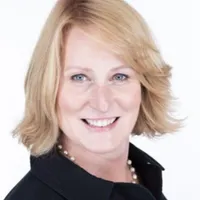
Maura Stevenson
Chief HR Officer, MedVet
Why your HR strategy needs an adaptable point of view for real business impact.
Episode 253 · June 24, 2025 · 16:18
Why your HR strategy needs an adaptable point of view for real business impact.
Key moments
In Maura's words
“I think I like to joke that I did people analytics before it was cool. So I really leverage that data component along with an understanding of people to build a career that has wound up in HR over time.”
“You have to start by meeting the business where they're at.”
“I often say that none of us, including me, are nearly as good at identifying talent as we would like to think, that science could help us.”
Transcript
Read the transcript2,470 words
HostWelcome to the Built by People podcast, where we share the stories and insights of the world's top HR leaders. Join us as we dive deep into the minds of HR executives, uncovering their strategies, challenges, and triumphs in shaping today's workforce. I'm excited to welcome Maura to the Built by People podcast. Maura, thank you so much for joining us today. And as a starting question, I always love to ask if you could share a little bit more about your career journey.
GuestI wound up in HR, um, kind of by a different path than a lot of people have. By training, I'm an organizational psychologist, and my first job was actually as a statistician. But I think I like to joke that I did people analytics before it was cool. So I really leverage that data component along with an understanding of people to build a career that has wound up in HR over time.
HostMaura, during your time at Wendy's, you mentioned implementing a talent transformation strategy that led to an 87% increase in EBITDA per director. What challenges were you facing with leadership talent that prompted this initiative, and why was addressing this so critical for the organization?
GuestSo I joined Wendy's as the head of talent when a new CEO had come in, we had a new CHRO, and the brand had merged with Arby's and then had unmerged. So there were a lot of things going on simultaneously with refranchising. So for listeners who aren't as familiar with franchise organizations in retail, particularly restaurants, you have your company-owned and operated like Chipotle and Starbucks, and then you have other brands that franchise their concepts. And Wendy's was moving towards 25% company-owned to 5% company-owned, which obviously has some pretty significant implications from a talent perspective. We were also really going through a brand transformation. Old-fashioned was taken out of the logo, and we need to make make sure that we had the right talent to drive the business performance and growth that we were looking for. And I think the other piece is you've got cultural implications. Where was the organization culturally? And what cultural changes did we need to make in order for us to complete that brand transformation? So a lot of moving pieces from a context perspective.
HostMara, could you walk us through the step-by-step approach you took to transform talent at Wendy's, starting with succession planning and talent mapping, then introducing assessments, leadership development events, and finally implementing 360 feedback. What was your strategic thinking behind this sequencing?
GuestYou have to start by meeting the business where they're at. So right after I started, one of the first things we needed to do was, with the refranchising, take a look at, as we sold off stores, which folks in our field organization, which of our operators did we absolutely want to keep with the brand, and which would we be open to letting go with a franchisee, right? So the talent in the Wendy's system would often cross back and forth between franchise and company operated, and we didn't really have a way to segment our people that let us think about their growth potential. We found that we had 3 different levels of the organization with a similar age profile and a similar talent profile, and we really didn't have the bench strength we needed. So step number 1 was figure out what was going to be our framework to talk about and segment our talent. So we really started by introducing the 9-Block concept and a simple model with 5 things that we wanted to look at to think about segmenting our talent based on potential. And really having meetings with our senior field operations folks, doing some of that talent segmentation and introducing them to that concept of thinking about their talent in a different way. So it was very much to address a business need at the moment. Then simultaneously, we had been introducing executive assessments, and we did work to really scale and customize our leadership assessments for directors and above. For all new hires and promotions within the organization. And we mapped those, right, custom report, to our leadership behaviors. It was really a different way of thinking about how do we hire talent that can grow, to help the business grow, and think about not just performance, but potential over time, and starting to introduce those assessments in hiring and really spending a lot of one-on-one time with the HR partners, the senior business leaders, to talk leaders through what we were seeing in those assessments, why it mattered, how they might interview differently. It was really a gradual adoption because you wanted all the cool kids, all the cool kids doing the assessment, right? So you've gotten your talent segmentation. You're implementing better tools for hiring and promotions, which was really important within our organization. And then you want to look toward development and also that culture change. So we wanted— Wendy's had a great culture. It's a very values-based organization, always has been. Very nice culture, highly collaborative. But what we needed to amp up in order to do the brand transformation was help our leaders at developing their leaders and really driving that execution and innovation mindset. So, you know, our folks were, they'd heard about these leadership behaviors, they'd had some exposure to them, but we decided what we would do as part of really our cultural change was we would develop a custom 360 based on our leadership behaviors. And we had a plan over multiple years to implement that to our director and above populations, educate them about it, link it to our other work, and then use that to drive development. So step 1 with the 360 was the whole senior leadership team went through it, right? Leaders go first on that kind of stuff. We really thought that role modeling was important, and they were phenomenal as they went through the assessment. And then for the 360, and then we took all of our VPs through it and we brought 'em all together for development day. And I had a leadership team member sitting at each table with the VPs as a facilitator. And we had very structured follow-up so that there was accountability built in so that we could understand individually as well as collectively what was our leadership culture And how did we need to continue to change that in order to meet our business goals? So we did VPs one year, we did directors the next year, using our VPs in that coach way. And then we did another session with our VPs to reinforce, go deeper, and link that 360 with some of the other tools and initiatives we were focusing on. So it, it takes a couple years to get all this stuff up and running.
HostMaura, you mentioned having to approach talent development differently at a restaurant company versus a scientific organization like MedVet. What specific adaptations did you make to your communication and implementation strategy at Wendy's to ensure buy-in from leaders who might not naturally lead with science?
GuestYou know, I think context is key. So our work may not change that much. But how we communicate it, gain alignment around it. Assessments in particular for hiring and promotion, they can feel really scary, right? You've got some psychologist making you take these tests, and it doesn't feel great. And so that can be really— that can be scary. We've got some cognitive tests in the suite that can be intimidating to people. I think at Wendy's, it was very much around Making sure you're addressing an immediate business need, right? And making sure that we don't overcomplicate things, right? And figuring out what's already in the organization and how can you use that language or tools or contrast with those language or tools and really get started with your key influencers to start building that momentum. So we spent more time at Wendy's getting folks comfortable with even the concept of assessments I often say that none of us, including me, are nearly as good at identifying talent as we would like to think, that science could help us. Versus when I went to MedVet, we are a veterinary specialty organization. We have about 35 hospitals now across 20 states. We were super fast growth. We didn't really talk at all about a common leadership framework, some of those types of things. But my folks are all a bunch of scientists. So when you show them, ah, here's what an assessment does to help improve quality of hire, it's very easy for them to get on board 'cause that's their training. And data in that way can be very influential. But I think assessments in particular, they're very personal and they can be very intimidating. So making sure that you have leaders on board and we're using them in the right way. The other thing that we did at Wendy's was we were really transparent around giving people people their own data. Because sometimes you might take an assessment, you never hear anything back, and you're like, I don't know how that went. But we had a custom report, and if you were an internal person, or if you were an external who we hired, we sat down with you and walked through your data, sometimes with your leader, to talk about what that meant for development. Showing that this wasn't a weird secretive thing, this was information to help you so that you could onboard successfully or you could keep growing in the organization. So I think that transparency piece and making sure that these things aren't seen as secret is really important in getting buy-in.
HostI wanna go back to the time when you did the talent transformation strategy to increase EBITDA by 87% per director. What were some other more significant results that resulted from that initiative? How did you measure success and what unexpected benefits or challenges emerged throughout that process?
GuestSo, I think ROI with people, you always have to take with a grain of salt. So, Wendy's at the time was refranchising. So, we were shrinking our director and above headcount to make sure that we had the right number of folks for the number of company-operated restaurants. So, our director headcount was shrinking. It shrunk 34— sorry, 36% over that time. The other thing that was happening there, which is interesting, is our EBITDA wasn't necessarily growing because you get EBITDA in a different way. Refranchising really improves quality of that EBITDA. So, you had a bunch of different variables, but I do fundamentally believe that we did become pound for pound stronger. So, we were intentional. About rationalizing the number of senior leaders, making sure that we had the right work at the right level, and that our VP jobs were big and they were substantive. We also found that over time, because we did have time 1 and time 2 360 feedback on all of our executives, we found that we got better at developing talent, as well as driving results. We saw that over time we had more top talent entering or being promoted and more bottom talent exiting, which is what you want to have as you're building that healthier talent pipeline. And the other thing that was fun is we were able to, because we had data over multiple times, we had all kinds of data, we had assessment data, we had 360 data, we were able to identify empirically what our top talent did differently than our non-top talent. So our top talent was better at developing themselves and their teams. Our top talent was better at building partnerships and relationships, which was very important in a very collaborative organization, especially franchise system where influence is important. What I found really interesting is our top talent was rated as better at listening me, which is not always the case. I started my career on Wall Street, and I'm not sure back in the day some of your best producers would have been the best listeners, right? And then not surprisingly, our top talent was better at driving action and taking initiative, and they also raised the bar on performance. So I think when you have that top talent with high expectations for themself and others, but they're also developing their people and they're listening better, which that to me was interesting. And I don't know if that would be repeated in other organizations, but I think it really speaks to the fact that especially at the senior leadership level, the ability to collaborate, to drive a shared agenda, and to influence is increasingly important as our work becomes more connected. And I think probably one of the best things was we created a common language. And a common framework around talent. So all of our leaders meant the same thing when they used the same words. And that's hard, especially if you're bringing in a lot of external talent around your journey as well.
HostMaura, what parting advice would you like to share with our community?
GuestI think HR is hard, but HR is fun. And I think the key is to have a point of view coming into an organization, but not to be calcified in that point of view. So coming into Medved, we had some similar problems to Wendy's and Starbucks and other places I've worked, but how we sequenced those solutions, how I drove change and alignment, that was different. But you have to have a point of view so that at the end of 2 years, 3 years, 5 years, you have a body of work that has driven the organizational culture and the leadership capability forward. It's not going to be linear, and that's OK. So be open to the work being nonlinear. You're not always going to start where you think the beginning should be. You might start in something that feels like the middle. But the trick is to get that progress and to have a game plan for how you're going to build that broader talent agenda, that common language, those set of connected initiatives that when you look at them holistically are gonna help the organization meet its business and growth goals. MedVet has been super high growth, so we really needed to amp up our talent quickly in a profession that historically didn't focus a lot on people leadership development.
HostLaura, thank you so much for joining us today on the Built by People podcast. It was a pleasure to have you involved.
GuestMy pleasure. Thanks so much for your time.
More conversations like this