Episode 147 · April 2, 2025 · 15:56
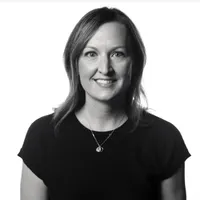
Marci Rogers
Chief People Officer, GSD&M
Ignite Your Team: Master Strengths, Engineer Unforgettable Employee Moments
Episode 147 · April 2, 2025 · 15:56
Ignite Your Team: Master Strengths, Engineer Unforgettable Employee Moments
Key moments
In Marci's words
“If you focus that, if I were focusing that same energy on my top 5, the things that come naturally to me, my gifts and talents, I would have seen such different results.”
“It's not about trying to limit anyone. It's not about that. It's about what are you great at and how do we leverage that? How do we bring it out within teams?”
“To create moments that matter to your organization, the first and most important step is really knowing your employees. What are their drivers? What are their motivations? And even what are their passion projects?”
Transcript
Read the transcript2,298 words
HostWelcome to the Built by People podcast, where we share the stories and insights of the world's top HR leaders. Join us as we dive deep into the minds of HR executives, uncovering their strategies, challenges, and triumphs in shaping today's workforce. I'm excited to welcome Marcy to the Built By People Podcast. Marcy, thank you so much for joining us. And as a starting question, I always love to ask if you could share a little bit more about your career journey.
GuestSure. Thanks for having me. I appreciate the opportunity. If you asked me when, what I wanted to do when I was growing up, I would've told you I wanted to be a surgeon. Clearly that did not play out, and that's for the best for the entire world. After being a biology major for a couple of years, it was clear that this would not be my path. I'm more of a people person than a parts person. Life took some twists and turns, and I needed to get a job and start supporting myself. And so I began working at a telecom company. I think my first day was my 21st birthday, which is an odd time to start your new adventure. But several years after being in the telecom company, I applied for a learning and development position, which started my HR journey. That really was my passion. I had to give a presentation and teach them about something, and I really went rogue on this. I wanted to teach them something that I knew none of them would have any background or any kind of specialty around, so something out of high tech. And so I taught about cigar making and cigar rolling and all the intricacies and different types and everything. And we just really had a great time learning together. And it was so much fun. One of the participants asked me, can I light this? And I was like, no, I'm sure I will not get this job if you do. So we had some good fun with it, but I really found that passion for learning and development. I went on to then do employee relations within the same organization. And then around 2002, there was the dot-coms busted, telecom tanked, and I hit the bricks to find what was next, what was going to be my next adventure. I went to probably polar opposite of telecom and I went into advertising, which has been a wonderful journey. I am here at GSD&M in Austin, and it's an integrated advertising agency. And I systematically learned and took the opportunities that arose to learn the other aspects of HR outside of learning and development. Employee relations, what are some of the other pieces? So taking on, say, like benefits and workforce diversity and a number of other pieces, including compensation, to systematically add those building blocks to my resume. One of our core values here is curiosity and restlessness. It's really great when you find an organization that supports that. That where you can learn new things and add to your skillset and broaden your toolbox. And I've really been blessed to work with some amazingly brilliant folks for 23 years now. When you're having fun working with smart people and in service of an impressive roster of clients, it goes by in literally a heartbeat. But coaching and development still remains my passion. I love doing this. This is where I really like to focus these days as a chief people officer is really helping people find those items in their life, in their career, that's going to help them both professionally and personally.
HostMarcie, how have you utilized the Gallup StrengthsFinder tool in your personal and/or professional life to foster growth?
GuestSure. This is a tool, back to the coaching and development piece, that we use, and I am a huge proponent of it. I took it for the first time 15 years ago or so, and I found myself thinking when I saw the assessment, these top 5, it really nailed me. It did. I literally laughed out loud. How could this assessment know me so well? But like many people, I started looking at the bottom, my lesser strengths, and I didn't focus my energies on those top ones and really leverage that. I kept focusing on the lesser ones and saying, how do I work on these? How do I get better here? How do I bring these numbers up? Which is a, a very natural human tendency, but it's actually you get the inverse of the results that you really want. If you focus that, if I were focusing that same energy on my top 5, the things that come naturally to me, my gifts and talents, I would have seen such different results. And when that finally clicked for me and I started putting my energy into my top 5, Relator, Belief, developer, connectedness, and strategic, I really saw the result of my efforts shift. I could see where my effectiveness was improving with others, where I could start adding more value effortlessly because it's just kind of what you do. It's, it comes so naturally and I could help assist in their needs much better. And once I had focused on those, my teammates knew how to lean into me. And then conversely, I also knew where I needed to lean on someone else versus focusing time and energy on those lesser. Look at my teammate that that's one of their strengths and lean into them. So I think it really made me a better teammate. And, you know, I believe in it so much, I actually had my entire family do it as well, and we each have a much deeper understanding for each other's starting point.
HostMarcie, can you share an example of a time when identifying your strengths led to a significant breakthrough or success?
GuestSure. I— this isn't one that is about a personal success, but one of those from the folks that I work with and support here at the agency. There was an individual who really was struggling with the concept of this. They didn't like labels. They didn't like feeling like they were being put in a box, so to speak, from an assessment. They were really, really struggling with the concept overall. And so I tapped into my Relator strength and I knew this person loved fashion. I mean, really loves fashion, has an entire closet dedicated to velvet, loves fashion. And so I reframed the concept for them. I asked them to imagine this assessment tool as their closet. I asked, when you come home from work, do you change into other clothes? And of course the answer is yes. Everyone comes home, puts on their, what I call their comfy clothes. And as we continued to walk through their closet, noting a few more things such as a suit or a little black dress that they wore to a party, I was really reinforcing that they looked fabulous in it all. Everything fit. It's just what you grabbed when you needed it. So your comfy clothes are your top 5. That suit or little black dress, those are your lesser strengths. That you grab them when you need them, but it's not your everyday go-to. And when we talked about this, it clicked for this individual. They agreed to take the assessment and we agreed we would talk again in a week or so. I wanted them to have some time to really sit with it and process it. And when they came in, they looked at me and said, Marcy, oh my goodness, this is me. And there was that click of this isn't about trying to limit anyone. It's not about that. It's about what are you great at and how do we leverage that? How do we bring it out within teams? And they then had a better understanding of their fellow teammates as well. And so it was that aha moment But you, you really tap into what you know about an individual and where you've seen their success and how their strengths, it's so obvious. But when you lean into those, it really makes a difference for them and the team dynamic overall.
HostMarcie, what strategies do you recommend for organizations looking to leverage Gallup Strengths Finder? Or enhancing team dynamics and performance?
GuestSure. You know, an example is really looking at your team makeup and being very aware of that. Like when I looked at our people team, for instance, we were very strong in relationship building, executing, and the strategic areas. We were noticeably low in the influencing area. And with this knowledge, when we would put a new tool in place to test or a program to roll out, or even needing a focus group, I would pull a report from Gallup and look at people who are high influencers. And I would pull those cross-functionally in to be part of our focus group or our beta test. And so when you have that, you would get the natural buy-in and that organic movement throughout the organization. So it's really having that snapshot saying, what's our need? What is our current makeup and what are we trying to achieve? Who else has that in the organization? And how do we then leverage that? It helps in a lot of team projects if they're getting stuck, then we go out and we look for the people who are high achievers to help get them over that hump. So it's really looking deeply and often at your team makeups. And figuring out how you maximize those.
HostMarcie, the concept of the power of moments is fascinating. How can leaders create these impactful moments to enhance the employee experience?
GuestSure. Many of you have probably read the book, The Power of Moments by Chip and Dan Heath. And in their book, they talk about we as humans remember our best or worst experiences, as well as the last experience. And we forget all the rest, which I think each of us can relate to in various situations. And this is so true, particularly in a creative environment. And it often reminds me of electricity. People don't think about the hundreds of times that you walk into a room, you turn on a light switch and you just get to work. But you certainly can recall when the electricity was out for a few hours. Right? And so to create moments that matter to your organization, the first and most important step is really knowing your employees. What are their drivers? What are their motivations? And even what are their passion projects? And what do they really value? What stage of life are they in? And once you know this, you can look for those opportunities to create or evolve your programs to support these at critical moments.
HostCould you discuss some key touchpoints in the employee journey where creating lasting impressions is most critical and how you've successfully implemented this in your work?
GuestSure. At GSM, we really focus on the moments that matter most to our people. We focus on looking at the whole person. We look at what's going on in life while they are here at work. And how can we best support them? So a few of the key moments hit around new hires and our recruitment process. That employee experience starts with the first reach out. So our recruitment process, our Day Zero site, welcoming them the moment that they hit accept to their offer and building that excitement and engagement during that time of that 2-week resignation or whatever timeline that they have. The way we do it really is a differentiator in our industry. We hold a week-long onboarding program where we introduce new hires to our ideas, our culture, our core values, our employee resource groups, and even our CEO meets every single new hire. So we end the week with a happy hour that includes all the people that they've met along the way during their week, and the team celebrates having new folks in the organization. You know, we're also there very much for folks when we have a relatively young workforce, and many times they're at that stage where they're wanting to start a family. And so how do we support that? Because that family-forming journey is so different for each and every person. So we've partnered with Carrot for IVF, surrogacy, adoption. We have a generous parental leave. We look at how we return to work after the birth of a child. And also becoming a caretaker for aging parents is a new need that is coming up more and more.
HostArcee, what parting advice would you like to share with our community?
GuestIf you haven't already, I would really encourage people to take the Gallup StrengthFinders. You learn a lot about yourself, but you can also learn a lot about the people that you work with and know how to lean into them, it will not only improve your effectiveness, but also your energy level and how work feels. Because if you're leaning into those strengths, it just comes naturally to you, which allows the opportunity for work to become some fun as well. And the energy that you have when you leave and when you come in the next day is going to be very, very different. If you can do so.
HostMarcy, thank you so much for joining us on the Built by People podcast. It was a pleasure to have you involved.
GuestThank you so much for having me.
More conversations like this