Episode 3 · October 29, 2024 · 13:25
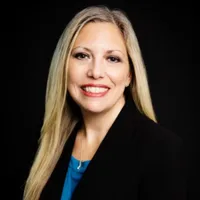
Laura Thiele
Chief People Officer, Optimizely
Future-Proofing HR: Adaptability and Empathy in an AI-Driven, Geopolitical World
Episode 3 · October 29, 2024 · 13:25
Future-Proofing HR: Adaptability and Empathy in an AI-Driven, Geopolitical World
Key moments
In Laura's words
“I knew that technology was a, a big way to do, to do that and make enhancements.”
“I think the landscape is changing very, very quickly. I think in terms of the opportunity, it's really to help simplify as well as really provide, you know, AI assistance to help individuals through their jobs.”
“We definitely measure and pulse our team members to understand where the perhaps pain points are and where the areas of strength are in terms of our, our culture.”
Transcript
Read the transcript2,183 words
HostWelcome to the Built by People podcast, where we share the stories and insights of the world's top HR leaders. Join us as we dive deep into the minds of HR executives, uncovering their strategies, challenges, and triumphs in shaping today's workforce. You know, Laura, usually the first question that I ask is, is related to your career journey. Can you walk us through your own career journey and some of the key moments that led you to your current role in HR?
GuestSure, no problem. So I studied human resource management at James Madison University and had a— early on in my career, joined a rotational HR program, an HR leadership development program at Lockheed Martin, and that provided me a lot of opportunity to rotate across 3 different functions in HR. And through those rotations, I had become very interested in the HR business partner role. A pivotal moment was when my husband and I relocated to the Maryland area and I began working on the PeopleSoft implementation of, at Lockheed Martin. It was a very, very large project and I was a business analyst and really developed a strong affinity towards technology. With that, through my career, I had always, uh, a strong interest in effectiveness as well as areas to simplify. And I knew that technology was a, a big way to do, to do that and make enhancements. So when I had excel, you know, further excelled in my career at Lockheed Martin, I made a big jump to join SAP, who was a leader in ERP solutions and developed a strong interest in their cloud-based solution called SuccessFactors. In my role as an HR business partner at SAP, I supported cloud-based businesses, and there were a lot of opportunities for me to really drive transformation and strategic change within several cloud businesses. And at that time, I had developed a lot of competencies and felt that the next role was a CHRO role for me. So when a Chief People Officer role opened up, I was able to assume that role externally., and it was a great opportunity. So that was a pivotal moment in terms of taking that next step, being able to, um, be underpinned a lot through the strong interest I had in technology that had developed early on through, um, in HR implementation.
HostThat's great, Laura. And what are some of the more significant trends that you're seeing, uh, which are shaping the HR landscape and How do you find yourself adapting to those trends within your current organization, Optimizely?
GuestThere's a lot of trends within HR. The HR field is constantly changing. Obviously, the big one right now is AI and what technology will look like for the consumer, which is employees with our customers of HR. I think the landscape is changing very, very quickly. I think in terms of the opportunity, it's really to help simplify as well as really provide, you know, AI assistance to help individuals through their jobs. And I think, you know, there's many roles within HR that can think of ways that HR can be further simplified, but taking it to another level where we're talking about AI assistance that may be performing some of the roles, or at least be complementary to help people perform their roles better, I think that creates, you know, a huge amount of excitement and opportunity for the field of HR. As you think about the complexities that we've had managing humans doing jobs and people, let alone an assistant, um, I think that's gonna introduce a lot of, a really wide dynamic of complexity as well as interest to the HR space. I don't think it's gonna happen overnight, and I'm, Sure, there's companies that are very much ahead of this, but I think as we continue to think about how complementary AI assistants are to the roles that people are performing, the roles that they're gonna be doing is gonna be changing. And so how do we leverage an AI assistant as part of that role? Or in some cases, you know, the role may change significantly and be replaced by AI. With that being said, I think it creates an opportunity, you know, to be in terms of the, the landscape of, you employee development to think about what value and what areas we add, you know, in terms of the skills to the organization that technology doesn't have. Is that critical thinking? Is that executive presence? Is that communication? You know, what are the areas that we could differentiate ourselves through outside of standard technology? So the AI technologies is a big trend. I think a second area within HR that, that's changing is, is really looking at you know, what HR experts are being tapped to, to really become comfortable with in terms of subject matter areas. So we saw very much through COVID where HR was expected to be, you know, resident knowledge on health and safety. That changed. We saw through other, you know, dynamics within the environment where we saw different alignments towards, you know, diversity and equity and inclusion and how fast, you know, that field has been evolving. I think when you look at the geopolitical environment, it's pretty complex. And there's something that we're looking at, you know, often in terms of how does it impact our employees, but more importantly, what are employees having to face perhaps on their day to day? We're seeing— we just most recently had some, some experiences where we're looking at you know, for some of our employees in a different location and thinking through from an HR perspective, what is, what will that look like? And, you know, for their day-to-day experience, if there's perhaps some difficulties or unrest in their location, you know, how do we, how do we prepare ourselves and how do we ensure that our employees are treated with empathy and compassion when perhaps their world, you know, has some dynamic changes at the time? So I think it's a very exciting field and there's still a lot of interest in terms of what's changing often.
HostAnd thinking through HR's impact, how do you measure the impact of HR-specific initiatives on things like employee engagement, productivity, and overall business success?
GuestI think we measure our employee engagement on a survey twice a year, and we measure the engagement through various dimensions. Whether it's work-life balance, whether it's the relationship with their manager, whether it's how fast their career development is accelerating, or how well they know, you know, the organization in terms of business strategy. So we definitely measure and pulse our team members to understand where the perhaps pain points are and where the areas of strength are in terms of our, our culture. I think another area that we measure is through our data. And when we look at employee trends, when we, monitor whether it's promotion rates or terminations or how fast individuals onboard to be successful in terms of contribution to their role. We're obviously looking at business productivity and how fast people are effective in the role. You know, people are in key roles to be driving organizational performance, to be able to step up and drive business results, and the company is, you know, measured through the success of their people in a, in a service-based business and a lot of technology in terms of how individuals are capable to build and develop and, you know, to build, develop, and sell and support our customers. That, that's a lot of emphasis in, in terms of our people. So we're successful through, you know, their, their engagement and how they're solving problems, how they're providing value to our customers. And so those are sometimes a little bit harder to measure, but I think where we try to gauge is, you know, certain dimensions in terms of leadership effectiveness, how they're driving business results in terms of their OKRs, their objectives and key results, and how do we look at data in terms of identifying where we can do better. And having that instrumentation can really help us.
HostAnd Laura, what are the biggest challenges that you have faced in your HR career? How did you overcome them and what did you learn from those experiences?
GuestI think in terms of challenges, I think, you know, being able to manage teams that have a lot of pressure on them and be able to still have fun and be able to get business results and work together as one team when there's, you know, certain pressure points, whether it's a large strategic change or technology implementation and that the team is at capacity and beyond capacity, you know, there's not always an opportunity where you can easily deploy additional resources when there's budget constraints or skill constraints. And sometimes you, you have to be able to continue to press forward. There's obligations that you've made and commitments, and I think motivating and inspiring that team is a, is a big opportunity. So, you know, I, we've definitely been challenged in, in some of those areas. I think in terms of the technology and staying abreast of how the technology is changing on top of other demands in HR, I think it was, you know, interesting to be able to continually learn and evolve. I think as well, you know, the client relationship is, is always evolving, right? You look at that employer-employee dynamic and, you know, I think there are some areas in which employees have stronger voice. Voices in terms of feedback and opinions and desires. Yet at the same time, there's times where an employer, you know, has to be able to recognize that they are employing people for the business results that they need to achieve. And, you know, it's, it's not necessarily sometimes an equilibrium, right? We work in harmony and we try to ensure that we're, we're aligned. Um, but the employee dynamic is, is really interesting. The last 5 years have been really complex. In terms of employee landscape. And I think having that ability to navigate across HR with ensuring individuals are treated with respect and empathy and going through business transformation, I think is really important.
HostAnd how do you see the future of work evolving and what role will HR play in shaping that future?
GuestI think the future of work, you know, is an interesting concept, right? We've been talking about the future of work for 10 years. Within HR, even if not longer. And I think in terms of really what it is in terms of looking at how technology is going to be a forcing function through our roles, how do we adapt and evolve based on the technical, you know, technical advances that we have at our fingertips, right? But at the same time, I think in terms of the future of work is also looking about how we're growing and evolving as humans, right? What resources and accesses do we have? But what else are we kind of managing and growing as, as our skills evolve and our talent? So I think, you know, the future of work is, can be very individualistic because each employee, you know, has a different outlook. But I think as individuals are staying, you know, more present as they continue to progress, you know, progress in their career, we may have, you know, a much more multidimensional workforce across 5 to 6 generations perhaps. You know, how does, what does that look like? You know, in terms of the future of work, you're going to be working with people across a wide range of, generations or wide mix of technology. And I think in terms of, you know, what that concept of, in terms of individual skills, it's hard to see like what skills we're gonna be using 'cause the skills are changing so fast. So we can't necessarily say, hey, in 2035 or '24, you're gonna have these skills. It's not even ahead of us right now in terms of what those skills will be for 2027, 2028, you know, in terms of that, that's changing so fast. So I think having that ability to be fluid and having that ability to evolve is something that is gonna be instrumental to the HR team to be able to relate and understand and as the client base and the talent landscape changes.
HostHmm. And Laura, what would be your parting advice to your fellow HR executives?
GuestI think in terms of advice is really take it one day at a time. I think you can have a strategy and you can have, you know, the best operational plan, but at the end of the day, there's change and you have to be able to adjust and evolve based on that change.
HostThat's great. Well, Laura, that wraps up our HR Executive Re-Interview series. I want to thank you for participating.
GuestOkay, take care.
HostBye-bye.
More conversations like this