Episode 342 · October 3, 2025 · 9:13
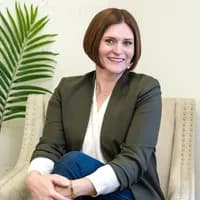
Karina Young
VP of People, 15Five
Empower Your Managers: Data-Driven HR is the New Performance Engine
Episode 342 · October 3, 2025 · 9:13
Empower Your Managers: Data-Driven HR is the New Performance Engine
Key moments
In Karina's words
“I love coming into tech companies and helping them build the people foundation from the ground up.”
“HR burnout is unfortunately, I think, more and more common given, you know, shrinking team sizes and people functions paired with increasingly complex workplaces.”
“One of the things I learned from that experience in particular was really being able to advocate for the right balance with data.”
Transcript
Read the transcript1,837 words
HostWelcome to the Built by People podcast, where we share the stories and insights of the world's top HR leaders. Join us as we dive deep into the minds of HR executives, uncovering their strategies, challenges, and triumphs in shaping today's workforce. Karina, thank you so much for joining us today. And as a starting question, I always love to ask if you could share a little bit more about your career journey.
GuestYeah, of course. Well, I've been a longtime HR strategic leader, really specializing in scaling tech organizations. And what that really means is I love coming into tech companies and helping them build the people foundation from the ground up. So whether it's starting in the tens or the early hundreds and taking it up through the thousands, going through mergers, acquisitions, shrinkage, growth, everything in between, that's really my sweet spot and where I've spent the majority of my career. I have to say though, to be honest, I've spent a lot of time lately thinking about what has gotten me into HR and what makes me stay here. And I actually owe a lot of that to all the jobs I had before HR. I've been working since I was 14 as a necessity, and so I've worked in retail and sales, hospitality, childcare, and I do feel like every day I am coming back to things I actually learned in those roles that just happened to translate really well into a people function and navigating managers and leadership and difficult conversations. So that I think was really my original foray into the HR world. But in the last 13 years, you know, I would say, you know, every experience I've had in different companies has been so unique and has really been about kind of rising to the occasion of what the company needs, not being afraid to take on new challenges and helping companies navigate change. That's really the thing that keeps me in this now and what I love the most, where I get the most joy at.
HostCorinna, could you share a specific instance where you encountered HR burnout in your organization and what strategies you implemented to address it effectively?
GuestYeah, I mean, HR burnout is unfortunately, I think, more and more common given, you know, shrinking team sizes and people functions paired with increasingly complex workplaces. Places ever since COVID right? The demand and the dynamics of companies have really shifted and changed, yet so many organizations still see HR as the last place they want to make an investment. So burnout is happening everywhere at every company of all size. And I, and I don't think team size alone is actually what keeps you out of burnout, right? HR itself can just be an incredibly isolating job, right? We work in, you know, I worked in one organization in particular, I think of where we had a large people function. We had about 30 people across talent and HR in total. And we had a lot of headcount, but our priorities were just totally imbalanced in relation to that headcount. And that was leading to a lot of burnout on the team, meaning that the teams that had the most high-priority work that was most visible to our C-suite, to our employees, that we were really being measured on, actually were the most understaffed. And the teams that weren't delivering on those types of priorities had the most headcount. And one of the things I learned from that experience in particular was really being able to advocate for the right balance with data. I worked with a couple leaders who were really incredible at being able to come with a clear, concise story of what they needed, what was the headcount, and why it mattered. And what I actually did in this particular organization was I used them as my own personal feedback mentors, as I went to them and said, this is what I'm experiencing, here's what I'm trying to pitch, tell me what I'm missing. Tell me, pretend to be our CEO and tell me what you think he's going to say because you know the feedback, you, you know, you see it all the time and experience it. And that was such a helpful thing to help me become a stronger communicator and a stronger executive presence, but also actually get the outcome I wanted. It was just being vulnerable and saying, I want to be better at this. I see someone who's doing it well. Will you help me?
HostMaika Leibbrandt: Karina, what challenges did you face when developing your manager enablement program, and how did you overcome resistance to create meaningful change in that process and journey?
Guest[Speaker:Karina Lozano] Yeah, you know, this question makes me think back to an organization I was at where we were scaling at an incredible rate. I mean, 200 people per year. It was absolutely huge. And I'd say about 80% of our leaders had less than 2 years of management experience in tech organizations. And where we ended up having the most resistance to our manager enablement was not actually from senior leadership. They were completely behind us. We had the data, we had the plan, we had the pitch, we had the budget, and they loved it. But it was actually the leaders we needed to participate in this program who were lukewarm. And a lot of them who were coming into this program initially were coming from operational, non-tech backgrounds. They had worked in environments departments that were mostly non-exempt employees, kind of hands-on hardware development. And so for them seeing this, what they called like a fluffy HR training, didn't really resonate. Getting them to spend 2 hours a month for 4 months with follow-up sessions did not, did not really excite them, as you could imagine. So we did a couple things that actually worked really well. 2 of them were planned, 1 was totally unplanned. The first is that we had our executives play a really big role in the rollout of this program, meaning They shared the invitation, they shared the messaging, and instead of this being another HR training you have to complete, this was a unique opportunity for you as a leader. It was an invitation from them, so it really shifted the dynamic. And then to back that up, we gave all of their department leaders the data and the messaging to reinforce this program and why it mattered. So they were, they could go to those leaders and say, I've seen your engagement scores. It's not acceptable. This is how I'm going to help you fix it. This is what I'm going to do to create time and space and how I'm going to check in with you. So, they had accountability far beyond HR, which really, really mattered. And the last thing that was just a really cool surprise was we ended up pairing them with some technical leaders who had experience in startup organizations in this training, and the peer-to-peer learning and connection was so cool to see. That, I think, was actually a big part of what drove them back week over week to come to these trainings, is they started to realize, They're not unique outliers that are doing a bad job. They're just managers who are trying to do their best. And other people, even with tech experience or even with more manager experience, have the same problems. It made them feel less isolated and alone, and really created this cool community that we did not plan or intend for, but was a big driver of engagement.
HostJim Collison: Karina, based on your experience at 15Five, how have you measured the impact of your HR initiatives? And what unexpected lessons have you learned along the way?
GuestYeah, well, I, I think what I love about 15Five most is getting to be in this unique position where I'm a user of our platform, but also lead the people function within. So I really get to, to sit in between both of those worlds. And so measuring impact for us at 15Five is pretty serious business, right? I use our platform as a way to put our strategy to the test, right? Are we actually being able to drive better business outcomes by improving performance, engagement, retention through targeted manager actions? Can we do it and does it work? So I use our platform and our technology all the time. And where that really starts and ends for me is with our outcomes dashboard. And that dashboard is really how I measure impact. So it's looking at things like performance scores, engagement scores, retention across our team, but then being able to split that by the right cuts of data. So being able to know that it's not just engagement for all employees that matters. It certainly does, but I actually really need to make sure that the teams and groups working on our top company priorities are highly engaged, that we have the right mix of talent in there, and that we're not losing great people earlier than we need to. And so, it's really that combination of being able to look into those segments that matters. And that's really what I'm looking at all the time on really like a daily basis, is I'm looking at those groups that I've targeted and seeing where are things going well, where are they off base, how can I get ahead of a problem versus hearing about something 3 months later and then trying to fix it. From there, I'd say the data and how I think about impact really varies, right? Like, I'm looking at regretted versus non-regretted attrition. I'm looking also at revenue per employee, at the cost per attrition, the cost of engagement, of engaging our highest performing people. What is our talent investment versus the outcomes that we get? So, being able to pair that with compensation data. I mean, there's kind of endless ways that we can look at it, and it varies a little bit by if I'm talking to our employees, to my executive peers, or if I'm talking to the— Karina, what parting advice would you like to share with our community? I think my biggest parting advice for the community is just try one thing differently every day for yourself, whoever you are, whatever role you're in, whatever you're trying to do. If you're working at a job right now, you're looking for a job, just remember that one small shift every day makes you a little bit better versus waiting to make that big, big change that is much harder to tackle. Just take it one slice at a time.
HostKarina, thanks so much for joining us today on the Built by People podcast. It was a pleasure to have you involved.
GuestThanks for having me. It's great to be here.
More conversations like this