Episode 20 · December 17, 2024 · 16:39
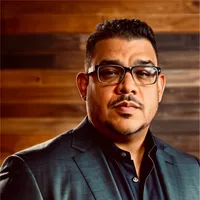
Jennifer Padlan
Chief People Officer, Breakthrough Public Schools
Employee-Centric HR: Adapt Your Strategy To Evolve With Your Workforce
Episode 20 · December 17, 2024 · 16:39
Employee-Centric HR: Adapt Your Strategy To Evolve With Your Workforce
Key moments
In Jennifer's words
“It is so critical that your EVP and the total rewards package is unique to your organization and to your employees. And as organizations change over time, it really is important to update both of those things on a regular basis.”
“What do you need? What do you want? What are the things that we as an employer can do or provide to you to possibly fill some gaps and support you not only as an employee, but as an individual, a family member, and so forth?”
“I believe that if everyone, everyone buys into that culture, buys into the values and why we are here and why we do what we do, that makes for a more unified employee culture.”
Transcript
Read the transcript2,132 words
HostWelcome to the Built by People podcast, where we share the stories and insights of the world's top HR leaders. Join us as we dive deep into the minds of HR executives, uncovering their strategies, challenges, and triumphs in shaping today's workforce. I'm excited to welcome Jennifer Padlin to the Built by People podcast. Jennifer, thank you so much for joining. The first thing I always love to ask of you is to walk us through your career journey.
GuestSure, happy to, and thank you so much for having me. So I am a career HR professional. I've dedicated my whole career to the discipline. I grew up in the profession, so to speak, and I have a very varied background in terms of working for small and large companies in various different locations, not-for-profit as well as for-profit organizations. I started my career in the talent acquisition space in New York as well as in the D.C. area, and I moved into a number of different industries, federal contracting and healthcare and insurance. And recently I was in the higher education industry and now I'm in the K-8 charter school. And it is— it has been a whirlwind. There's so many different experiences that I'm happy to share and I think that my career as an HR professional has really been focused on continuous education and continuous learning, regardless of what role or what part of HR I was working in. I did teach undergraduate and graduate-level classes, and even in my day-to-day and working with teams at my current employer, I think it's really important to always be learning, always be listening to podcasts and stretching your brain and figuring out different ways of doing the best you can at your, at your organization and in your role. So I've thoroughly enjoyed my career. It's not over yet, and I just enjoy the challenges that HR has to offer.
HostThanks, Jennifer. Last, last week I had a conversation with the CHRO on the topic of employee value propositions. I want to tie that to total reward and benefit system design and get your perspective on how you design a total reward and benefit system to align with the employee value proposition.
GuestI think that's a, that's a great, and that's a great question. You know, in this age of really having to work to get the key talent that your organization needs, it really is important to have a strong employee value proposition to be able to really communicate what is your organization's stance on— what are you offering your employees in exchange for the services they're providing to your organization? And And, you know, in my roles, I've worked with developing EVPs and standing them up and as you, as you say, tying them to the total rewards package. And it is so critical that your EVP and the total rewards package is unique to your organization and to your employees. And as organizations change over time, it really is important to update both of those things on a regular basis. So in my experiences, when I have designed total rewards employees or total rewards packages and programs specifically to speak to EVP-type principles, it really is important that you put your employees' current needs and priorities in the forefront. And you do that in a number of ways. One is looking at the utilization of your programs. What programs are your employees taking advantage of? Which ones are somewhat falling by the wayside? What are those, those high participation programs that, for example, tend to fill up frequently and quickly? And then, of course, ask your employees, talk to your employees and find out What do you need? What do you want? What are the things that we as an employer can do or provide to you to possibly fill some gaps and support you not only as an employee, but as an individual, a family member, and so forth? I think another real key point to keep in mind is that the makeup of the workforce really differs from organization to organization, industry to industry. And that is why it is so key to know that one size does not fit all when it comes to total rewards and, and EVP principles. So if I may give you an example, I currently work for a K-8 charter school network, and many of our employees here are early career. They may be single, they may have young families, and that population has certain priorities. The higher education industry that I previously worked in has tenured faculty, many established career employees. And so those two populations have very different needs and priorities. That your EVP and your total rewards package should respond to. So whether it's childcare versus eldercare versus, you know, different stages of retirement and so forth, that is really, really key. And I would say the last thing I'll just mention here is that looking at industry trends What is coming down the pike? What are, what are your peers doing? What are things that you can apply? What are some best practices that you can possibly apply from other areas into your organization when designing your total rewards package? And, you know, this is where continuous learning, you know, your network is, is so important for you to make sure that you are examining and interrogating all kinds of different programs to serve your, to serve your employees well.
HostJennifer, you're over a network of charter schools, and I'm sure you're facing rapid and frequent change within that network. I'm curious to get your perspective on the steps you're taking to build a unified culture across that network.
GuestOh, change is that one constant, right? And I think that all Industries experience change and some are slower to evolve than others. Some are more accepting of change than others. And, you know, for a charter school network, a unified employee culture not only benefits us as employees in our organization, but our scholars and our schools as well, as we really try to create and foster a a supportive, thriving educational environment for, for our, for our scholars. So I think when building a unified culture, we need to start with the vision and core values of the organization. You know, I think that your culture should be based on those, those foundational elements that drive the direction of the organization, and you need to secure commitment and buy into those values and model those values in your own behaviors while encouraging others to do the same. I believe that if everyone, everyone buys into that culture, buys into the values and why we are here and why we do what we do, that makes for a more unified employee culture. So starting with vision and core values is something that is so, so important. Another thing is to, and you'll see this in a theme of what I say, is that talk to your employees and your leaders, get feedback, get input. What is their perspective of the culture? What is their day-to-day experience? I mean, we all have, we all have great days and some challenging days, but what overall is their employee experience with the current culture? And then also, what do they want to see happen? How would it feel if you walk into an environment that you are really able to bring your whole selves to, that you feel supported, you feel challenged, you feel excited to be at? I think employees, as well as your leaders in your organization, are so valuable in terms of getting their input and their feedback. And of course, when we talk about culture, you can't talk about culture without talking about the relationships between your employees. They are a key part of not only your employed— your day-to-day experience, but also how your organization operates, how your organization feels. And so, I think it's important for HR leaders to really think about what opportunities, what tools, what resources, what, what physical space are you offering your employees to interact with each other, build strong relationships with each other, not only collaborating with projects for work for departmental assignments, but also those informal experiences where you encourage your employees to foster those positive relationships. Open communication goes without saying. I believe a strong employee culture and a unified employee culture is one that believes that open communication and open two-way, three-way, four-way communication is something that is critical to build trust and build respect. In my previous— in my current employer, as well as my previous employers, we talk about culture a lot, and I believe you can't talk about culture without talking about creating a safe and inclusive work environment. I mentioned earlier having an environment where employees feel comfortable bringing their whole selves to work. That's important. I think that if employees feel that they are walking into an environment that is inclusive, that is safe, that is supportive, that will not only unify the culture, but also promote that kind of day-to-day experience with your, with your employees. So, you know, I think that building a unified culture is something that is always evolving. But there's certain steps like the ones that I mentioned that, that need or should happen in order for your employees to feel like they are— they're welcomed, contributing, and challenged in their work.
HostJennifer, change management is top of mind for every HR leader, and every employee experiences change differently. What strategies are you deploying to help employees adapt to an environment where change is constant?
GuestThat's a great question. I think with regards to change and moving employees in an organization from point A to point B, whether it's proactive change or reactive change, clear communication is key. Why are things changing? What are the reasons for the change? How will we as an organization or you as an employee benefit from these changes. I think that, that communication piece is so— you can't communicate too early. As soon as you know the communication, that the change is going to occur, talk about it, introduce it, socialize it, communicate early and often throughout the process, and really give your employees those tools and resources whether it's training or other types of tools to adapt to the change. So not only talking about change, but also supporting your employees through the change, managing through the change, and, and working with them to proactively encourage engagement with the change. I, I think in general, changes can be challenging, especially if processes, workflows, tools have remained constant for a long time. Change can be challenging. And so it really is important, in my opinion, that we support our employees throughout the whole process. Hear what your employees are saying about how are they handling the change. What are, what are those, those threads that are coming through with regard to potential resistance? And then think through how can you mitigate for that? How can you overcome whatever resistance may be there and to have them engaged in, in, in the forward motion and the change that is coming, coming down the road? I think that with Any kind of change, big or small, some anxiety is normal. And acknowledging that with your teams, as well as creating those supportive mechanisms to walk with them through the change is a strategy that I've used in the past and I feel is so, so critical to the success of the change.
HostJennifer, any parting advice that you'd like to share with our audience?
GuestI think that in the world of human resources and HR professionals and HR, our HR discipline, it is really important for us to remember that we are employees too. I think we are in that space where, you know, we are driven to serve the organization, so to speak, and think about policy and programs and and put things in place to help and support our employees. And one thing that I think is so important to remember is that we are employees too. So not only for us participating in our own programs that we develop and come up with, but also taking care of those things and taking advantage of things in a total rewards package, such as perhaps Work-life balance initiatives. You know, I think that that is something that HR professionals, we are driven to doing for others quite frequently. And we also have to remember we have to do for ourselves as employees.
HostJennifer, thank you so much for joining us on the Built by People podcast. It was a pleasure having you involved.
GuestMy pleasure. Thank you so very much.
More conversations like this