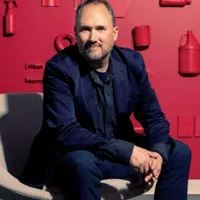
Jeanette Winters
Chief Human Resources Officer
8x8
Beyond Compliance: HR's Path to Business Impact & Engaged Culture
Thesis
“Strategic HR must transcend compliance, deeply understanding business economics and cultural nuances to align talent strategies that directly drive tangible business outcomes and foster genuine employee engagement.”
What you'll take away
- 01To successfully transform 'shadow HR' into an integrated function, deep empathy for each business unit's economics and a demonstrated commitment to their success are paramount.
- 02Overcoming resistance to organizational change requires a gradual, reasonable, and predictable pace, coupled with strong listening skills to build trust and advocacy.
- 03Aligning HR roles and responsibilities with the cultural understanding of both employees and customers, particularly in diverse and global settings, significantly boosts satisfaction and productivity.
- 04Strategic HR Business Partners (HRBPs) should be empowered and expected to immerse themselves in business acumen and data-driven insights to become true strategic influencers, not just compliance officers.
- 05Before pursuing an HR role, thoroughly evaluate the prospective organization's cultural perception of HR, its size, and operational style (e.g., startup vs. enterprise, PE-backed) to ensure a personal fit.


What most organizations get wrong
- Jeanette asserts that HR should be 'much less focused on compliance' as it's 'one of those basics in our sport,' advocating for a higher strategic alignment that challenges traditional HR priorities.
In Jeanette's words
“I needed to convey and to convince the business leaders I knew what they were doing and why, and to help support them. So the challenges were pretty obvious. Change.”
Highlights the critical need for HR leaders to demonstrate business understanding and support during organizational transformation.
“The instant we turned from that cautious skepticism to excitement, we knew we'd won.”
Emphasizes the pivotal moment in change management when resistance shifts to engagement, marking true progress.
“One of the things about servicing customer through calls is understanding the culture of the caller.”
Directly connects HR's cultural sensitivity in staffing to external customer satisfaction, beyond internal employee engagement.
“Much less focused on compliance. We all know what we've got to do, and we, you generally stick that. That's one of those basics in our sport. But the need though is for a higher level of strategic alignment.”
A clear statement de-prioritizing traditional HR compliance in favor of a more strategic, business-integrated approach.
“In my model, on that manufacturing floor, the impact was swift and business outcomes responded accordingly. We reduced our safety issues, we contributed to reduced attrition, and we improved productivity.”
Provides a tangible example of how a simple HR alignment (language skills) directly led to significant, measurable business improvements.
“Be careful about knowing why and what you expect if you're getting into HR for the first time. Know what you're getting.”
Offers crucial career advice, urging aspiring HR professionals to critically assess organizational culture and their own fit.
The problems this episode addresses
- Fragmented talent strategies and lack of centralized HR expertise due to 'shadow HR' organizations operating independently within a company.
- Internal resistance and skepticism from both leadership and rank-and-file employees when implementing significant organizational changes or centralizing functions.
- Suboptimal customer satisfaction and employee engagement in global or offshore operations stemming from a disconnect in cultural understanding.
- HR functions that are perceived as compliance-centric rather than strategic partners, hindering their ability to influence business outcomes and organizational design.
- Challenges in diverse work environments (e.g., manufacturing floors with a majority Spanish-speaking workforce) where HR teams lack the necessary cultural or linguistic skills to effectively support employees, leading to safety issues, attrition, and low productivity.
In this episode
Intro
You successfully transformed a shadow HR organization into a fully integrated HR operation
When a Shadow HR Organization Became a Fully Integrated HR Organization
You had to balance business growth with strategic HR decisions regarding offshore call centers
Employee-Culture Balance
Integrating HR business partners into a company's operation can have significant benefits
Integrating HR Business Partners into the Company
Jeanette, what parting advice would you like to share with our community
A Lesson from Jeanette's
Topics covered
Organizations and entities mentioned
Full transcript
Expand transcript (1981 words)
Welcome to the Built by People podcast, where we share the stories and insights of the world's top HR leaders. Join us as we dive deep into the minds of HR executives, uncovering their strategies, challenges, and triumphs in shaping today's workforce. I'm excited to welcome Jeanette to the Built By People Podcast. Jeanette, thank you so much for joining us. As a starting question, I always love to ask if you could share a little bit more about your career journey.
Oh, it's been an interesting one and so fulfilling. Every day I learn something new and just find that The world is a smaller place than we ever anticipated, but I really started my career right out of graduate school, and I'd been a working professional even before earning my doctorate to align business and talent strategies. And that was something that was always my call to action. And I emphasized my business acumen and understood that if you didn't bring the people along at the same time, you couldn't accomplish what you were hoping to. And that's really how I got into the world of human resources.
Thanks for that great introduction, Jeanine. I want to jump into a question that's going to have you share a specific example of how you successfully transformed a shadow HR organization into a fully integrated HR operation that met business needs. What were the key challenges and how did you overcome them?
That has been a significant part of my early career in HR was through shadow organizations. And a shadow organization is one where you've got functions within an organization that set up their own separate HR activities, like recruiting, workforce planning, training, college relations, all of those, because the business needs something that the central HR function isn't providing. And I was challenged in one role to align 3 disparate businesses. They were somewhat analogous. You could see the rationale of having 3 distinct businesses in the corporate umbrella, but they were 3 distinct businesses. And the leadership decided that we were going to have a centralized HR function rather than the 3 shadow organizations that had been existing. The idea of a center of excellence and to make sure that we were providing high-level expertise and subject matter direction to all 3 businesses. The challenge was obvious. My personal role was to ensure that the 3 CEOs— one was the CEO, 2 were presidents by title— but that each of them felt that I understood their business and the economics of their business, that I was most interested in their success as my number one issue. And so I would go around saying, I have 3 number 1 issues in each of the businesses. I needed to convey and to convince the business leaders I knew what they were doing and why, and to help support them. So the challenges were pretty obvious. Change. Anytime you're changing things, you're introducing a new variable that has to be addressed specifically in addition to the work of earning business from customers and fulfilling that obligation. But the second challenge that I really engaged was this whole idea of self-interests over corporate interests. And it's a natural reaction. These 3 organizations had their own talent organizations, and we were bringing those together. We had common job descriptions, and we had levels of expertise that we were requiring in each of these roles. And as you can imagine, homegrown teams were grown somewhat from within. And so there was always that my people do what I need them to do just fine, rather than looking at what the company writ large needed, which was a center of excellence. Again, overcoming that required listening skills and moving at a gradual, reasonable, and predictable pace. The last challenge that I think is important and noteworthy is that it was the skill and willingness to change. Leadership knew that it was in their best interest. They had been a part of the decision to bring me in, but at the rank and file level, so the people that were doing recruiting and training and mapping out career pathing, maybe they needed to be trained or upskilled. And those were the people that were very fearful about, A, keeping their jobs, and B, losing the influence that they'd always had in that formula of gradual, reasonable, and predictable, whether it was dealing with leadership or the people that were engaged in those functions. We brought a demonstrated knowledge of the inner working of the business, and by using examples that we could convey of how the centralized function brought people along and it got people excited. The instant we turned from that cautious skepticism to excitement, we knew we'd won. There was a long journey after that, but at least we had advocates along the way, and that's how we overcame the challenges. It took time and a lot of investment on our part to ensure we knew the businesses that we were serving.
Jeanette, tell me about a time when you had to balance business growth with strategic HR decisions, such as hiring restrictions in multiple countries. How did you approach this and what were the outcomes?
I'll give you the example of offshore call centers, and the business decision was that we needed 24-hour coverage and robust coverage. It couldn't be the overflow that typically you'll get from 10:00 PM to 4:00 AM in the morning at any given time. And so the customer demands were increasing and going offshore seemed like a really easy answer. And we were very closely watching the engagement scores of our employees at the same time, watching our customer satisfaction.. And we were just seeing a disconnect on both ends. The employees didn't feel thrilled about their service, and the customers were reporting that they didn't feel that they were being as well served being sent offshore. You know, what we found out, and we had hired and trained, and we found out that the talent at various offshore locations was fabulous. We just had to ensure we were utilizing their skills in an appropriate manner. So one of the things about servicing customer through calls is understanding the culture of the caller. Well, if it requires, depending upon what service or goods that people may be calling about, if it's very intimate, you really have to know somebody's culture. For example, one of the company's spokesperson was a well-known basketball coach. It was March Madness, and one of our callers called in and said, hey, what do you think about Coach so-and-so? And the employee said, oh, I don't know that person. The caller actually called the customer service hotline and said, I don't think they knew anything about me because they didn't know enough about— they didn't even know what March Madness was. We then began to align roles and responsibilities to the skills of these folks offshore and found that alignment culturally was very important for the caller's satisfaction, as well as giving our call center employees at these various international locations real opportunity to understand the impact of the work that they were doing. It was a dual beachhead that we had to fight, and it took us some time, but the results were astounding. We had to make sure that we were culturally sensitive on both sides of the equation to accomplish what could have been a pretty sticky issue if we had not been careful. But business needs required us to look at the data. And we did, and we learned from and through it.
Jeanette, could you describe a case study where integrating HR business partners into a company's operation led to a significant positive impact on the organization?
For me, I have seen the role of HRBPs, HR business partners, evolving. Much less focused on compliance. We all know what we've got to do, and we, you generally stick that. That's one of those basics in our sport. But the need though is for a higher level of strategic alignment. And what I have seen is that by setting the expectations of understanding the business and how the business contributes to the company making money, that they can immerse with the knowledge that they have better into the business and better into HR. And so being very deliberate about that two-way street for us in HR, we've got better decision-making, better alignment with programming, and closer sense to employee engagement. You know, with business acumen, data drivers, the sensitivity that the functional teams may not be icons of organizational design or HR practices, is something we tend to lose sight of. And this way, by understanding the business of the business, we can best align there. And I really seen a huge shift in the ability for HR to influence strategically and in areas where we have the most expertise. So for example, assigning HRBPs that were Spanish-speaking to a manufacturing floor. The majority of the population spoke Spanish. And we had prior to that time, no one on the floor that spoke Spanish. You can imagine how limiting that was. The HR employees couldn't get a real sense because they didn't understand the language or the subtleties that might be associated with what was being translated and then really getting engaged. And that, again, the HRBPs are to really integrate into the business. In my model, on that manufacturing floor, the impact was swift and business outcomes responded accordingly. We reduced our safety issues, we contributed to reduced attrition, and we improved productivity. Can't ask for any better than that. And it was literally aligning one aspect of skill in the HR team. And we had many Spanish-speaking employees in HR. We just hadn't thought about putting them on the factory floor where they could be of most help. And that, in my mind, is a prime example of where addressing and meeting people where they are and in the most simplest fashion, you can help not only the individuals and the teams, but the company really aspire to do great things. And they did.
Jeanette, what parting advice would you like to share with our community?
Be careful about knowing why and what you expect if you're getting into HR for the first time. Know what you're getting. And what I mean by that is culturally, the position of HR, not all HR organizations are as warmly embraced as most of the organizations that I've been associated with or the one I work for even today. So make sure that you dive deeply as you're looking into joining an organization and be real at what you're good at. Startups are not good for everyone. Midsize companies may be too basic in terms of rolling up the sleeves and needing to get things done. Bigger companies have larger staff complements. They may be more bureaucratic. These are the types of things you need to think about. One of the things that I see is that, uh, turnarounds, and particularly working for private equity, you have to roll your sleeves up and be willing to get into the dirt. Not everyone is comfortable doing that. So know what market and what size organization you feel you would best fit in, given the way that organization operates. And lastly, AI. Use technology to enable services and ensure that the people feel connected to and through, as well as just getting the job done. And you'll see a much higher level of engagement and you'll feel better about it too.
Jeanette, thanks so much for joining us on the Built by People podcast. It was a pleasure to spend time with you.
Absolutely. I wish you and all of our colleagues a great day, and hopefully we all learned something new today.