Episode 142 · March 27, 2025 · 11:57
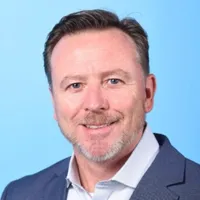
Burke Walker
Chief People Officer, Spring Venture Group
Positional Power vs. Personal Influence: The Real Secret to Leadership Growth
Episode 142 · March 27, 2025 · 11:57
Positional Power vs. Personal Influence: The Real Secret to Leadership Growth
Key moments
In Burke's words
“Any leader that can figure out the balance between positional and personal power will be a successful leader.”
“If you really want to move the needle, in my opinion, on leadership training, it needs to come down to more of that individual-specific small group. Real one-on-one coaching, those types of things that really move the needle.”
“The more you can embrace that growth mindset, you'll look for challenges as opportunities. You'll look for, you want to be receptive to feedback, more persistence, more grit, those kinds of things.”
Transcript
Read the transcript2,458 words
HostWelcome to the Built by People podcast, where we share the stories and insights of the world's top HR leaders. Join us as we dive deep into the minds of HR executives, uncovering their strategies, challenges, and triumphs in shaping today's workforce. I'm excited to welcome Burke to the Built by People podcast. Burke, thank you so much for joining us. And as a starting question, I always love to ask if you could share a little bit more about your career journey.
GuestYeah, Dave, thanks. Yeah, it's great to be a part of it. I appreciate the, the opportunity to talk with you and excited about it. So from a career path standpoint, it's a little, I don't know, maybe a little bit different story. I never intended to be in HR for me, but it's a career path that's actually worked out really well and I'm happy with it. But from a career path standpoint, I was going to school, had an opportunity for an internship at a company, not in HR. Through that, I got to know the HR person out of there. And the next year they said, why don't you come back and be an HR intern with us? And so I thought I enjoyed learning a little bit more about it that summer. Summer. And so I agreed to it, got to know the HR individual through that. And then in undergrad, I thought, well, maybe I want to be a lawyer. And I got some really good guidance from a professor back in the college days that said, unless you're really committed to being a lawyer, I'm not sure you want to sign up for 3 years of additional school unless you really want to do that. And it was great advice because I really wasn't that committed. With the HR internship opportunity, I ended up going down the HR path and having an opportunity there and continued on and the career's grown and I've loved it.
HostYou, you've talked in the past about the balance between positional and personal power in leadership. Can you elaborate on how leaders can effectively strike this balance and why it's so crucial?
GuestYeah, I think it's just when you think about leadership, it's a big ominous kind of word. To some extent, it's a little ambiguous when they say what makes a great leader and trying to define all that is hard. And there's a lot of characteristics. If you Google it, you'll get a lot of results back on what Defined leadership. So when I get asked the question, the two things that come to my mind is positional, personal power. And that's how I'm trying to boil it down to, and that any leader that can figure out the balance between positional and personal power will be a successful leader. And that's, and that's not to oversimplify it, but that's how I try to sum up leadership. And so positional power being that authority you're given when you've been given a position, that opportunity, you've been given the position to make decisions. You know, that's an important and necessary part of it, but the real growth and where you can really make movement is on that personal side. And so if you can strike that balance, you'll be successful. Where the personal side is, you're, you know, you've got the unique skills and behaviors, you're building that relationship, the soft skills, the expertise, all those different areas that at the end of the day really win over your direct reports and your team. And so where leaders can really struggle is when they get out of sync with that. And I can tell you early on in my career, when my, one of my first really larger leadership roles, I thought I had to go in and really prove myself. And so I leaned more on that position of power because I, maybe I didn't have as much experience as maybe some others I was leading. And so I felt like I've gotta go in and have all the answers and I've gotta do this and that. And I leaned more heavily on it, which were some really good learnings for me. And it's really influenced my leadership from that point on. And so I've learned around the importance of the personal standpoint. And to really think about it. So, and again, I don't want to oversimplify leadership into that, but for me, when you try to boil it down, it really comes down to that positional versus personal power and how you can balance the two.
HostBurke, how has your approach to leadership development evolved beyond traditional mass trainings to focus on individualized development plans?
GuestYeah. When you think about training for leadership, I mean, there's so many, I think I saw a figure at one point that maybe $160 billion are spent by US corporations on just leadership training in So there's a lot of it that occur around that. And when I think about that, there is value in those large group trainings that you can have in organizations, and there's great things you can pull from that. So there's, it's important. We do it where I'm at now with Spring Venture Group. I've done it in the past. So I understand the importance of large group trainings or mass groups trainings, but I think those are good to an extent, but it's one of those one-size-fits-all training things where I think real growth happens in leadership development and leadership growth. Is when you can get to the smaller cohorts. You can get to the more one-on-one. You can get to the true individual development plans where you can get real work, real-world examples and specific things that individuals can work on. So I think you need the balance of both. I think you need the level of group training, mass training, large group trainings. Those kinds of things are really important and play a role. But if you really want to move the needle, in my opinion, on leadership training, it needs to come down to more of that individual-specific small group. Real one-on-one coaching, those types of things that really move the needle.
HostBurke, could you share more about how you use assessments like Predictive Index to shape your leadership development programs?
GuestYeah, I think there's a lot of different inputs that you should have as a leader together from it, whether it's you having a direct accountability partner, you have a mentor, you have a coach, you have whatever it is that you can pull from for feedback and of just having someone to bounce ideas off of. I also think assessments should be part of that process, and there's a number of them out there. We happen to use Predictive Index where I'm at currently. We like it. It works for us. So I'm a proponent of it, but I know there are many other assessments out there, but I think it's important to get that type of feedback. And so we have what we call learning paths, and the learning paths are specific cohorts. So for individual contributors cohort, we have a middle management cohort, and we have more of a senior level cohort., and we have everyone go through a predictive index model to understand more of their behaviors, 'cause it's behavioral assessment, more of their strengths, areas of opportunities. Along with that, we also have a 360 that we utilize as well as part of that. So all that combined together really helps, I think, provide a good, well-rounded source of feedback.
HostBurke, what role does the growth mindset philosophy play in your leadership development strategy? At Spring Venture Group?
GuestI think it's really important in general when you think about that word. Carol Dweck wrote the book Growth Mindset. And so we've tried to adopt it in what we do here. And I think many others try to do the same kind of thing, which fairly simple concept, but can be hard to execute on. But to put it into reality, meaning the idea behind it is that, all right, if you, those with a growth mindset can think about that, I can continue to grow and develop. And the more effort I can put into things, the more learning I can do versus the fixed mindset, which likes comfort. They might feel failure or fear failure. They might avoid conflict, avoid change. I'm more comfortable in what I do. And the more you can embrace that growth mindset, you'll look for challenges as opportunities. You'll look for, you want to be receptive to feedback, more persistence, more grit, those kinds of things. So if you have more of that, I think as a leader, you're open to trying a bunch of new things, open to that feedback to truly really grow at the end of the day as a leader versus trying to find a comfort level and not stray too far from that because you risk failure. So I think that's where the growth mindset plays such an important part in what we do and try to emphasize when we specifically think about leadership development.
HostBurke, how do you measure the success of your individualized leadership development approach?
GuestYeah, there's several tools that we use within that. I think one, it's hard to do some of those things at times because how do you really measure someone's growth as a leader?. But I do think there are some tools to do that. One of those tools I mentioned is we use a 360, and that's where I personally got some of the best feedback for me I've ever had as a leader is through that 360 tool where you're getting feedback from your direct leader to your peers, to your direct reports, and then others you have within the organization are all giving you some level of feedback confidentially around it that comes out in a report that will summarize the strengths that you have and the areas of opportunity that you have. And then from there, you can measure that growth year over year through that component of it. And so the 360 tool is a great one. In my opinion, it's one of the strongest and best tools. We do engagement surveys, so we get manager quality out of the engagement surveys. So it's another tool of how, what level of impact is the leader having on those things. Certainly as others have mentor or coaches, having that relationship with them on, hey, let's see how they're growing from Their ability to deal with conflict, ambiguity, giving, delivering difficult feedback. So you can try to get some level of measurement along the way there. So those are some of the tools in which we use to try to measure that progress along there. But that really comes back to first identifying your key areas of strength and your key areas of opportunity so you can zero in on it and really know I'm improving that area of development along the way.
HostBurke, what parting advice would you like to share with our audience?
GuestGosh, along my career, I've got so much great advice from so many great leaders and mentors along the way. One thing that has stood out to me that I talk a fair amount about is just around personal brand and what is an individual doing to build their personal brand. And when I think about personal brand, to me, it's like, how do I want to show up to others? How are others talking or thinking about me when I'm not there?. And I know there's certain things that I want to do. And so I try to create a list and I try to encourage others to create a list of 3 to 5 things of the way in which I want to show up. Some of those might already be strengths. Some of those might be areas of opportunity, but then to try to develop, this is how I want to be perceived and this is how I want to show up. This is what I want to be perceived, the value I'm adding. And I want others to understand that or support that too. So that helps to have an accountability partner then to help me make sure I'm showing up that way. And then the one thing that I've often asked about is how do you know that? And like, how do you know what a personal brand is or how do you know how you show up? So for me, one of the examples I use for people is you think about a cell phone. Everyone has a cell phone and everyone has caller ID on that cell phone. When the caller ID pops up with your name or anyone's name, everyone has a reaction or a perception of that name. And that's your brand to me. And so it's the matter of what am I doing that when my name pops up on a cell phone, or that email pops in that they're like, hey, I'm excited to talk to him. Or am I an individual that pessimistic? Am I a person that maybe they don't want to talk to? Oh gosh, I can't, I don't want to talk to them. Maybe I'll decline that call either. As you're continuously thinking about your brand and what you're doing to build that, I think is the advice I would give to so many is to think about that, balance it out. How do you get that feedback and how do you continuously build that brand so you're showing up the way you want to show up? Which has a little bit to do with one of the other examples that I was once told is, are you a, are you the faucet or are you a drain when it comes to energy? And are you the type of person that's giving out the energy or are you the one that's draining the energy? And that's part of that brand and how you show up. And so you wanna be that faucet and coming out with that energy and that positive personal brand. So I, that's the advice I would offer up to people is to think about that. Think about how you're showing up and how you wanna show up and continually work on it.
HostBurke, thank you so much for joining us in the Built by People podcast.
GuestIt was a pleasure to have you involved. Thanks, David. It was great to talk to you as well.
More conversations like this