Episode 350 · November 12, 2025 · 7:33
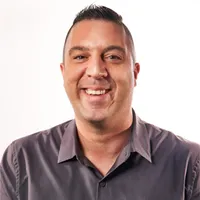
Billy Parsons
Chief Human Resources Officer, Not specified in current role
The AI Trap: Why human HR is still your strongest asset.
Episode 350 · November 12, 2025 · 7:33
The AI Trap: Why human HR is still your strongest asset.
Key moments
In Billy's words
“I, I want to make sure that there's bench that's coming up through the ranks. And if we use AI, which I've seen, you know, dabbled with to replace a lot of the frontline HR staff, you're not going to have much of a bench in 10 years or 15 years that you really need.”
“sometimes you can't overcome, no matter your people, your platform, sometimes you can't overcome, you know, unfortunately operations just not going the direction you want, the revenue going where you want, and having to make cuts.”
“So if there was one platform, it would definitely evolve around communication, especially for culture building, engagement, making sure the right information reaches the right people. The same way every time so that everybody gets the same message.”
Transcript
Read the transcript1,144 words
IntroWelcome to the Built by People podcast, where we highlight the stories and insights of the world's top HR leaders. Now, let's Let's get started and welcome our next guest.
HostI'm excited to welcome Billy Parsons to the Build by People podcast. Thanks so much for joining us today, Billy.
GuestI appreciate the invite.
HostAbsolutely. Hey, as a starting question, I always love to open and just ask if you can share more about your career journey and what got you here today.
GuestYeah, I, well, I've spent the last 15 years in healthcare from hospitals, acute care, to specialized care for dermatology, eye care, et cetera. Before then, I spent 12 years working for the Sears Holdings Company. That was a great journey, part of the retail space. And before that, I worked for Motorola as a field service technician. I drove around in a little van and fixed radios, cop cars, things like that. Before that, I was in the Navy for 6 years at a, as a submarine radioman. So that's kind of the encapsulated You know, backwards chronology.
HostI love it. That's awesome. Well, you know, if you're looking forward or looking backwards, doesn't matter. What's the biggest challenge that you feel like HR is currently facing?
GuestI think, you know, AI is always out there, but actually one of the things I'm concerned about is the people aspect of AI. There's going to be a huge opportunity, but also temptation to take people out of the equation as much as possible. And as far as the HR space, I, I want to make sure that there's bench that's coming up through the ranks. And if we use AI, which I've seen, you know, dabbled with to replace a lot of the frontline HR staff, you're not going to have much of a bench in 10 years or 15 years that you really need. I think that's something that really is concerning, making sure that the AI space is ran by people, adjusted by people, and really guarded by those same people. If there's one thing, it would definitely be that.
HostYeah, that makes a lot of sense. Along those lines, and it might be a very similar answer, but what's keeping you up at night? Or maybe what's a recent situation where things broke down in your role, whether it was benefits or engagement, turnover, compliance, that you kind of had to figure out?
GuestWell, actually my last organization, they had, we had a lot of financial impact, negative fourth quarter, negative first quarter. And although the HR team I felt was top-notch, really the greatest HR team I ever had, sometimes you can't overcome, no matter your people, your platform, sometimes you can't overcome, you know, unfortunately operations just not going the direction you want, the revenue going where you want, and having to make cuts. Gets changes to your offerings outside of your own department, and we're all the same team. We're all on the same team no matter what. And we, uh, especially HR is there to support those people in the field. But when you have a really great platform, everything is running like a top, and it still isn't quite enough. Although, you know, recruiting, sourcing, selection, and all that goes great, filling the needs, low time to fill,, you know, reducing turnover, all that. But sometimes in the operational space of an organization, um, is really the captured space. And that is something I came up against in my last opportunity that eventually led to me leaving the organization.
HostOkay. Yeah, it makes sense. As you look about maybe, you know, this, this past HR team or past teams that you've been on. Which tools or partners were most critical to you? And if I could wave a magic wand for you and fix one system or process that you found over your career, what would it be?
GuestThat's a good question because each organization was always different. There was always a gap that needed to be met. In my previous organization, I'd have to say it was the communication structure. It was fixed by the time I left, but when I got there, it was very disjointed. The different channels available across the company were wide and varied between, you know, lack of domains, domain access for email, or a lack of an intranet, or the lack of a communication structure, communication plan, a solidified employee value proposition, all suffered because there was no initial communication structure that was meeting all the needs. And in the organization before that, communication was very key as well. I thought the marketing team did a really good job in that communication space, but it still didn't meet all the needs. So if there was one platform, it would definitely evolve around communication, especially for culture building, engagement, making sure the right information reaches the right people. The same way every time so that everybody gets the same message. It would have to evolve around that, and that can always improve, especially from a leadership standpoint, because leaders may have great ideas and everybody has the context inside the executive leadership team meetings, but sometimes that doesn't cascade effectively. As a matter of fact, most of the time it does not cascade effectively down through the ranks. And communication is super key to making sure that great ideas are not only funneled down to the, to the ranks, all the way to the frontline folks, but also with the same passion, the same understanding, the same, again, context that everyone making the decisions has. And sometimes that unfortunately doesn't happen. It gets about middle management and the passion and the understanding and the, and the needs for the changes don't make it all the way down, and there's a huge disconnect there.
HostWell, hey, we've reached the ending part of our session today. What parting advice would you like to share with our community?
GuestThat no matter where you go, no matter what you do, be true to yourself, speak up, and always be for the benefit of the organization. Essentially, if the team loses, you lose too. From an HR standpoint, I thoroughly believe one of the greatest things that HR does is it solves problems for people so that they can actually focus on the work they were hired to do. So I like to take solutions and problems out of people's laps, uh, work it for them and free them up so that they can do what their passion allows them to do.
HostI love that. Well, Billy, thank you so much for joining us today on the Built by People podcast. It was a pleasure having you.
GuestI appreciate the invite once again, and, um, you know, really appreciate the opportunity. Absolutely.
More conversations like this