Episode 267 · July 8, 2025 · 13:02
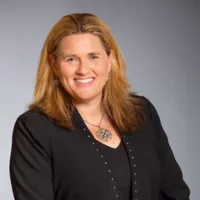
Beth Ley
Sr. Director Global Rewards, Auctane
The 'Grass' Theory of Leadership: How HR Builds Unshakeable, Mission-Driven Teams
Episode 267 · July 8, 2025 · 13:02
The 'Grass' Theory of Leadership: How HR Builds Unshakeable, Mission-Driven Teams
Key moments
In Beth's words
“So many people during that time were paralyzed. I was like, I'm just going to gather as much information as I can and I'm going to act. And kind of that ability to think quick, act fast has really helped me throughout my career.”
“What you do is never going to be as important as who you were when you were doing it.”
“I am creating a career so that I can be the grass. I'm the bottom. I am the foundation at which my team grows and has stability and has a healthy foundation.”
Transcript
Read the transcript2,226 words
HostWelcome to the Built by People podcast, where we share the stories and insights of the world's top HR leaders. Join us as we dive deep into the minds of HR executives, uncovering their strategies, challenges, and triumphs in shaping today's workforce. I'm excited to welcome Beth to the Built by People podcast. Beth, thank you so much for joining us today. And as a starting question, I always love to ask if you could share a little bit more about your career journey.
GuestYeah, thanks so much for having me today. I really appreciate the opportunity to be here. So I am in my 17th year as an HR professional. I grew up in Kentucky, went to college and graduate school there, and actually went to school for industrial organizational psychology. So I knew pretty early on HR was going to be my path. I was ending graduate school and did spring break in Dallas, and a friend said, why don't you pop down to Austin while you're in Dallas? It's within driving distance. And signed a lease while I was here and moved back 3 months later and honestly haven't looked back. It's one of the best spontaneous decisions I've ever made. My first role was for a venture capitalist here in Austin, providing very basic HR training to some of his investments. But I found myself traveling a lot to do that and was like, I moved to Austin to be in Austin. So after about a year and a half of that role, I started looking for a uniquely Austin company and found that in Wheatsville Food Co-op. So it was a locally owned, locally operated grocery store that went to a lot of local farmers for the produce and meat selection. I was like, you can't get much more Austin than this. And I actually spent 6 years at Wheatsville, grew that role from an HR coordinator role. When I left 6 years later, was an HR manager there and had a team of 2 and had opened one additional location after 30 years of being a one-location business. I saw the job opening at Kendra Scott, hopefully a familiar name to a lot of folks. Kendra Scott is a very philanthropic company known for jewelry design and just really spoke to me both on a personal level, a professional level, and it was a job I had to have. So, I remember when I saw the opening for the benefits and compensation manager role, I couriered over champagne and cookies to the office. I did a handwritten card and that got me an interview. And in that interview I was like, I've opened a location. And after I got the role at Kinderscout, we opened 20 locations that first year. So I definitely learned a lot about scale in that role. And for every year, for 7 years while I was there, we opened between 15 and 20 locations. When I started, we were under 15 and when I left, we were over 100. So just amazing growth opportunity, both professionally and personally. When I left that role, I was the vice president of total rewards and also had taken on the HR business partner side of things. So just an amazing opportunity. From there, I went to a startup. I was like, I've done this once, let's do it again. And I went to Removery, which is a very niche business. It offers tattoo removal services, so laser services. And really felt my groove there. I knew hospitality, I knew giving good service and creating experiences in a location. And so I led the HR team there for a year and a half. And then a former coworker from Kinder Scott reached out to me about the role I'm in today with Octane. I hadn't done tech, and Austin is known as a little mini Silicon Valley. I was like, I really should have some tech experience. Octane is a shipping and logistics company. We're the parent company of multiple brands. ShipStation, Stamps.com is one of the longest running brands, and in Europe, MetaPack Link. I really am interested in this role because I want to learn tech and I want to learn global, and we operate in 12 countries. And so I've been here now for a year and have absolutely loved the experience.
HostBeth, can you share with us a specific challenge you faced in balancing data-driven decision-making while maintaining the human element in HR?
GuestYeah, for sure. I think I— there was a specific moment. I always think about moments of impact. You can feel the air shift around you, right, when you have one of those moments. And for me, that move from being a director-level thought partner to a vice president-level thought partner came during the pandemic. I'd found myself de facto leading the Kendra Scott HR team at the time.. And the question that came in is, we're about to close all of our stores. How do— what do we do for our people? How do we pay our people? And so, of course, if we can all remember the chaos of that time, I was trying to get as much data as possible, as quickly as possible, navigating through a ton of ambiguity. And what I found was really my secret sauce is my ability to make a decision. So many people during that time were paralyzed. I was like, I'm just going to gather as much information as I can and I'm going to act. And kind of that ability to think quick, act fast has really helped me throughout my career. I think AI has for sure over the last couple of years allowed us to ask much better questions, more thoughtful questions, and to make smarter decisions. But ultimately, like a human still has to make the decision. We still have to make sure that we're doing the right thing. We're doing the thing that aligns with our company's mission and values. And then we have to be able to communicate it. We have to be able to manage it, action on it, operationalize the decision. And I think most importantly, like being humble when we were right and pivoting and admitting when we were wrong in that decision. And again, just moving quickly.
HostBeth, can you tell us about a time when you successfully elevated your personal brand as an HR professional?
GuestYeah, I feel strongly on this one. I think just like a company needs a clear mission and vision, we need them as people. And if we don't have that, like, what's our north star? What are we aiming for? How are we making decisions? And so I think just as important as it is to know a company's vision, people should also know that about you. They should know who you are. And your ways of working. And I think something I've learned, and it took me some time in my career to learn this, is what you do is never going to be as important as who you were when you were doing it. What kind of team member were you? How were you showing up? How are you giving credit and celebrating people's wins? And for me, I think it's okay to tell the world that. It's okay to have a strong LinkedIn and social presence. It's okay to celebrate your wins publicly. It's okay to nominate yourself for awards and be really proud when you win those awards. And I think I had a great testament the other day. We hired a new teammate here at OXANE, and he said, I feel like I already know you because you have a presence online. I know what you stand for. And so a month into his tenure here, I said, Am I who you expected based on what you saw? And he said, unequivocally, yes. Like, you lead with kindness. You can tell that you're philanthropic and that you really care about the team you're supporting. I was like, then great. I'm authentic to who I am online and everything is driving really well.
HostBeth, can you tell us about your leadership style and how that has evolved throughout your career?
GuestYeah, I definitely have learned a lot over the 17 years. I am not the leader I was when I started managing a team, that's for sure. And again, going back to that moment of impact, I think I really had a shift. Someone that had worked for me for 5 years resigned, and I didn't have a lot of turnover at Kendra Scott. Our teams were really tight, and I took a step back. I was like, man, she's been giving me her issues. She's been telling me what's not going well, and what she really needed was for me to roll up my sleeves and solve the problem. And from that point on, I really thought about my org chart as inverted. Like, I'm not up here at the top. I'm not climbing a career ladder to be the apex predator or the lion. I am creating a career so that I can be the grass. I'm the bottom. I am the foundation at which my team grows and has stability and has a healthy foundation. I want to be restorative for them. I want to be rooted for them. Committing to that shift has really helped me to see how to support others and change my yardstick. My yardstick for success is no longer what my title is, it's how well is my team doing in life and in career. When your team is thriving, you're also thriving. It's not a completely selfish task, but I think that really defined my leadership style is how can I continue to be the foundation for which others can grow and thrive.
HostBeth, can you share a story about how you've made a significant difference within the constraints of a profit-driven culture? What specific approaches did you use to maximize your impact with limited resources?
GuestYeah, so this is what I love about total rewards. Total rewards is very much a puzzle, or how I like to explain it to my teams is it's a pie. And we all have a limited pie. A pie is a circle, right? And how you slice the pie is really important. And how you use good data to think about how you're going to do that. And not everybody needs the same flavor of pie. Not everyone needs the same toppings depending on where they are in life. But if you're in a company that's going to be sustainable, you should have a limited pie. It shouldn't just keep going. And what I really found in my career is you hear a lot, you manage what you measure. I found you build what you budget, and having really great relationships with your finance leaders is incredibly important in HR. Understanding your business is obviously— and the needs of the business are incredibly important in HR. And I think earlier in my career, and sometimes in that startup mentality, you can just throw things, we need this and we need to do that and we should think about this, and that can really get overwhelming and be chaotic. And so I think Building what you budget, budgeting during actual budgeting season. I know it may sound crazy, but that's the time to do it and really being planful for your year. A really good example here at Octane is when I came in, we had a US-centric wellness program. Like, we're a global company. We operate in 12 countries. Why would we only have a wellness program for the US? And so by being really strategic and looking at vendors and different structures and thinking outside the box, We were able to use that same budget but expand that to our 500+ European coworkers and no negative impact, no takeaways for our US employees, all gives. And now we have something that's truly global rather than just US.
HostBets, what advice would you like to share with our community?
GuestI think for me, I have two main things I'd like to share. One is Don't chase title and money. Like, those things, when you work hard and you're authentic, they come. I think what you need to chase is really meaningful work with great people and companies whose mission and products excite you. It's really nice to drive into work every day excited about what you're doing. And I think those are the elements of what a happy career are built on. And then I think the next one is you can't do it alone. No one can do all of this work alone. But when you delegate to your team members, delegate wisely, delegate for their strengths, and delegate with time and resources. Giving someone something that's impossible to do in the amount of time that you have or with the resource constraints you have, that's not delegating for growth, that's passing the buck. And so I think thoughtful delegation is really important.
HostBeth, thanks so much for joining us today on the Built by People podcast.
GuestThank you so much. I appreciate the time.
More conversations like this