Episode 105 · February 25, 2025 · 14:37
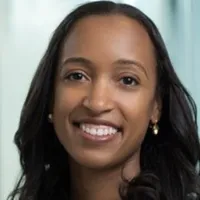
Andrea Alexander
CHRO, Coterra Energy
Stop Chasing Comp: Learning & Development is the Real Talent Magnet
Episode 105 · February 25, 2025 · 14:37
Stop Chasing Comp: Learning & Development is the Real Talent Magnet
Key moments
In Andrea's words
“I absolutely do believe that learning and development is more important than compensation when attracting and retaining individuals. Now, your compensation has to be at a certain level first, but at the end of the day, people stay places where they feel like they are learning more than they could. Anywhere else.”
“So, I wouldn't say that every company should look at the same 5 metrics when it comes to HR. First, I would say, well, what problem are you trying to solve? Now, let's think about what metrics you need to have in place in order to know how you're doing in that dimension.”
“One of the things that I learned in my first year of teaching is that no one wants to be a failure... And when I think about learning and development, my approach really has been, okay, what can I do for this group of individuals to get them excited about this thing that I want them to learn or the job that they're doing, and also make sure that they have the skills to do it. So it's the skill and the will.”
Transcript
Read the transcript2,472 words
HostWelcome to the Built by People podcast, where we share the stories and insights of the world's top HR leaders. Join us as we dive deep into the minds of HR executives, uncovering their strategies, challenges, and triumphs in shaping today's workforce. I'm excited to welcome Andrea to the Built By People podcast. Andrea, thank you so much for joining us. And as a starting question, I always love to ask if you could share a little bit more about your career journey.
GuestAbsolutely. I'm very excited to be here first, so thank you for having me. My career journey, it's so funny when I think about it, I'm like, where do I start? And I would actually start at my first job out of undergrad. So I went to the University of Pennsylvania Wharton School of Business, and instead of deciding to go into business after that, I decided to do Teach for America. So I taught high school math in New York City for 2 years, absolutely loved it. And decided to join a charter school after that for a year, really helping them start an afterschool program. And during that time, what I realized was I care about helping people grow and develop into the best version of themselves, whatever that may be. So I applied to business school and, uh, thought I would do the Broad Residency Program, which basically helps, um, individuals that have teaching experience become superintendents or similar, And then when I went to Harvard Business School, I realized I don't know if I actually wanna be a superintendent. I don't know what they actually do. So I decided to pivot a little bit and went into consulting. So I did my summer at McKinsey and Company in Atlanta. Absolutely loved it and decided that I would try the consulting route for a period of time. The funny thing is they actually put me on an ocean conservation study for as my first study, I think thinking that Andrea loves nonprofits. She loves kids. I care a little bit less about fish. I still care about fish, but it just doesn't drive me in the same way. And so that wasn't necessarily the best study for me, but it also made me realize what I do care about, and it is people and supporting people. And so my next project was actually at a hotel helping the housekeeping staff become more efficient. And it was amazing. I got to speak a little bit of Spanish. I was able to use my engineering way of thinking, although that's not my background, to improve operations. And I realized, okay, this is, this is my sweet spot. So I was there for 12 years, thought I would never leave. The pandemic happened, and I had this amazing opportunity to become the chief people officer for Rent the Runway. And it came to me because I was in a Facebook group with some HBS moms actually that where we shared advice on how to raise kids. One person said, why are we only talking about our kids? We are all professional women as well. We should share job opportunities. So we started a different Facebook group to share opportunities out that we learned about through headhunters. Um, and so the co-founder and CEO of Rent the Runway is an HBS classmate of mine. So she posted there one day, I'm looking for a chief people officer. Does anybody know anyone?, and I thought, I care about people. I don't necessarily have that traditional background that others may have, but let me throw my hat in the ring. And so I pinged her, and I'm so glad that I did because I was at Rent the Runway for 2 years, helped them go public, and really learned what it meant to be an executive, an HR executive, and realized that it's something that I want to do long-term. I was commuting from Houston to New York every week with 3 young daughters and eventually decided, I love this role, I love the company, but I need something that's more sustainable. And so I started looking for opportunities in Houston and ended up at Koterra Energy, uh, in my backyard. And so that's where I am today as the Chief HR Officer.
HostYou mentioned in the past that learning and development is more crucial than compensation for employee retention. Can you elaborate on how you've seen this play out in your experience?
GuestYeah, I absolutely do believe that learning and development is more important than compensation when attracting and retaining individuals. Now, your compensation has to be at a certain level first, but at the end of the day, people stay places where they feel like they are learning more than they could. Anywhere else, right? So, an extra 2 years here at Koterra, or an extra 2 years at McKinsey, or 2 years at Rent the Runway, even if I'm making a little bit less money, is going to set me up for more success in that next role. Or I feel like I am getting experiences here that I just could not get anywhere else. I think about my time at Rent the Runway, and I took them public. Not that many people can say that, and you can't really put value on that. And so when companies think only about compensation, I think that they are missing the mark. Really thinking through what does learning and development mean for each group of employees, each individual employee, what will make them feel like, you know what, this experience is second to none. That's where you really get retention, and also just excitement from employees.
HostI wanna switch gears and talk about metrics and data. I'm curious to get your perspective on what specific metrics or data points you found most valuable in driving strategic HR decision-making.
GuestYeah, so with a non-traditional HR background like I have, and one where I come from McKinsey, a very data-driven consulting firm. I like numbers. I also taught high school math. Math has always been my favorite. And so I like numbers, I like metrics, I like being able to demonstrate the impact of the work that I or my team or my company am doing. And one of the main metrics that as an HR individual or professional that you look at is just retention, right? So how many people are leaving different parts of the organization and are there any areas of the company where the retention or attrition is less favorable than the others and kind of focus in on there. But beyond that, it's important to look, it's important to think about what question are you trying to solve, and then what data would be helpful for that question. So, I wouldn't say that every company should look at the same 5 metrics when it comes to HR. First, I would say, well, what problem are you trying to solve? Now, let's think about what metrics you need to have in place in order to know how you're doing in that dimension. So, I would say one of the things that I looked at actually here at Cotera is when we have our parental leave. So we have a very unique parental leave policy where if you are the primary parent or the birthing parent, you get leave. And then if you are the secondary parent, then you also get leave, but it's a shorter period of time. And with that second leave, you actually get to choose if you want to get paid for a month or take a month of time. And you can do it in 2-week increments. And so this is, this is for both parents, whether you're the primary or secondary parent. My team was like, ah, you know, are we encouraging people to not take the, to not take the time by giving them the option of the money instead? And so you may have some hypotheses there. You may have some preferences in terms of what you think people should do. When I look at it, I want there to be no trend, right? Like, I want males and females to equally take the money or the time. I want different parts of the organization, BU, corporate, for there to not be this group of people always chooses the time, this group of people always chooses the money. Now, if, if the data did show that, that's not necessarily a bad thing. I just want to understand it., but for that question, we actually looked into it and we found that there's no trend there, right? Different people make different decisions for very different reasons. And that's the type of policy that we want, one that allows, um, people to show up the way that they want to as parents. So what I found is thinking first about what question do you wanna answer, and then what data will help you answer that question.
HostI'm curious, having worked across different regions and industries, how has your approach to employee development evolved over time?
GuestSo, it's interesting because as a consultant where you see lots of different industries, you start to see more commonalities than differences. And at the end of the day, one of the things that I learned in my first year of teaching is that no one wants to be a failure. So I was teaching high school math in, in New York City where kids were going through metal detectors every day, where people would say, you know, they didn't really wanna learn, but they showed up every day. And so it was our responsibility to make sure that they were successful as teachers. And when I think about learning and development, my approach really has been, okay, What, what can I do for this group of individuals to get them excited about this thing that I want them to learn or the job that they're doing, and also make sure that they have the skills to do it. So it's the skill and the will, the will to be like, yes, I want to do this. I believe I can do it. And the skills saying, I am equipped to be, to, to be able to do this. And over time, I think I've just honed in on the questions to ask people or observations and the importance of not assuming that you know what will motivate someone just because of their age, their sex, the industry that they're in, or anything else. You really do have to talk to people and ensure that there's a relationship between that employee and someone else, whether it's a best friend at work, whether it's their manager. We need to make sure we know what's on their mind. And we don't have a one-size-fits-all approach for
Hosteveryone. Andrea, I know that, uh, data has been a large part of your career, especially with that, uh, consultant background at McKinsey. What's your advice to HR leaders who are just beginning to build their data
Guestcapabilities? So I would first say get comfortable with Excel. That is the most basic version of analytics in my mind. And one that if you can at least start to think about, okay, what numbers should I look at? What do I want them to be? And you don't have to be a pro. You don't have to use all the shortcuts. Just simple math and like thinking through it is the right answer. If you're a little bit further along in your career when it comes to HR analytics, thinking about Spotfire or other tools like that to make the data visualization easier is definitely something that I would recommend. But honestly, the, the one piece of advice that I would give to everyone is to talk to analytics, other individuals that focus on analytics as the primary part of their day that aren't necessarily in HR. You will learn so much when talking to them about the problems that you're trying to solve or the HR analytics that you're trying to demonstrate by getting their point of view. Some people that haven't really thought about HR analytics, but think about general analytics as their day job. Are usually very intellectually curious around these metrics and a great thought partner, even if they can't see the data, because the data that we're working with is usually very confidential, but they can be very helpful in thinking through approaches and what really matters.
HostAndrea, how do you balance the human element of HR with the increasing, uh, focus on data?
GuestWell, I think the importance is it's very important to have both. So I like to start actually with a question and then go to the data and then confirm it or let additional questions arise by having the human element there. And sometimes it's actually vice versa where you're talking to someone and you're like, okay, this is interesting. I wanna dig more into this. Is this just that one person's point of view or, or something that's consistent across the organization? I think any HR team. Executive, or honestly any executive in general who focuses on only analytics without kind of confirming it based off of conversations or focus groups, or only makes decisions based off of what they hear in the hallway or water cooler talk. Either one of those is, uh, not the best way to go about things. It needs to be a balance.
HostAndrea, what parting advice would you like to share with our listeners?
GuestWell, I always like to remind people of my kind of non-traditional background and trajectory to get to where I am today. And I would just encourage everyone to make sure that you are challenged every day and you show up, um, as, as your best to demonstrate what you're capable of and have an idea of where it is that you want to end in your career, but also be very flexible about what that path looks like and be okay changing that endpoint. Because if I thought about, you know, that first day going into the classroom as a high school math teacher, that I would eventually be the chief HR officer of an energy company, I would've never made that, that link. But every step of my career, I have been challenged and I've been learning and I've enjoyed it. And it makes it feel like it's still work, to be clear, but it makes it feel like fun work. And that's what I hope for everyone.
HostAndrea, thank you so much for joining us on the Built by People podcast.
GuestThank you.
More conversations like this