What You Need to Know about Neurodiversity in the Workplace

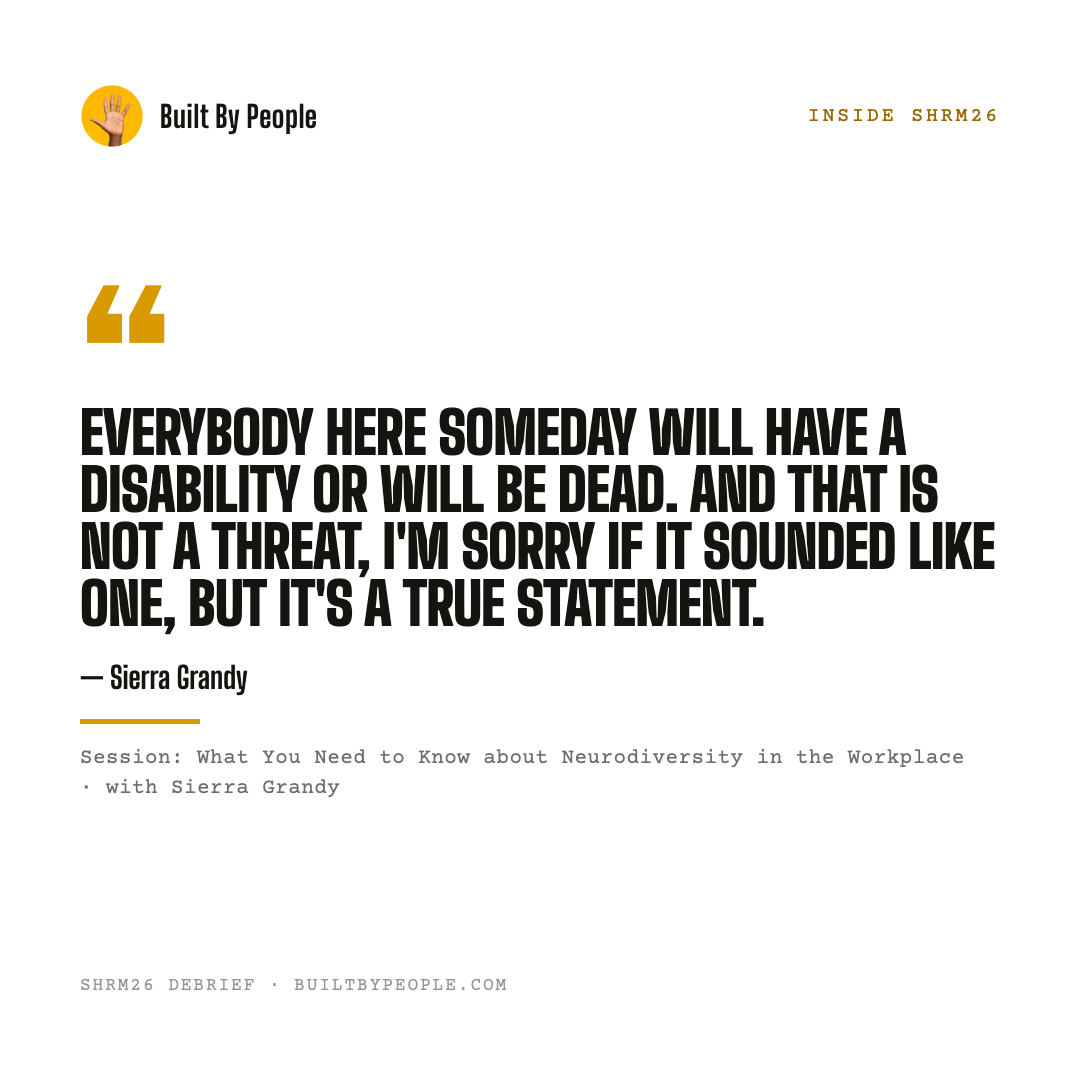
"Everybody here someday will have a disability or will be dead. And that is not a threat, I'm sorry if it sounded like one, but it's a true statement."
What it was about
Neurodiversity is a natural, valuable form of human variation, not a deficit to cure. HR and teams should focus on identifying individual strengths and weaknesses and building more accessible systems and communication practices, regardless of someone's neurotype or whether they formally disclose a disability.
By the numbers
Key notes
- Provide clear expectations, timelines, and definitions of success instead of relying on unspoken norms or assuming people 'just know' how things work.
- Emphasize outcomes and results over rigid processes or performative behaviors, and explicitly explain when and why performative behaviors (attire, email structure, format) actually matter.
- Discuss communication preferences explicitly with each team member: scheduled calls vs. random calls, written updates vs. verbal, what counts as urgent, and how long is acceptable before a response.
Take this back Monday
Ask each team member directly how they prefer to communicate: scheduled vs. random calls, written vs. verbal, and what counts as urgent.
Neurodiversity isn't a deficit to fix — it's natural brain variation, and clear expectations plus accessible defaults help every employee, not just disclosed ones.
Watch out for
- Assuming someone who appears to be struggling must be disabled, or assuming someone who isn't outwardly struggling isn't disabled — most disabilities are invisible.
- Treating 'ADHD is my superpower' as the whole story, which erases how genuinely disabling executive-function conditions can be and denies people the support they need.
- Making people go through a full, burdensome interactive/legal accommodation process for small, informal adjustments (e.g., to-do list tools, communication preferences) that could just be offered as accessible defaults.
Sierra Grandy is an attorney who holds leadership posts at the National Alliance on Mental Illness and the Minnesota Disability Bar Association.