Unwell at Work: Addressing the Health Challenges No One Talks About
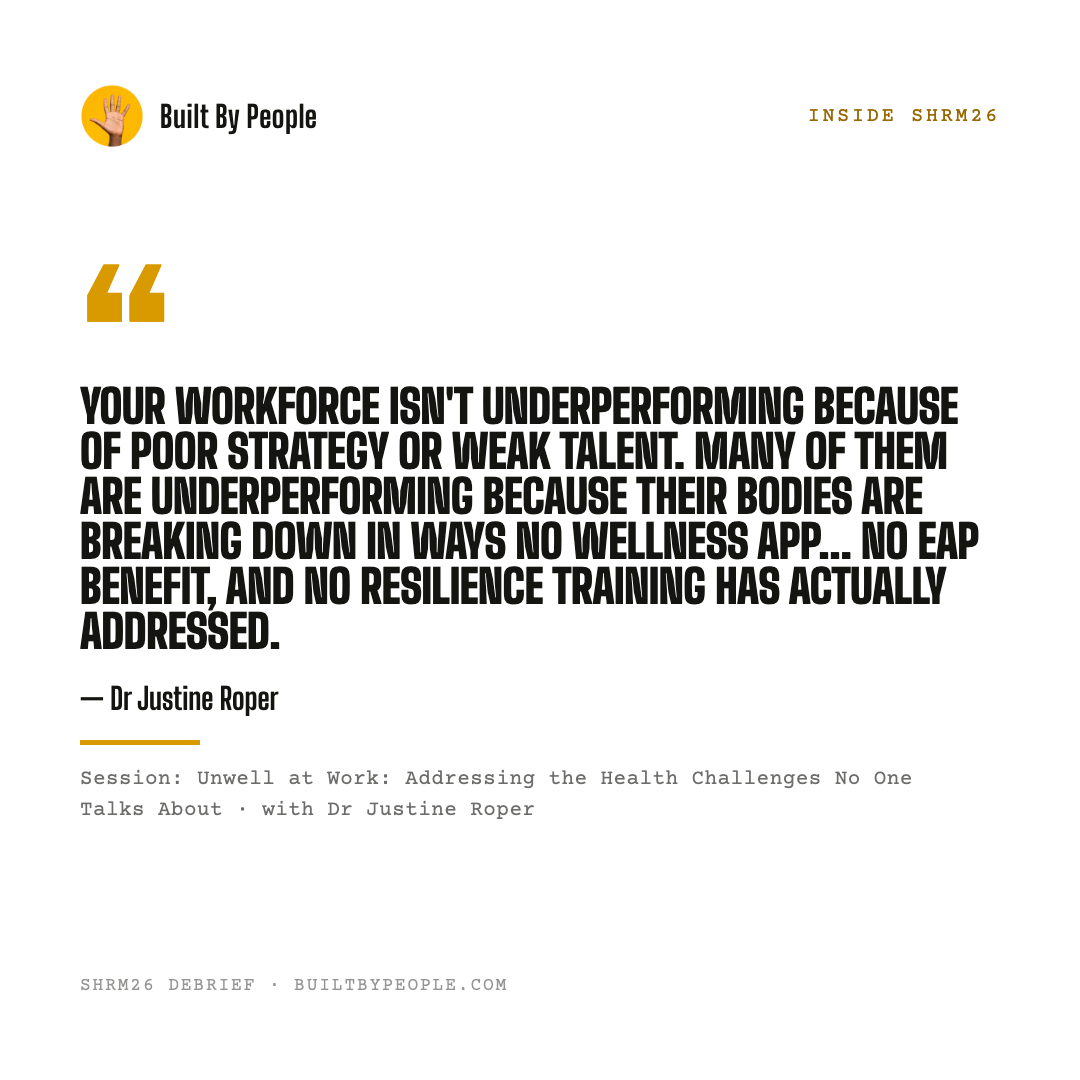
"Your workforce isn't underperforming because of poor strategy or weak talent. Many of them are underperforming because their bodies are breaking down in ways no wellness app... no EAP benefit, and no resilience training has actually addressed."
What it was about
Employee underperformance, absenteeism, and turnover are frequently mislabeled as talent or engagement problems. In reality they're often undiagnosed or undisclosed health issues, and workplaces hold far more power than they realize to either suppress or support disclosure and care.
By the numbers
Key notes
- Ask three audit questions of your workforce: what health conditions are affecting our people, which ones are people afraid to disclose, and what is non-disclosure costing us in dollars and time.
- Build a visible, printed organizational disclaimer stating that employees dealing with health conditions (menopause, prostate issues, chronic pain, etc.) are encouraged to discuss modifications with HR or managers.
- Train managers specifically on how to have disclosure conversations with empathy, building psychological safety so employees don't fear career penalty or embarrassment.
Take this back Monday
Post a visible HR notice inviting employees to discuss health-related work modifications (menopause, chronic pain, etc.) with managers confidentially.
40% of employees with chronic conditions delay care to avoid disrupting work, so our absenteeism and turnover numbers may really be undiagnosed health costs.
Watch out for
- Treating health-driven performance decline (absenteeism, forgetfulness, missed meetings) as a performance or engagement problem instead of a health problem.
- Building wellness programs and EAP benefits without first establishing psychological safety, so utilization stays low (e.g., only 3% platform usage).
- Assuming a hysterectomy or other procedure 'solves' a health issue rather than anticipating ongoing symptoms like leakage or pelvic pressure.
She's a certified marathon run coach who also runs a pelvic-floor therapy clinic, blending endurance training with women's health care.