The Recovery Friendly Workplace: A People-First Approach to Workforce Well-Being & Inclusive Culture
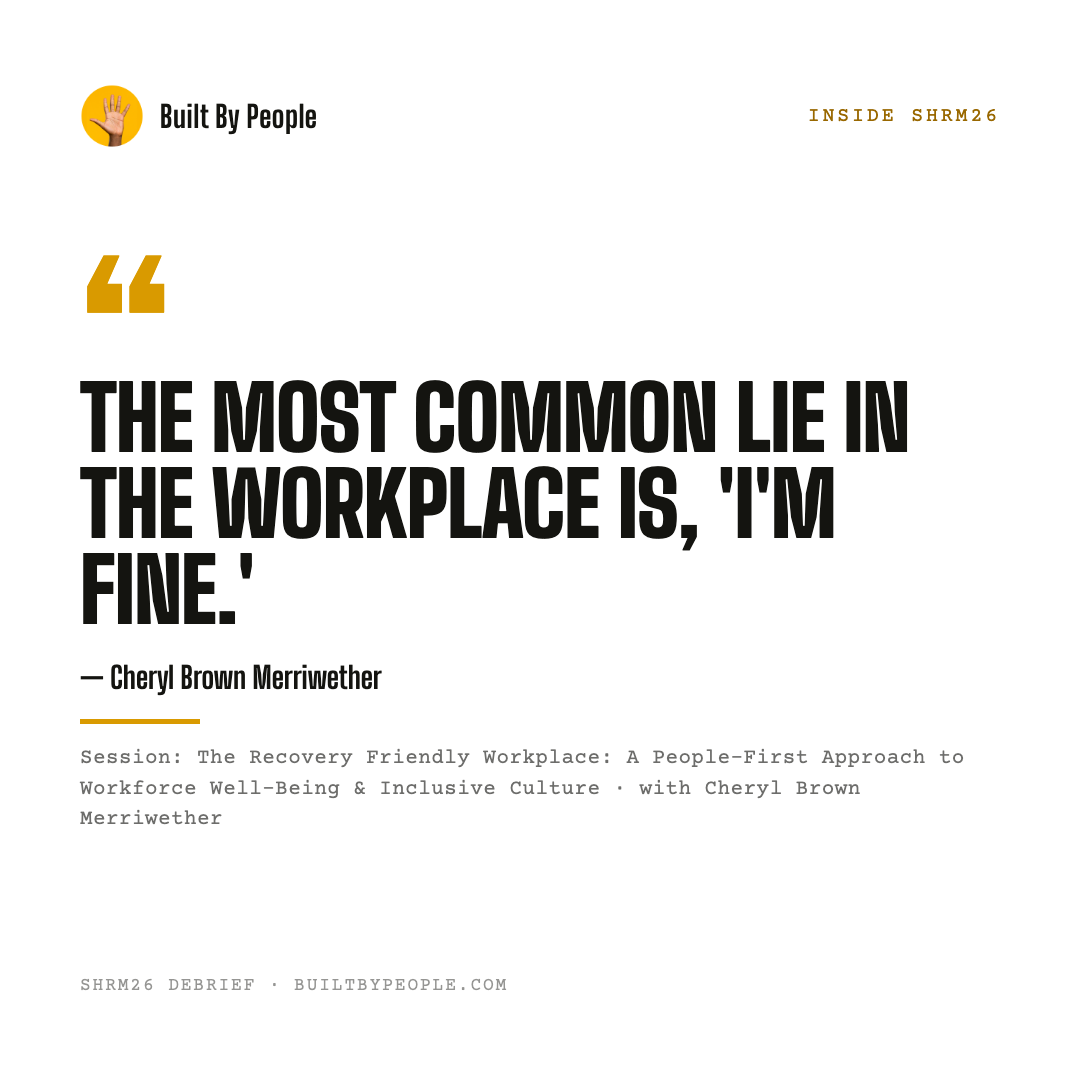
"The most common lie in the workplace is, 'I'm fine.'"
What it was about
Substance use disorder and mental health issues are widespread among working adults yet almost never addressed proactively by employers. Building a "recovery-friendly workplace" through psychological safety, changed language, and peer support can turn struggling employees into a grateful, loyal, high-retention workforce instead of a liability.
By the numbers
Key notes
- Genuinely check in on employees beyond a surface-level 'how are you': the most common lie in the workplace is 'I'm fine,' so create space for people to share what's really going on.
- Recognize that substance use disorder is classified as a mental health condition (comorbid in about 46% of cases) and should be addressed under existing mental health and wellness programs rather than treated as a separate compliance issue.
- Build a business case using free calculators (e.g., National Safety Council's mental health and substance use calculators) that quantify the cost of absenteeism, turnover, and incidents tied to behavioral health issues, since C-suite buy-in requires data.
Take this back Monday
Swap one scripted 'how are you' check-in per team for a real one, and use 'use disorder' instead of stigmatizing language.
75% of people who meet the clinical definition of addiction are working today, so recovery support belongs in our wellness strategy, not just compliance.
Watch out for
- Waiting for a critical incident or 'reasonable suspicion' before engaging, instead of proactively supporting recovery and well-being.
- Assuming EAP programs solve the problem: only 3-10% of employees with access actually use EAP, and many misunderstand what it's for.
- Trying to identify addiction by signs and symptoms, which the speaker says is unreliable and often leads to misjudging normal tiredness or personal struggles as something else.
She holds six credentials (SHRM-SCP, SPHR, CM, CRSS, CPRC, MHR) and once ran executive HR at AT&T, a Fortune 100 company.