The Missing Middle of Leadership
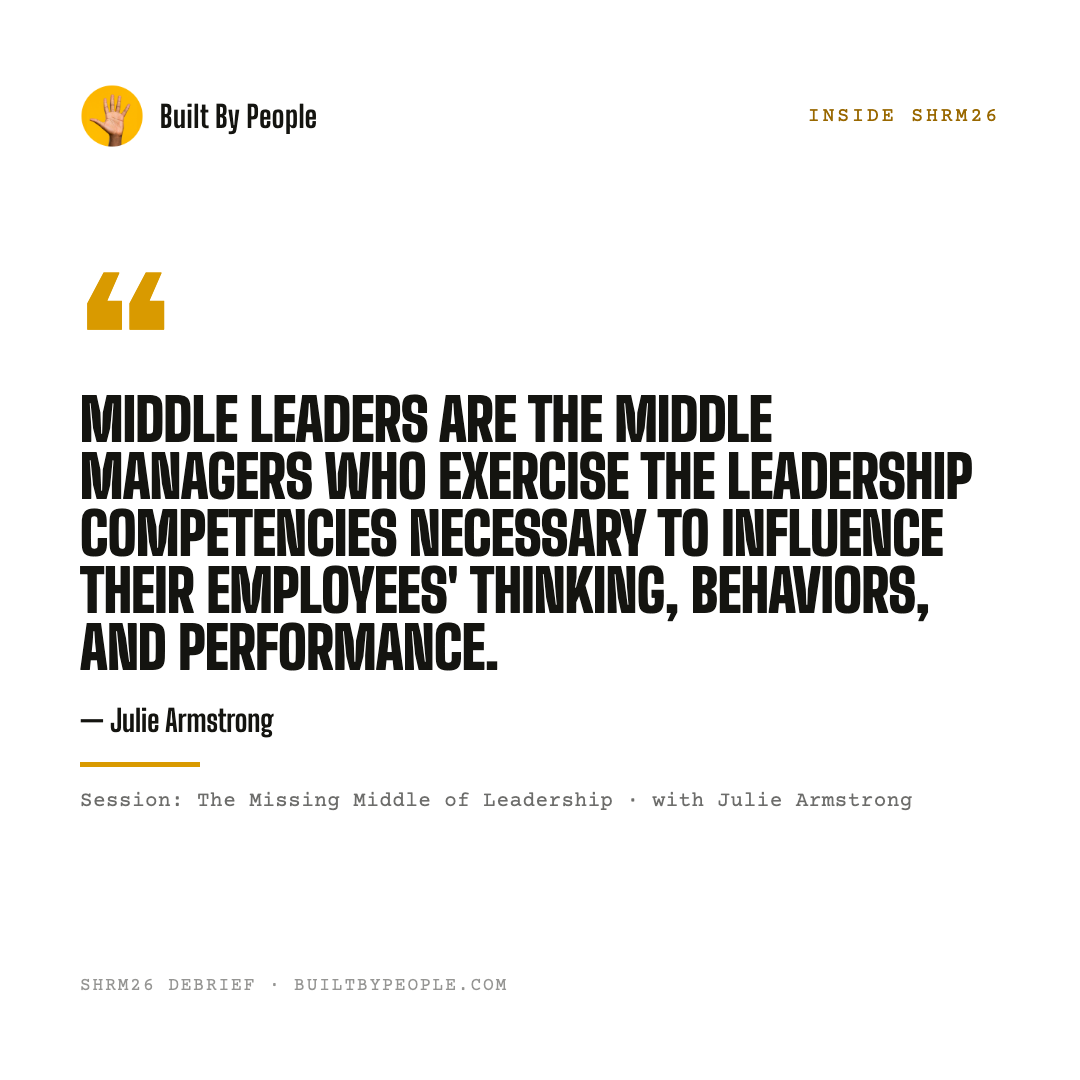
"Middle leaders are the middle managers who exercise the leadership competencies necessary to influence their employees' thinking, behaviors, and performance."
What it was about
Middle leaders make up 50-60% of an organization's leadership hierarchy and sit at the hinge between strategy and operations, yet they receive almost no tailored leadership development compared to executives and senior leaders, which drives communication breakdown, stalled change, and inconsistent culture.
By the numbers
Key notes
- Define middle leadership explicitly for your organization: middle managers who exercise the leadership competencies necessary to influence their employees' thinking, behaviors, and performance.
- Choose 5-8 leadership competencies (from the people, management, strategy, character, and followership categories) that would create the greatest positive impact if developed consistently in your organization.
- Identify and address the top barriers to middle leader effectiveness: lack of access/time with senior leaders, role confusion, feeling stretched between competing priorities, and lack of leadership support.
Take this back Monday
List the 5-8 leadership competencies you actually want from your middle managers, so they stop guessing what's expected.
Half our leadership hierarchy is middle managers, and they get almost no tailored development while executives get most of the investment.
Watch out for
- Promoting people into their first management role because they were excellent individual contributors, not because they were identified and developed as leaders.
- Pouring leadership development investment into executives and senior leaders and hoping it trickles down to middle managers.
- Treating 'communication' as a single competency to teach, when it's too broad to be useful — it should be broken into listening, coaching, asking questions, collaborative problem-solving, psychological safety, and emotional intelligence.
She invented her own trademarked leadership model, the 3H Leadership™ framework (Head, Heart, Hands).