The Hidden ROI of Mental Health: Building Recovery-Ready Workplaces That Retain and Revitalize Talent

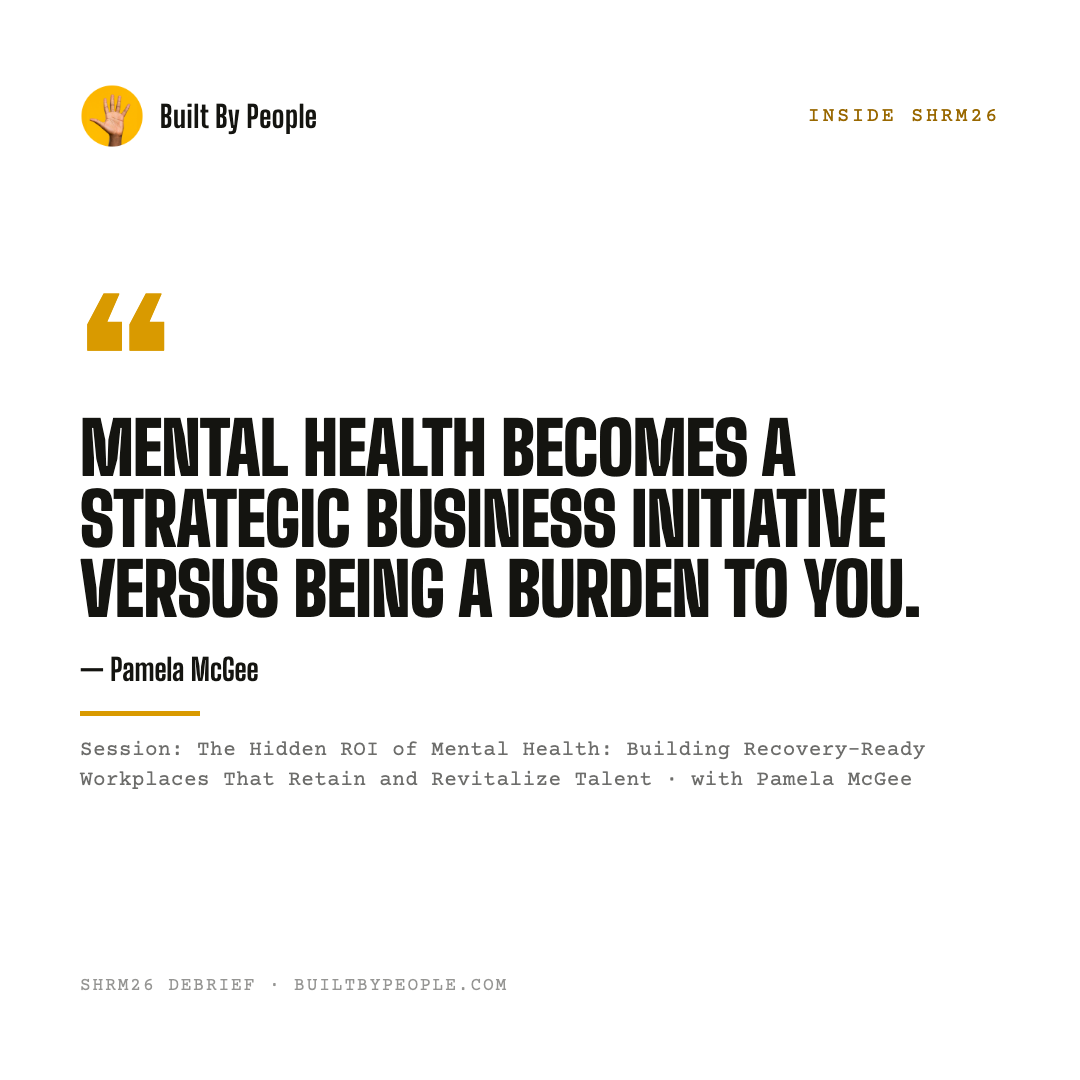
"Mental health becomes a strategic business initiative versus being a burden to you."
What it was about
Mental health and substance use disorders are already present in every workplace at scale. HR can turn a recovery-ready workplace, built on leadership training, visible EAP, psychological safety, prevention, and peer support, into a measurable business case that reduces absenteeism, turnover, and healthcare costs.
By the numbers
Key notes
- Make EAP visible year-round instead of only at open enrollment — mention it in newsletters, wellness fairs, and quarterly benefits communications, not just a flyer buried in the break room.
- Train first-line managers on a four-R framework: recognize, respond (with empathy, not assumptions), and refer employees to HR/EAP rather than trying to diagnose or handle it themselves.
- Offer to sit with an employee while they make their first EAP call instead of just handing them the phone number, since most employees won't call on their own.
Take this back Monday
Add EAP details to next week's newsletter and offer to sit with any employee while they make their first EAP call.
A recovery-ready workplace with visible EAP and trained managers can cut absenteeism 28% and turnover 41% — it's a business case, not just a benefit.
Watch out for
- Treating EAP as a compliance checkbox rather than an actively promoted, well-utilized benefit — most EAPs only cover 3-6 sessions and employees are left with nowhere to go after that.
- Jumping straight to policy enforcement and disciplinary documentation when an employee's performance changes, instead of having a conversation first.
- Running annual engagement/wellness surveys and never acting on the results, which employees notice and stop trusting.
Before becoming an HR executive and Certified DiSC Facilitator, Pamela McGee served as a U.S. Air Force veteran.