The Hidden Cost of Pharmacy Benefits: How HR Leaders Can Unlock 30–40% Savings Without Disrupting Employee Care
 & Eric Papp
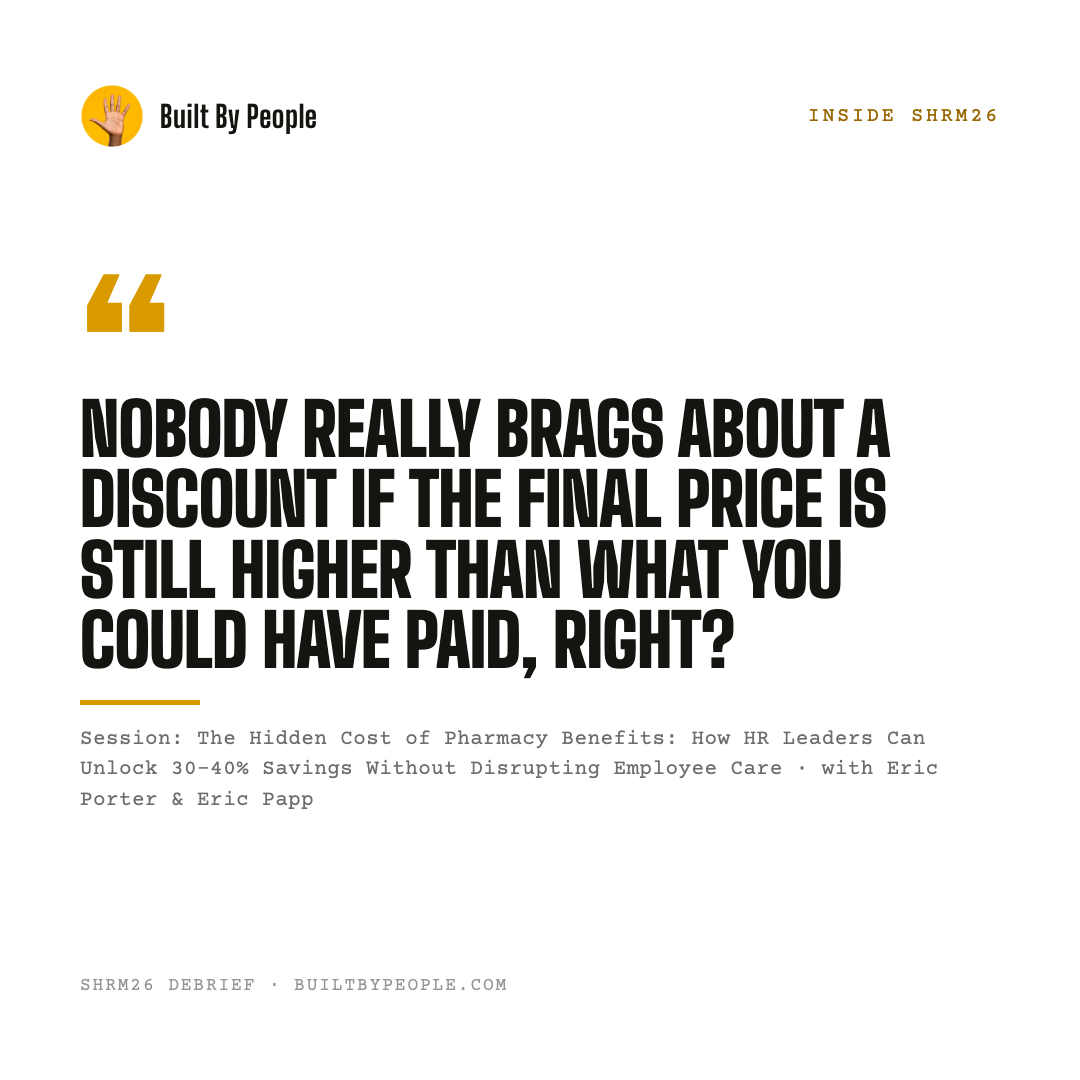
"Nobody really brags about a discount if the final price is still higher than what you could have paid, right?"
What it was about
Legacy pharmacy benefit managers (PBMs) hide profit in spread pricing, opaque rebates, and vertical integration, but employers can unlock 30-40% pharmacy savings by moving to a transparent, pass-through PBM model without disrupting most employees' care.
By the numbers
Key notes
- Calculate your true pharmacy cost using PMPM (per member per month): total annual pharmacy spend divided by members divided by 12. Compare it to the legacy PBM average of about $116 PMPM versus a pass-through PBM average of about $84 PMPM.
- Request your last 12 months of pharmacy claims data (or at minimum the top 25-50 highest-cost drugs) from your broker or PBM, since it is your company's data and legacy PBMs sometimes resist sharing it.
- Review your PBM contract for red flags: spread pricing, opaque rebates or rebate guarantees, conflicted ownership/vertical integration, weak audit rights, and lock-in penalties for early termination.
Take this back Monday
Request last 12 months of pharmacy claims data from your broker/PBM to see the true PMPM cost driving your renewal.
We're likely overpaying for pharmacy through spread pricing and rebate guarantees, and a pass-through PBM could cut costs 30-40% without disrupting most employees' care.
Watch out for
- Treating pharmacy benefits as a 'set it and forget it, look at it once a year' issue instead of an ongoing bottom-line cost issue.
- Assuming rebates and discounts are automatically a good deal without checking the actual net cost of the drug (the 'Publix milk' analogy: a 50%-off $14 item is still worse than an always-$5 item elsewhere).
- Signing multi-year (e.g., three-year) PBM contracts that look good upfront but lock the employer in as pricing dynamics change.
Eric Papp is a published author of two leadership books and has personally trained thousands of managers across North America.