The EX - Moments That Matter: Designing Interactions That Drive Trust and Belonging

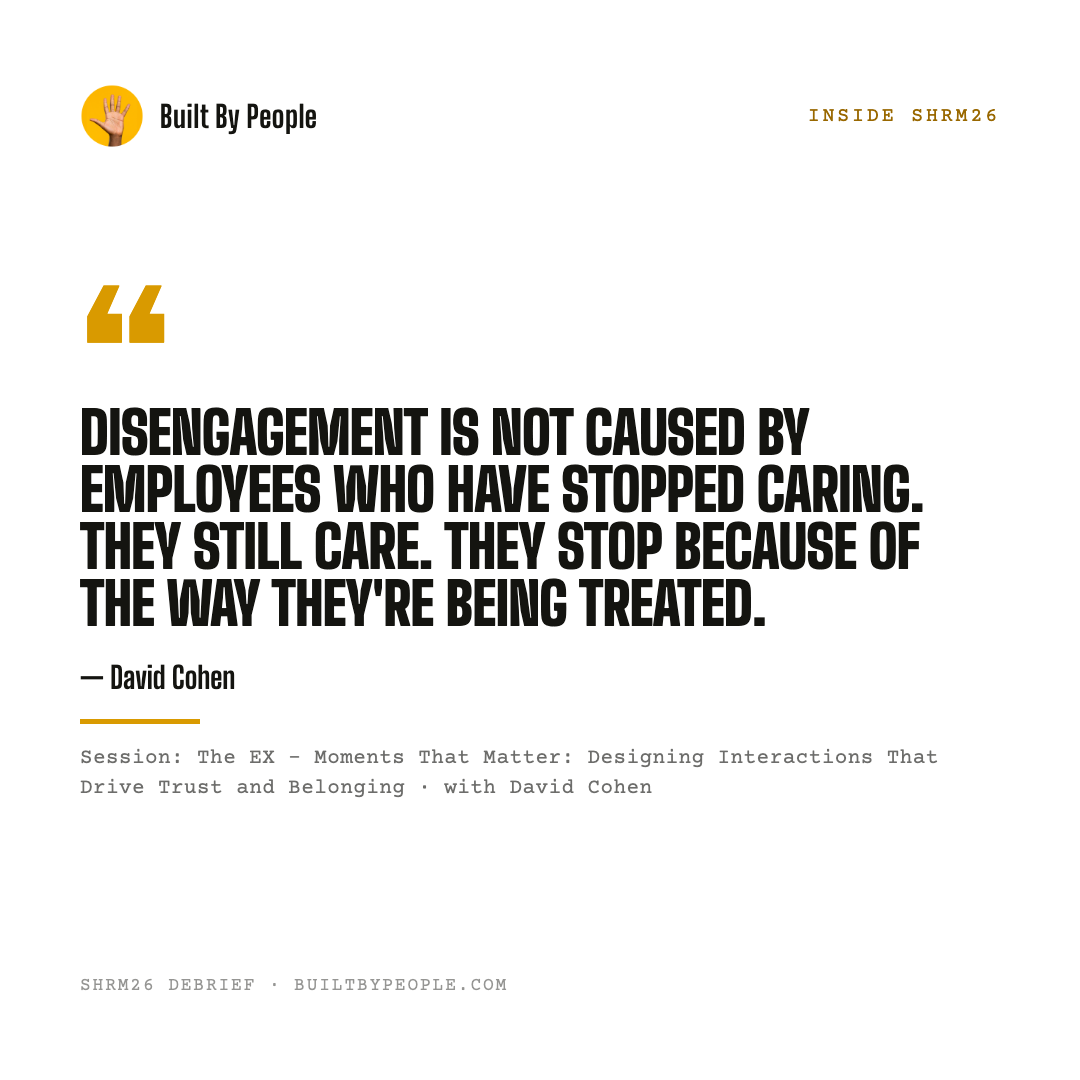
"Disengagement is not caused by employees who have stopped caring. They still care. They stop because of the way they're being treated."
What it was about
Employee engagement surveys are a flawed, manipulable snapshot in time. The real driver of retention is the accumulated experience of moments: hiring, onboarding, feedback, crises, exit. Measure that experience against a pyramid of hygiene, growth, meaning, connection, and trust/dignity, built on values that are lived, not aspirational.
By the numbers
Key notes
- Replace annual employee engagement surveys with ongoing 'employee experience' measurement (anecdotal, values-focused) because engagement surveys are a manipulable one-day snapshot, not an accurate movie of the year.
- Conduct stay interviews within the first 30 days of employment, before the 45-day point at which most people mentally decide to leave. Do it again at 30-90 days and again at one year, run by the recruiter or another manager, never the employee's direct manager.
- Define organizational values behaviorally through 'corporate legends' (real stories of values-driven decisions during a crisis) rather than Hallmark-card definitions, and hold managers accountable to those specific behaviors.
Take this back Monday
Schedule a 30-day stay interview for your newest hire, run by a recruiter or peer manager — never their direct boss.
Engagement surveys are a snapshot; retention is driven by moments of trust, so we're shifting to ongoing stay interviews instead.
Watch out for
- Treating employee engagement survey results as reliable data, when they are a manipulable snapshot that can be skewed by union negotiations, manager self-interest, or timing.
- Letting exit interviews be conducted by HR on the employee's last day, which produces only polite, non-actionable feedback because departing employees don't want to burn bridges.
- Cutting learning and development budgets first during downturns, even though lack of growth/advancement is the number one reason employees say they leave.
David Cohen has been ranked among the Global Guru's Top 30 in Organizational Culture for five consecutive years.