The Benefit That Quietly Shapes How Work Gets Done
 & Hayley Sprague, OD
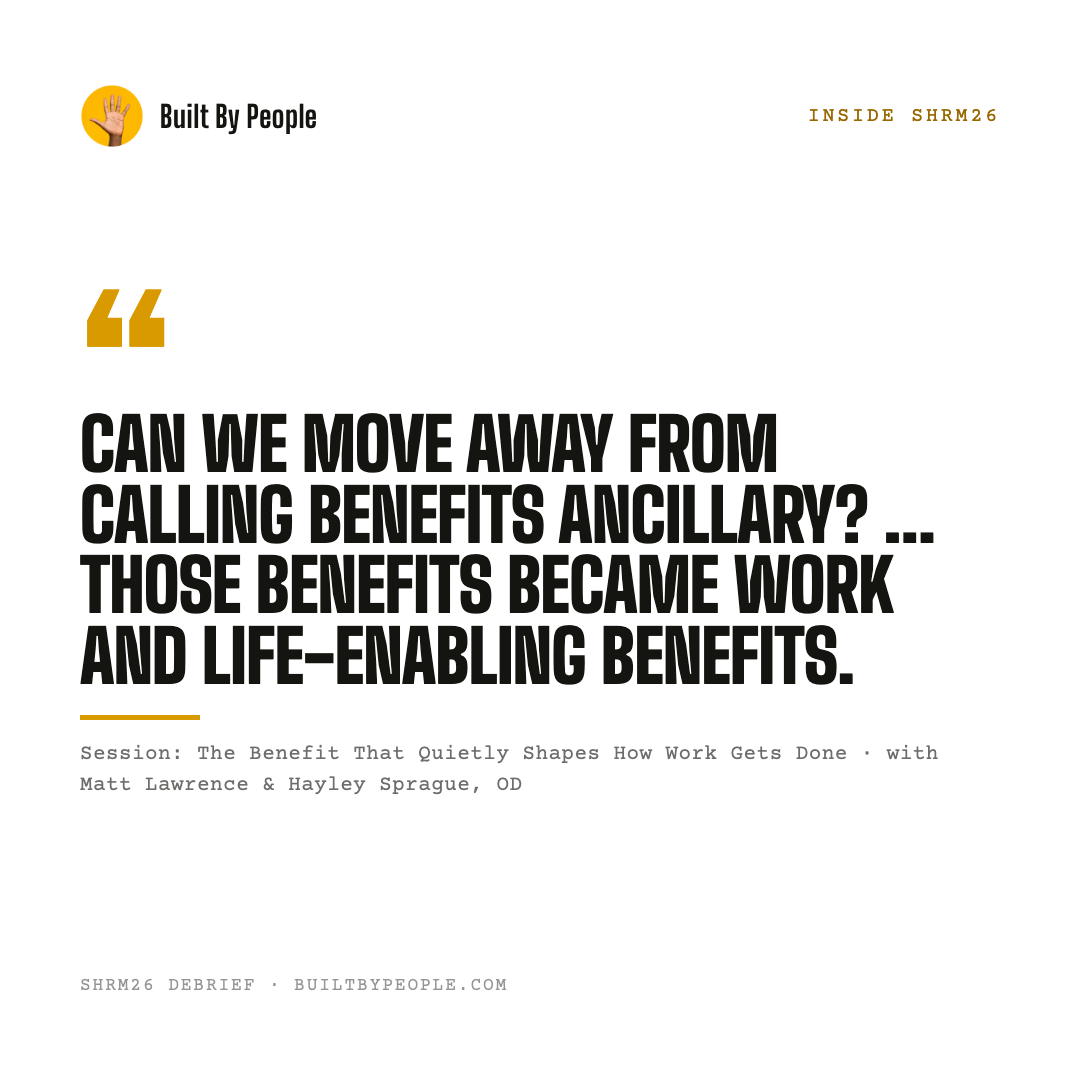
"Can we move away from calling benefits ancillary? ... Those benefits became work and life-enabling benefits."
What it was about
Vision benefits are widely misunderstood as a commoditized, low-value perk for glasses, but eye exams detect early signs of over 270 systemic health conditions and untreated eye issues cost the workplace billions in lost productivity, so HR should reframe and communicate vision care as a serious, work-and-life-enabling benefit rather than an ancillary one.
By the numbers
Key notes
- Reframe vision and other supplemental benefits as 'work and life-enabling benefits' instead of 'ancillary benefits' when communicating with employees and leadership.
- Communicate benefit information multiple times through multiple channels, the same way parents repeat important messages to teenagers, rather than assuming one announcement is enough.
- Encourage optometrist-led ergonomic assessments of workstations, checking monitor height (just below eye level) and monitor distance (20 to 26 inches from the eye).
Take this back Monday
Stock preservative-free artificial tears in break rooms and post the 20/20/20 rule near every monitor.
Vision benefits aren't just glasses — eye exams catch signs of 270+ health conditions, so we should call them work-and-life-enabling, not ancillary.
Watch out for
- Treating vision benefits as a commoditized product where all plans are basically the same and not worth evaluating closely.
- Assuming an eye exam is only necessary when someone has blurry vision or a noticeable symptom, rather than as a proactive annual health check.
- Presenting vision coverage as a purely voluntary, optional benefit, which the speaker says correlates with dramatically lower enrollment and utilization.
Before becoming a past president of the Delaware Optometric Association, Dr. Sprague completed a residency in corneal disease and contact lenses.