Taking Back HR: A Call to Courage

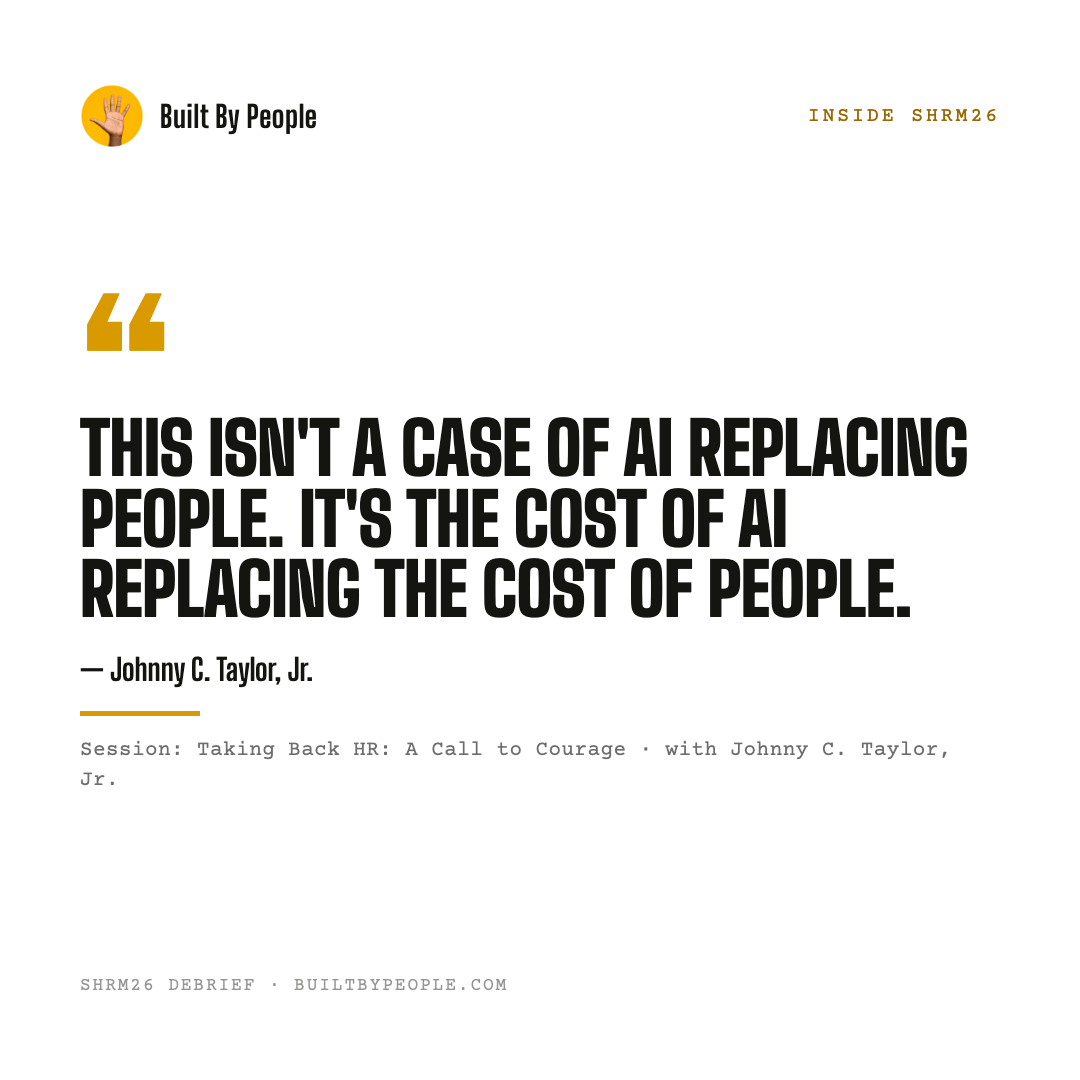
"This isn't a case of AI replacing people. It's the cost of AI replacing the cost of people."
What it was about
HR's business credibility is eroding as CEOs carve up and eliminate HR functions in the AI era. HR professionals must evolve from experts on people alone into experts on work itself, and practice courage to reclaim the profession's value and future.
By the numbers
Key notes
- Stop over-indexing on employee happiness metrics like engagement scores and Glassdoor reviews, and instead be able to explain the value and ROI of every employee to the business.
- Actively listen to your internal customer (the CEO and other business leaders), not just to employees through surveys, since the CEO is HR's critical customer.
- Become an expert on work itself, not just people: understand how work gets done, by whom, and with what tools, so HR can architect solutions to any business problem.
Take this back Monday
Pull one flight-risk employee's data and outline the specific retention action you'd take, instead of just checking their engagement score.
SHRM's HRX research found a roughly $62,000 revenue gain per employee per year when HR maturity improves — HR isn't a cost center, it's a revenue lever.
Watch out for
- Justifying HR's value through narratives, surveys, and activity reports instead of hard business-performance data.
- Focusing solely on people and employee sentiment while neglecting to understand and own 'work' itself as a discipline.
- Failing to listen to CEOs and other business leaders as seriously as HR listens to employees.
Before leading SHRM, he was an executive at Blockbuster Entertainment Group and Paramount Pictures, and now writes a weekly USA Today column called "Ask Johnny."