SHRM26 Debrief · AI, Data & Tech · #2514
SHRM Tech: A Peer Data-Driven Approach to HR Technology Evaluation and Selection
with Kenny Pyle
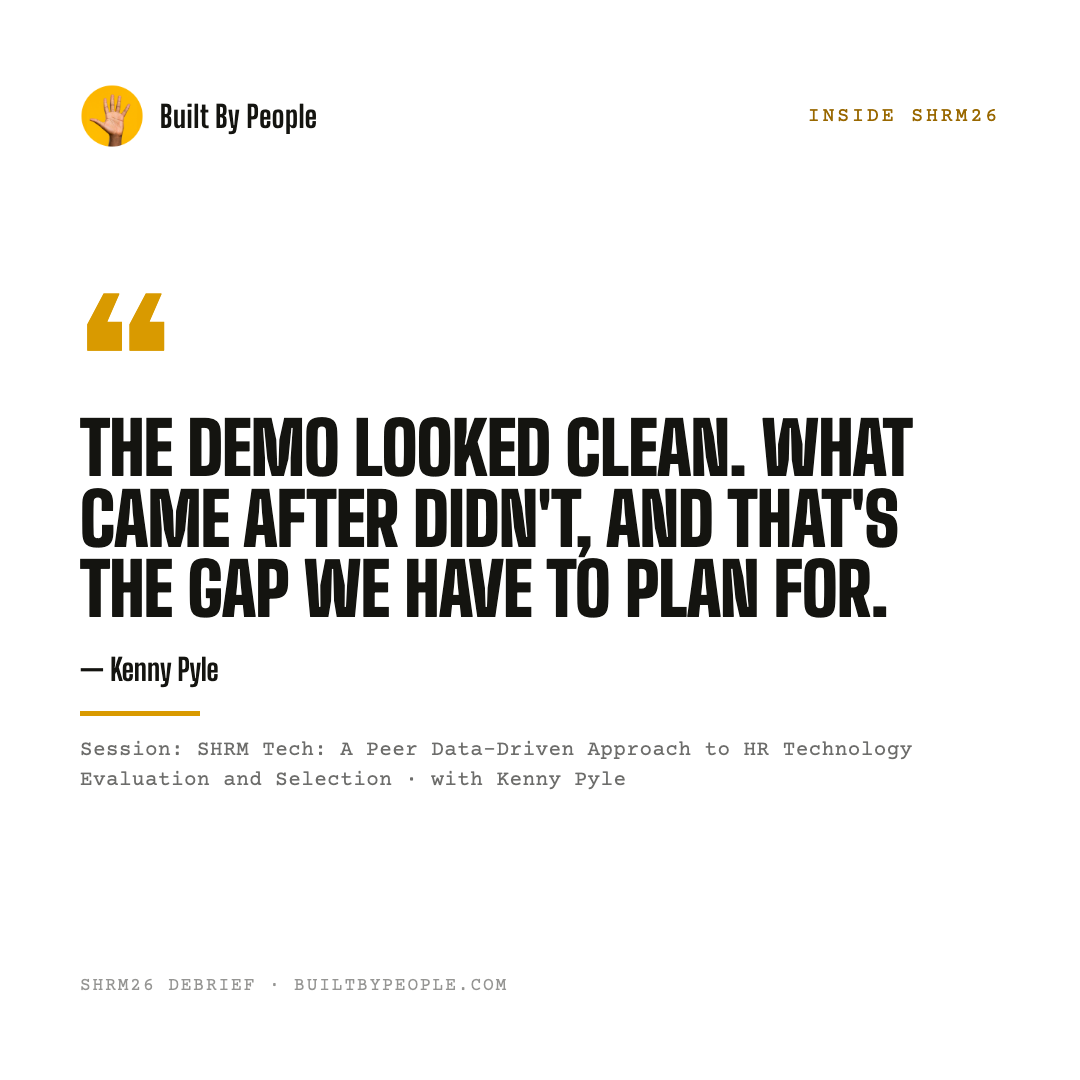
"The demo looked clean. What came after didn't, and that's the gap we have to plan for."
What it was about
Most HR technology purchases fail not because of missing features, but because of the 'below the waterline' work: readiness, stakeholder alignment, compliance, integrations, and adoption planning that organizations skip in their rush to demo vendors.
By the numbers
30%
of HR leaders regret their last HR technology purchase (from survey of 6,000+ HR professionals)
3x
total cost of ownership rule — expect the real cost to be roughly three times the vendor's sticker price
three-quarters
average share of a purchased HR tech system that organizations actually end up using
Key notes
- Complete a four-part readiness check (executive sponsorship, capacity to implement, sufficient pain to justify the spend, and clear decision ownership) before ever talking to a vendor.
- Separate needs from wants and lock down must-haves like payroll accuracy, compliance reporting, and benefits administration before evaluating nice-to-haves like AI features or fancy dashboards.
- Use a buy/wait/skip 2x2 (impact vs. urgency) to decide which organizational gaps actually warrant new technology rather than buying software for every irritation.
The contrarian takeAI features, despite being what vendors lead with in demos, have negligible or even negative impact on vendor satisfaction — user experience, not AI, is what actually drives whether people are happy with an HR tech purchase.
Take this back Monday
Do this for your team
Before evaluating any HR software, run the 4-part readiness check (sponsorship, capacity, pain, decision owner) and split must-haves from nice-to-haves.
Say this in your next leadership meeting
30% of HR leaders regret their last tech purchase because we skip the readiness and adoption work below the waterline, not because vendors lack features.
Watch out for
- Jumping straight from 'this process is painful' to scheduling vendor demos without doing the internal groundwork first.
- Letting compliance (state laws, ACA, I-9, audit trails) sit quietly in the background during evaluation instead of asking detailed questions about it.
- Scoring vendors without pre-agreed weights, which turns the decision into a subjective debate club swayed by flashy features.
Fun fact · Calven Engstrom
Cal Engstrom is the primary programmer for Opus, SHRM's robot employee.
If this landed, see these
↳ Go deeperStrategic AI Adoption: Designing Smarter WorkflowsExtends the readiness checklist into an actual incremental rollout plan, not just a buying filter.⇄ The counterpointBeyond the Gut Feel: How AI-Powered Structured Interviews Are Transforming Hiring OutcomesA case where the AI feature itself, not adoption work, drove the actual win.✦ The unexpected oneThe Benefit That Quietly Shapes How Work Gets DoneSame blind spot, different budget line: an unglamorous line item hiding real, measurable value.