Purpose-Driven Retention: Merging Human Motivation and Business Strategy

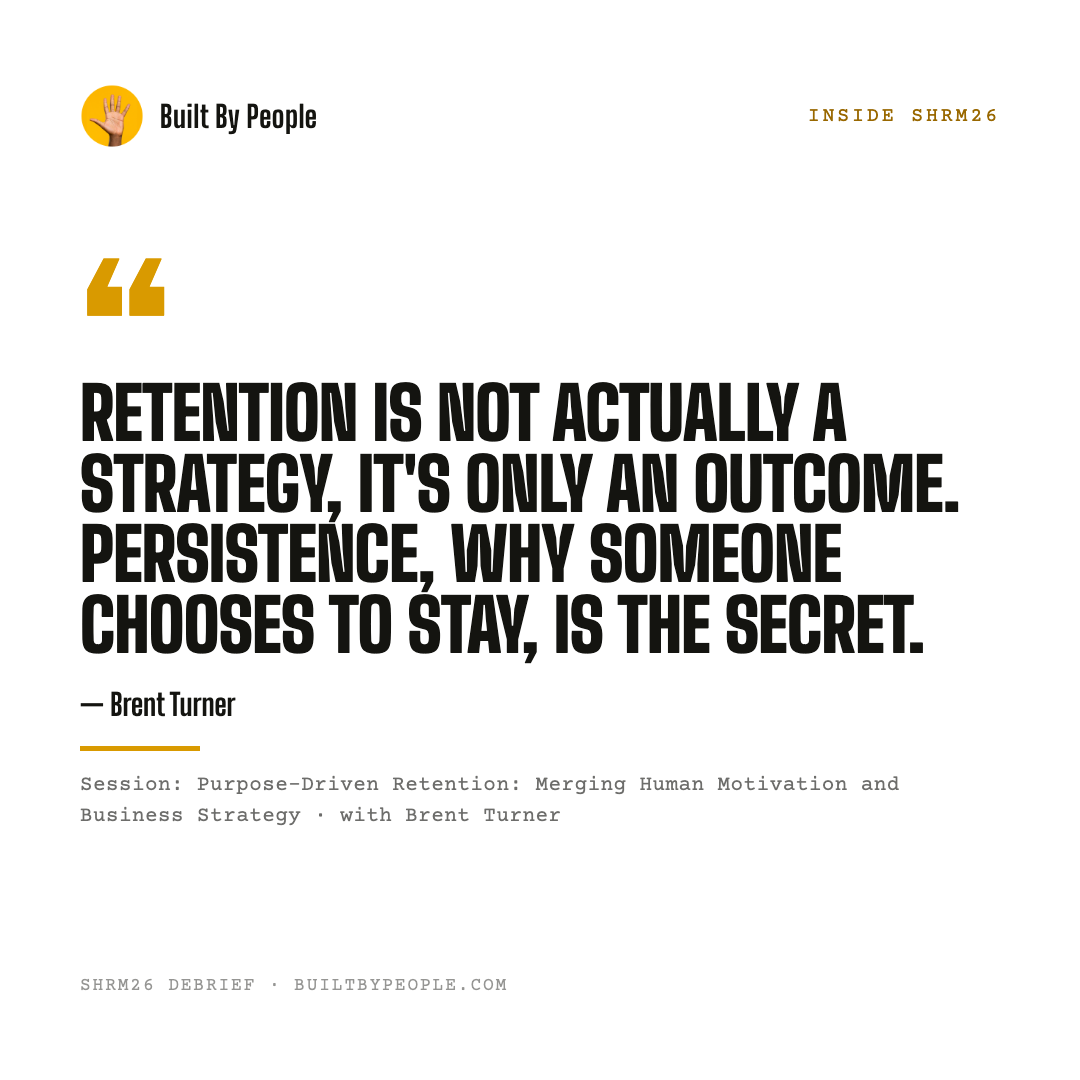
"Retention is not actually a strategy, it's only an outcome. Persistence, why someone chooses to stay, is the secret."
What it was about
Retention is not a strategy but an outcome of persistence, and persistence is created when employees can answer yes to three conditions: purpose (why does my work matter), people (relationships), and path (growth) — with leadership and organizational culture as the true starting point, not compensation or perks.
By the numbers
Key notes
- Reframe retention as an outcome of persistence, not a strategy in itself, and focus organizational effort on creating the conditions (purpose, people, path) that make employees choose to stay.
- Use the 'purpose alignment audit' tool to score domains like whether employees understand how their work contributes to organizational goals, feel respected as whole people, are encouraged to learn, and trust leadership decisions — with the goal being awareness, not measurement.
- Map purpose across the full employee life cycle (attract, onboard, develop, contribute, sustain, transition) and identify where purpose strengthens versus breaks at each stage, since purpose is not a single event.
Take this back Monday
In 1:1s, ask each employee 'why did you choose to stay?' instead of exit-style questions, to surface what actually creates persistence.
Retention isn't a strategy, it's an outcome of persistence — so we're focusing on purpose, people, and path, not perks.
Watch out for
- Treating compensation, pizza parties, and swag as the primary retention levers when they are rarely the root cause of turnover.
- Running employee engagement surveys and collecting feedback without taking visible action on it, which erodes trust in leadership.
- Letting onboarding become a one-time checklist with an end date rather than a continuous, purpose-reinforcing process.
He's co-author of the book "Moonshot: Hypersonic Business Growth Strategies."