Menopause, Pain & Productivity: What Every Workplace Needs to Know

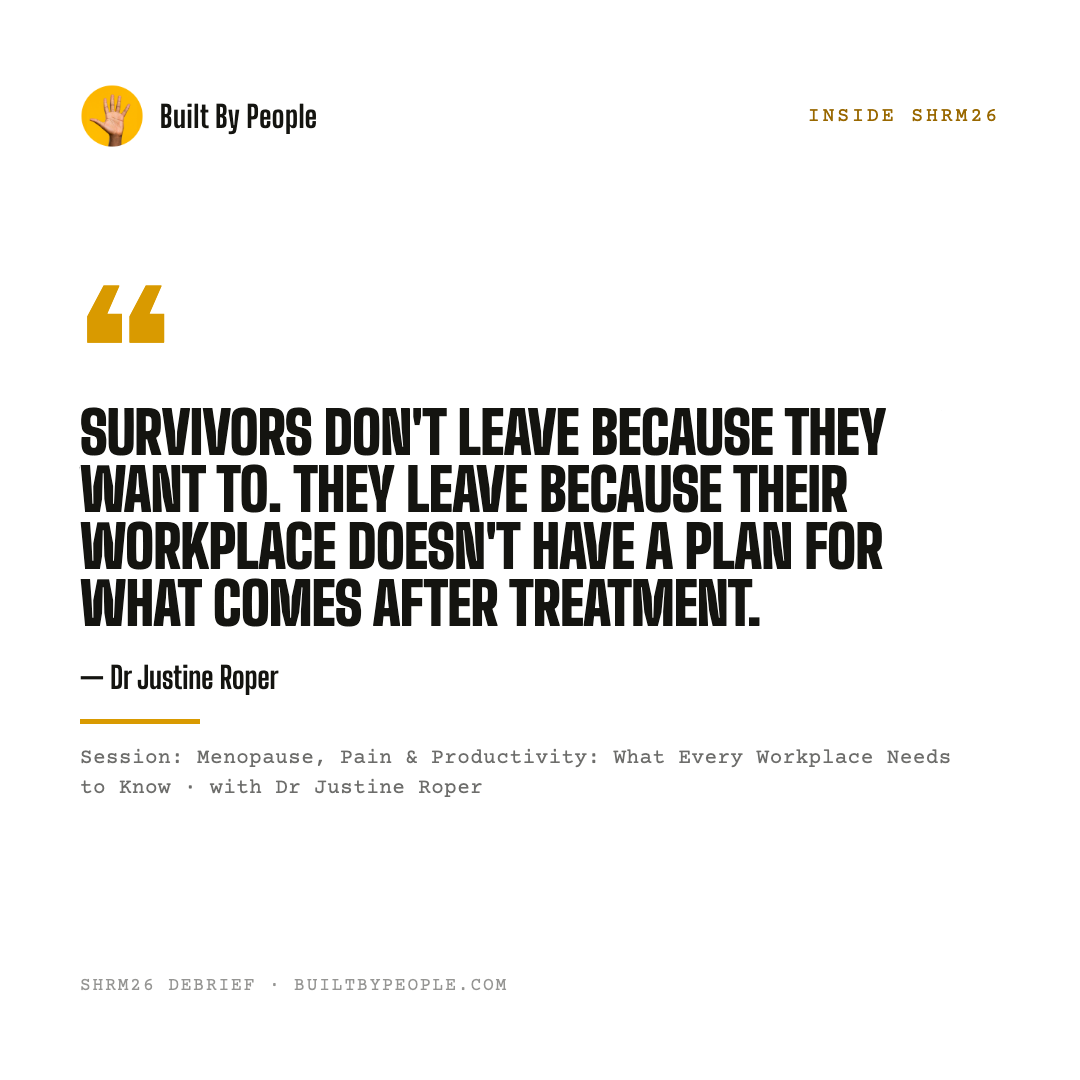
"Survivors don't leave because they want to. They leave because their workplace doesn't have a plan for what comes after treatment."
What it was about
Menopause, chronic pain, and conditions like breast cancer and pelvic floor disorders aren't niche wellness issues. They're business issues costing organizations billions in lost productivity, and the root barrier is that psychologically unsafe workplace cultures keep employees from disclosing what they're going through.
By the numbers
Key notes
- Build psychological safety first: employees won't disclose conditions like menopause or pelvic pain unless they trust it won't cause embarrassment or repercussions.
- Name conditions explicitly in benefits language (menopause, HRT, prostate care) rather than lumping them under generic 'insurance,' because unnamed conditions read to employees as unsupported.
- Audit current benefits coverage for gaps using a structured workplace readiness assessment across benefits, culture, policies, and data tracking.
Take this back Monday
Add temperature-flexible workspace options and stock menstrual hygiene products in bathrooms as low-cost, immediate accommodations.
Menopause alone costs US employers $26.6 billion a year, yet 90% of women don't believe we even acknowledge their condition exists.
Watch out for
- Treating menopause as a single moment at age 50 rather than a decade-long process that starts with perimenopause in the early-to-mid 40s.
- Assuming insurance coverage automatically includes menopause-specific benefits like HRT when most plans and most states don't mandate it.
- Dismissing symptoms as 'not that bad' (self- or provider-driven minimization) instead of validating three-months-plus pain as clinically chronic.
She's a certified marathon run coach who holds a Doctorate in Physical Therapy from Howard University.