Leadership Effectiveness That Delivers Results: Eight Organizational Dimensions

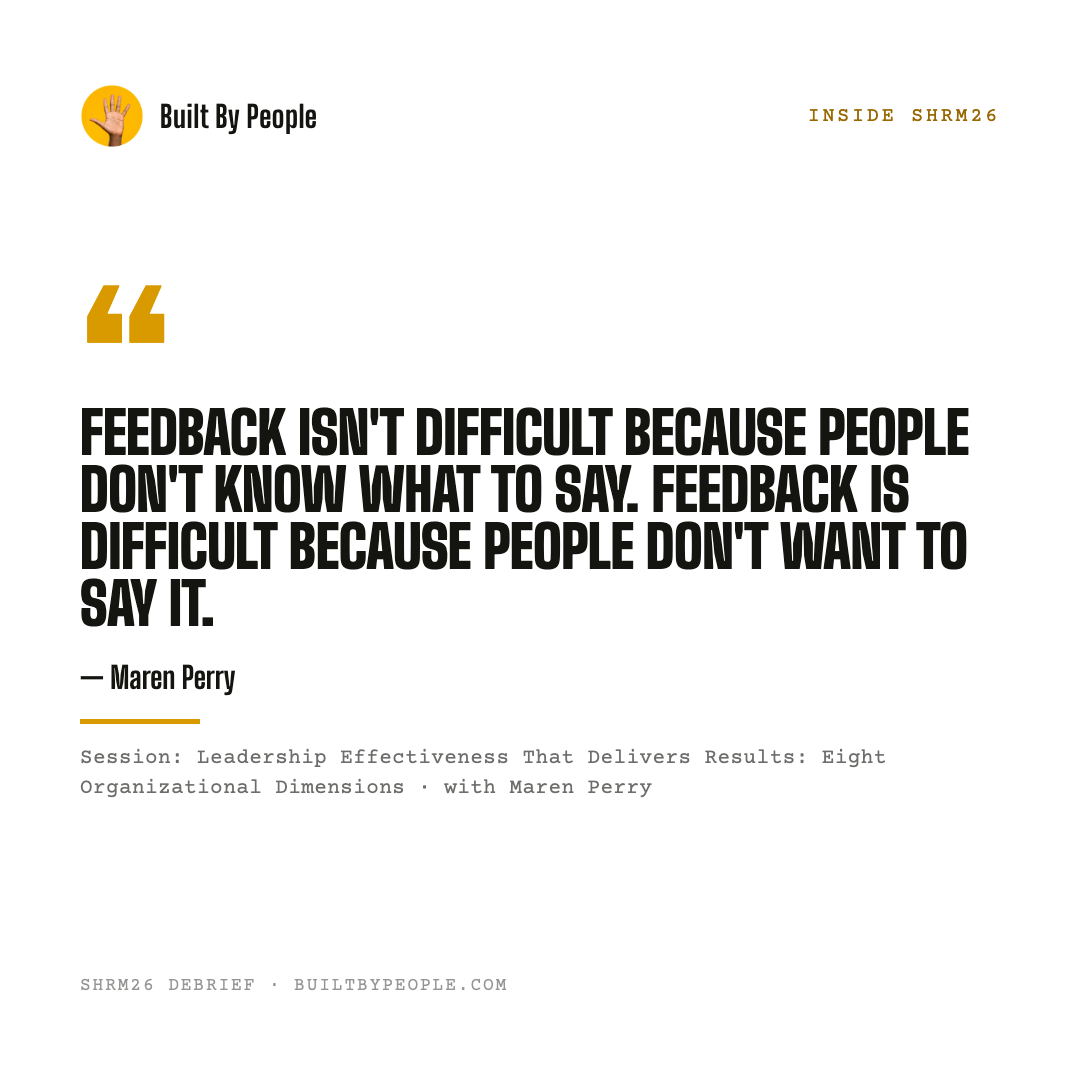
"Feedback isn't difficult because people don't know what to say. Feedback is difficult because people don't want to say it."
What it was about
Individual leadership "problem people" are often symptoms of deeper, systemic leadership conditions in the organization, so HR should diagnose recurring symptom patterns, map them to underlying organizational dimensions, and pull systemic levers rather than treating each symptom individually.
By the numbers
Key notes
- When you get repeated complaints about one high-performing but difficult leader, look past that individual for an organization-wide pattern (a 'leadership condition') rather than only coaching the person.
- Use a diagnostic process: collect the signals/symptoms you're seeing, map them to organizational dimensions (the 'Arden Eight'), then identify the specific HR lever tied to that dimension.
- Build organizational courage and institutionalized mechanisms for honest feedback, not just feedback training, since employees crave feedback but people avoid delivering it.
Take this back Monday
Pick one repeat complaint about a manager; instead of coaching them alone, ask what org-wide condition (workload, unclear roles, no feedback norms) might be driving it.
Our leadership complaints are often symptoms of systemic conditions, not just individual performance issues, so we're diagnosing root causes, not just coaching individuals.
Watch out for
- Treating the individual leader (e.g., 'Jacob' or 'Susan') as the sole problem and only offering them coaching/feedback/delegation training, missing the systemic condition underneath.
- Assuming feedback problems are an information/skills gap (teaching people what to say) when the real gap is courage (people knowing what to say but not wanting to say it).
- Letting a single indispensable high performer ('Susan') absorb all decisions and knowledge, which feels helpful in the moment but creates organizational dependency and blocks scaling.