SHRM26 Debrief · Strategic HR, Organizational Design & Change Management · #2242
HR Transformation: Building Strategic Impact During Change
with Stuart Masters & Alexander Pullen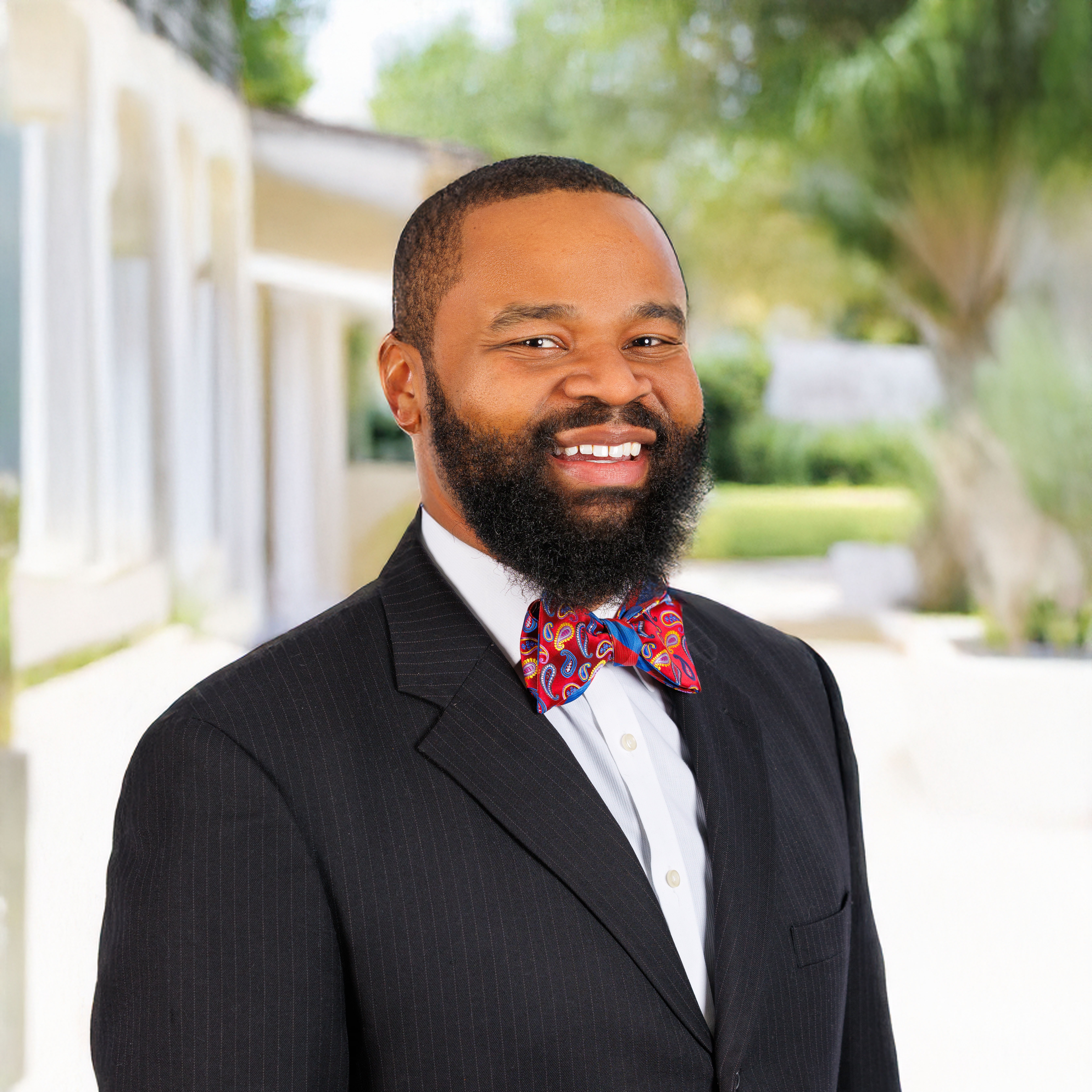
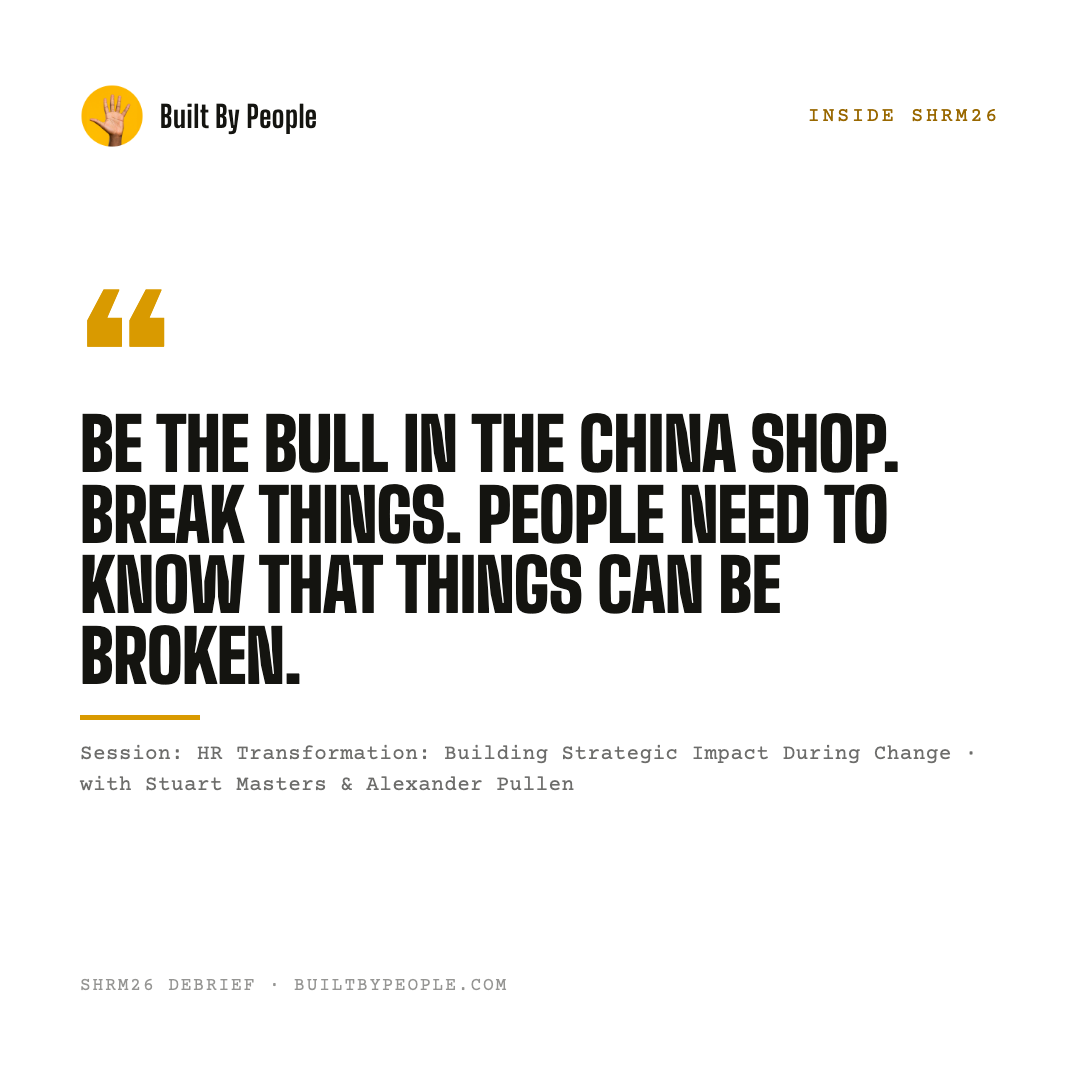
& Alexander Pullen"Be the bull in the china shop. Break things. People need to know that things can be broken."
What it was about
HR-led transformation succeeds when leaders reframe it as an ongoing business capability rather than a project, grounding every change decision in data, business outcomes, and CEO-level alignment while accepting that the process must be iterative, not a one-time fix.
By the numbers
$4 million a year
MSI's estimated organizational savings after fixing entry-level turnover
$25,000
MSI's cost per departure for entry-level role turnover before fixing the problem
54%
Percentage of CHROs who say they are not as involved in the business overall
Key notes
- Reframe transformation as a continuous business capability, not a series of project updates, since CEOs think about AI, talent, and revenue simultaneously rather than in silos.
- Quantify HR problems in business terms (cost, risk, revenue impact) rather than purely people terms to get leadership buy-in, as MSI did by translating entry-level turnover into a $25,000-per-departure cost and a $4 million annual savings once fixed.
- Use a simple four-question logic model to diagnose transformation opportunities: what business pressure made the change necessary, what capability gap had to close, what intervention HR drove or influenced, and what was the resulting impact.
The contrarian takeHR professionals typically see themselves as the organizational unifier and peacemaker, but panelists argued HR must instead deliberately act as the disruptor who forces unresolved tension into decisions, even when that means causing short-term discomfort rather than smoothing it over.
Take this back Monday
Do this for your team
Pick one HR pain point, translate its cost into dollars (like MSI's $25K-per-departure turnover math) before pitching leadership.
Say this in your next leadership meeting
HR transformation isn't a project with an end date — it's an ongoing capability we run like the business runs revenue and talent.
Watch out for
- Trying to fix everything in HR at once instead of iterating gradually (e.g., first ensuring one-on-ones simply happened before adding structure or peer feedback layers).
- Letting a transformation project scope grow too large by uncovering side projects without boundaries, or keeping it too small so it never solves the real problem ('you can't boil the ocean').
- Assuming everyone already understands your organization's reality just because HR lives in it, instead of actively gathering and telling the data-backed story.
If this landed, see these
↳ Go deeperDisrupting the HR Operating Model in the Age of AIShows what 'transformation as an ongoing capability' actually looks like at the operating-model level, not just the pitch-to-leadership level.⇄ The counterpointHR Service Delivery and Culture Transformation: A Lean Six Sigma Diagnostic and RoadmapWarns that most transformations fail exactly where this advice stops: teams sprint into surveys and dollar pitches without redesigning the underlying system.✦ The unexpected oneThe SHRM Workplace Culture Navigator: Exploring 8 Organizational Culture TypesReframes the whole transformation question: there's no universally 'right' culture to transform toward, only the one that fits your strategy.