HR + Cybersecurity: Partnering to Protect Hiring Integrity and Workforce Trust

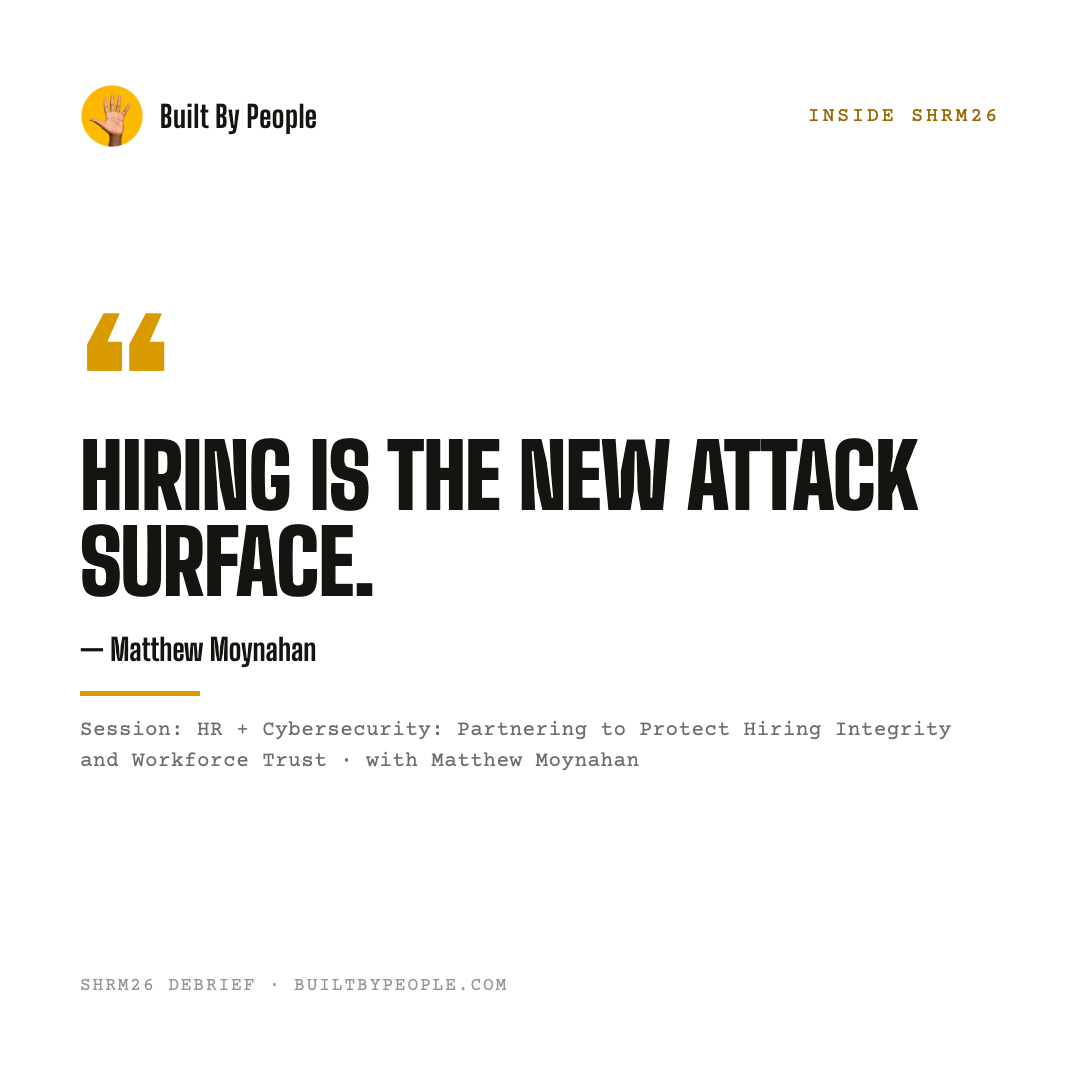
"Hiring is the new attack surface."
What it was about
HR and cybersecurity must become strategic partners. Nation-state actors and organized crime are now running synthetic and fraudulent candidates through the hiring process at industrial scale, and the attack has shifted from technical vulnerabilities to attacks on human trust and perception, which existing identity-verification and IAM systems were never designed to catch.
By the numbers
Key notes
- Treat your talent acquisition and HR teams as part of the security organization, since hiring is now a direct attack surface for nation-state actors and organized crime.
- Watch for clusters of candidates sharing the same mailing address, phone number, or slightly varied name/resume details — a sign of one person or group running many synthetic personas (a 'polymorphic virus' pattern applied to hiring).
- Recognize that one-time identity verification (I-9, background check, passport review) only proves identity at a single moment and cannot catch deepfake substitution that happens later in the interview or employment lifecycle.
Take this back Monday
Add one unscripted, personal question (favorite restaurant, etc.) to every interview to spot coached or synthetic candidates.
Hiring is now the attack surface, so recruiting has to work with security to continuously verify candidates, not just check IDs once at the start.
Watch out for
- Assuming AI itself is causing more people to lie on resumes, rather than recognizing the real driver is organized-crime and nation-state actors industrializing fake-candidate submissions.
- Relying on outdated deepfake-detection tricks like waving a hand in front of the face or flashing a light for a liveness check — modern deepfakes now defeat both.
- Treating identity verification as a one-time gate at hire instead of a continuous verification process across every interview and interaction.
He's led two different cybersecurity companies as CEO through major on-premises-to-cloud business transformations.