Grappling with Gremlins: Three Steps to Managing Imposter Syndrome

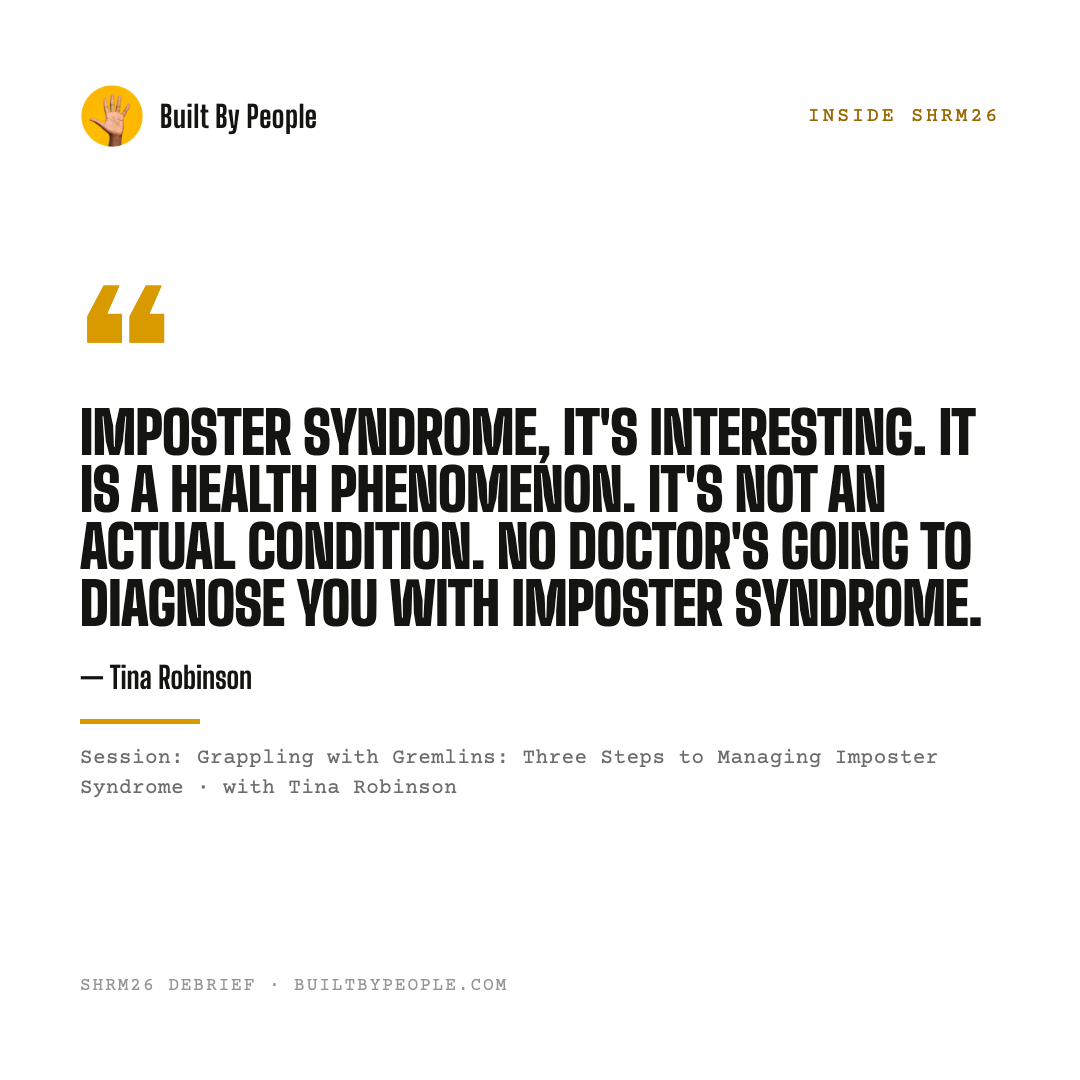
"Imposter syndrome, it's interesting. It is a health phenomenon. It's not an actual condition. No doctor's going to diagnose you with imposter syndrome."
What it was about
Imposter syndrome is a nearly universal, non-clinical phenomenon rooted in an inner critical voice, 'the gremlin,' that once served a protective purpose but now keeps people small. It can be managed, not eliminated, through a three-step process: framing, naming, and taming that voice.
By the numbers
Key notes
- Frame your gremlin by noticing the specific situations, times, or triggers when your inner critic gets loudest (e.g., being asked a question you don't know the answer to, pushing back on senior leaders, being the only woman or youngest person in the room).
- Name your gremlin (after a TV character, a childhood nemesis, or a former colleague) because giving it a name and identity reduces its power and makes it easier to call out in the moment.
- Tame your gremlin using the three anti-Gremlins-movie rules in reverse: shine light on what's real instead of what's loud, water self-compassionate voices instead of the critical ones, and stop unintentionally feeding the negative voice with self-defeating self-talk.
Take this back Monday
Run a 15-minute team workshop: have people name their inner critic and share it aloud to build psychological safety.
Up to 82% of people experience imposter syndrome, so we're building it into how we coach leaders, not treating it as a rare weakness.
Watch out for
- Believing imposter syndrome is a real diagnosable condition rather than a common feeling/phenomenon, which can lead people to over-medicalize or overly stigmatize it.
- Trying to banish or completely silence the inner critical voice instead of managing and taming it (the voice sometimes has a valid point and total suppression isn't the goal).
- Unintentionally 'feeding' the gremlin by engaging in self-defeating self-talk or seeking validation that confirms the negative narrative (including venting to AI chatbots in a self-pitying loop).
Tina Robinson is a top 100 HR influencer and just published a new book on developing business leaders through ATD Press.