SHRM26 Debrief · Talent Management & Acquisition · #2252
From Service to Success: Proven HR Strategies for Hiring & Retaining Military-Connected Talent
with Pamela McGee
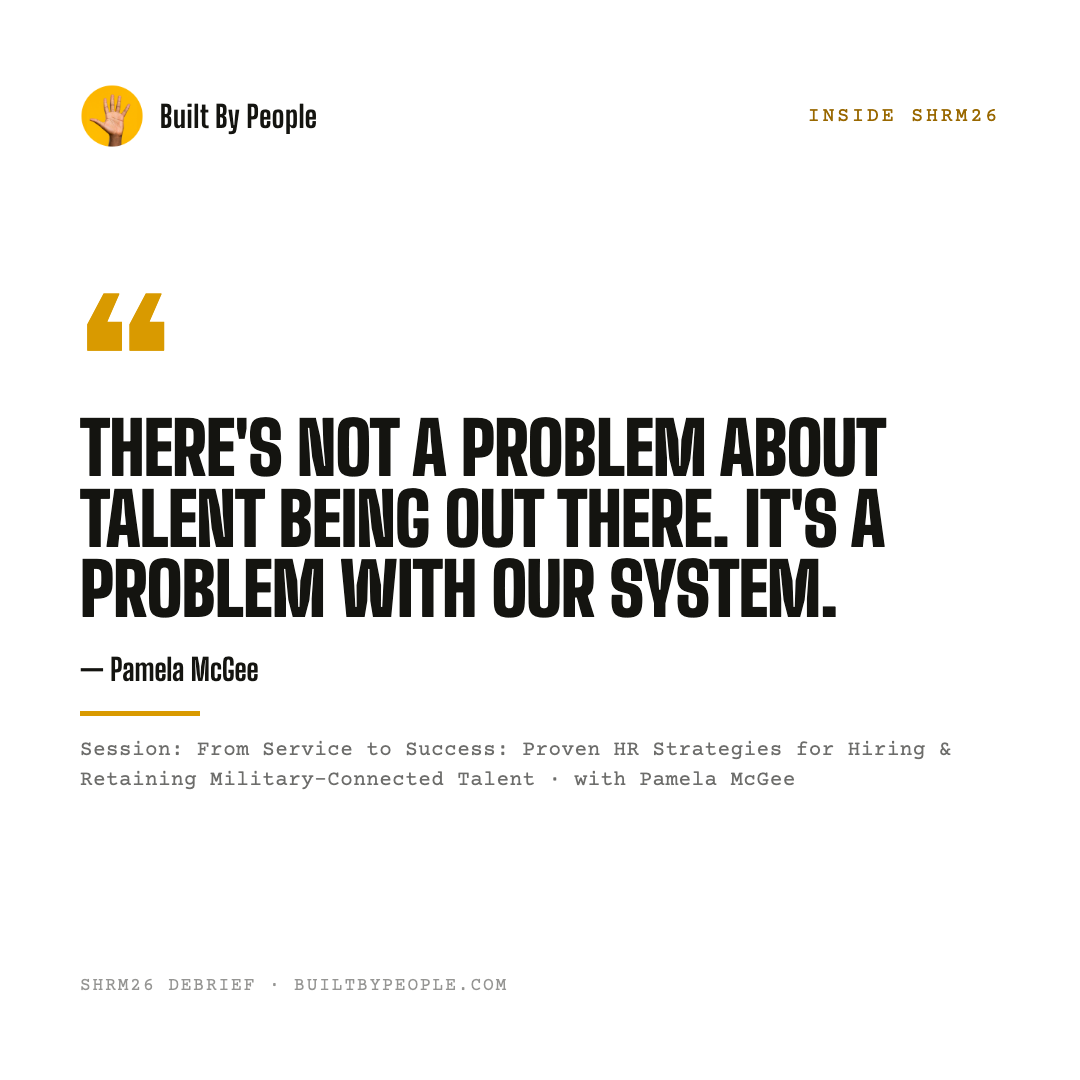
"There's not a problem about talent being out there. It's a problem with our system."
What it was about
Military-connected talent (veterans, spouses, caregivers, Reserve, and Guard) is an underutilized, high-value talent pipeline, and the barrier isn't a lack of talent but a lack of intentional, structured HR programs across the full employee lifecycle to recruit, translate skills for, onboard, and retain them.
By the numbers
48%
of organizations actually have a formal military hiring program in place, despite most HR pros recognizing the value
up to $10,000
Work Opportunity Tax Credit an employer can earn per year per veteran hired
98%
of surveyed veterans have indicated they faced barriers when trying to get civilian employment
Key notes
- Build the business case for a veteran hiring program before posting any job, including ADA compliance readiness and a designated point of contact/buddy for new hires.
- Train hiring managers and recruiters to translate military occupational specialties into civilian skills and to write basic qualifications that don't inadvertently exclude qualified veterans.
- Implement structured, substantive 30/60/90-day check-ins with military hires rather than a superficial checklist, and report progress to the C-suite to keep leadership engaged.
The contrarian takeThe speaker suggests newer generations of workers entering the workforce ('BC,' before COVID) have lower work ethic and professionalism than before, positioning veterans as a corrective to that broader workforce trend rather than just a diversity-hiring category.
Take this back Monday
Do this for your team
Add ADA readiness and a named buddy/point-of-contact to your next veteran job posting before it goes live.
Say this in your next leadership meeting
95% of HR pros know military talent adds value, but only 48% have a formal program — the gap is structure, not talent.
Watch out for
- Posting a job opening without first building a strategy or plan for hiring veterans, which sets them up to fail.
- Running a 30/60/90-day check-in as a box-checking exercise instead of a real conversation with specific questions.
- Overlooking military spouses and caregivers when designing veteran programs, which undermines support for the veteran too.
Fun fact · Pamela McGee
Before leading her own HR consulting firm, Pamela McGee served as a U.S. Air Force veteran.
If this landed, see these
↳ Go deeperEthical AI to Broaden Talent Pools and Reduce Hiring BiasSame fix, sharper tool: AI can surface veteran candidates the pipeline is quietly dropping.⇄ The counterpointCoaching Through the “Surprise Moments”: Tools for Supervisors Supporting Early-Career EmployeesDirectly challenges the 'weaker work ethic' read: disengagement is sense-making, not a character flaw.✦ The unexpected oneIgniting Hidden Strengths for Breakthrough ROIReframes veteran hiring's skill-translation problem as a strengths lens instead of a deficit one.