SHRM26 Debrief · Strategic HR, Organizational Design & Change Management · #1669
From Resistance to Readiness: Motivational Interviewing for Workplace Transformation
with Tatiana Stone
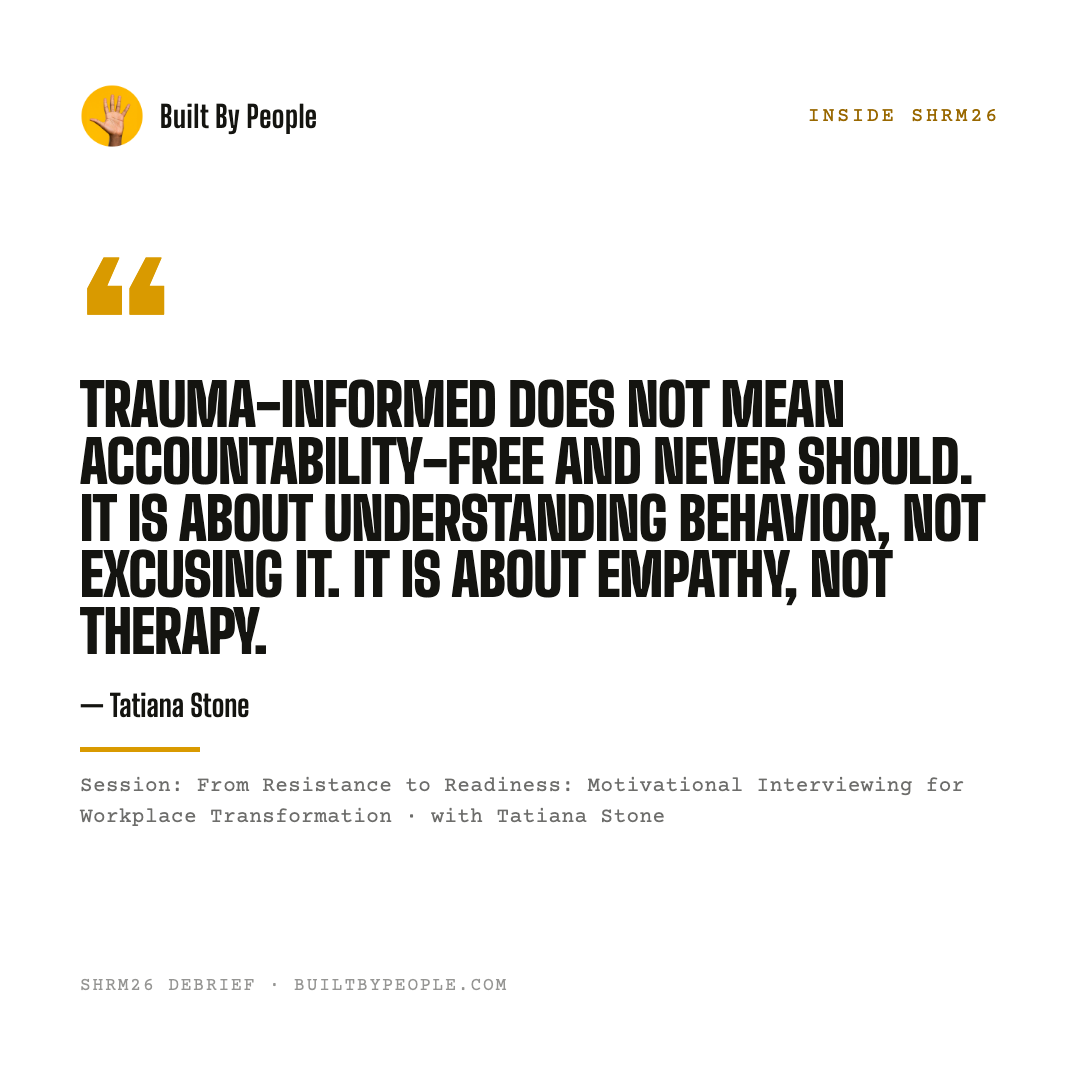
"Trauma-informed does not mean accountability-free and never should. It is about understanding behavior, not excusing it. It is about empathy, not therapy."
What it was about
Employee resistance to change is driven by ambivalence, not stubbornness. Leaders can resolve it by borrowing techniques from motivational interviewing and trauma-informed care, helping people talk themselves into change instead of being persuaded into it.
By the numbers
64%
Share of the relatively affluent Kaiser ACEs study population that had experienced at least one adverse childhood experience (ACE)
40%
Share of the same population that had experienced two or more ACEs
Key notes
- Identify where each person sits on the six-stage Transtheoretical Model (pre-contemplation, contemplation, preparation, action, maintenance, relapse) before choosing how to talk to them about a change.
- Listen for the ratio of 'change talk' to 'sustain talk' in conversations and use open-ended, values-based questions to elicit more change talk, since that ratio predicts whether someone will actually change.
- Use reflective listening: restate what you think someone really means as a statement, not a question, to surface the deeper concern underneath a surface complaint.
The contrarian takeThe speaker argues that the common instinct to 'explain harder' or persuade people into change is actually counterproductive. Even the inclination to change quickly, like executives racing ahead on AI, can itself be a trauma or fear response (fear of being left behind) rather than a healthier stance than resistance.
Take this back Monday
Do this for your team
Before rolling out any change, ask each employee an open-ended question and reflect back what you hear before explaining or persuading.
Say this in your next leadership meeting
Resistance to change is ambivalence, not stubbornness — the fix is helping people talk themselves into it, not persuading them harder.
Watch out for
- Trying to overcome resistance by explaining harder, providing more information, defending the decision, or persuading — which breeds defensiveness, malicious compliance, or disengagement.
- Treating people's autonomy over how they feel about a change as something to be overridden instead of respected.
- Responding to a surface-level complaint (e.g., 'I don't like the new software') by listing reasons it's good, without listening for the deeper fear underneath (looking incompetent, losing status, being left behind).
If this landed, see these
↳ Go deeperChange-Ready or Change-Resistant? How to Assess and Elevate the Mindsets That Drive AgilityGives the ambivalence problem a diagnostic: which mindset stage is actually blocking someone.⇄ The counterpointHR Transformation: Building Strategic Impact During ChangePushes the opposite instinct: ground change in CEO alignment and data, not patience.✦ The unexpected oneHR Executive Insights: A CHRO’s View on Owning the Digital Workforce, Operationalizing Generative and Agentic AI, and the Future of WorkSwaps reflective listening for mandated play as the unlock for AI-era change resistance.