From Panic to Pattern: Make Feedback Routine, Not Reactive

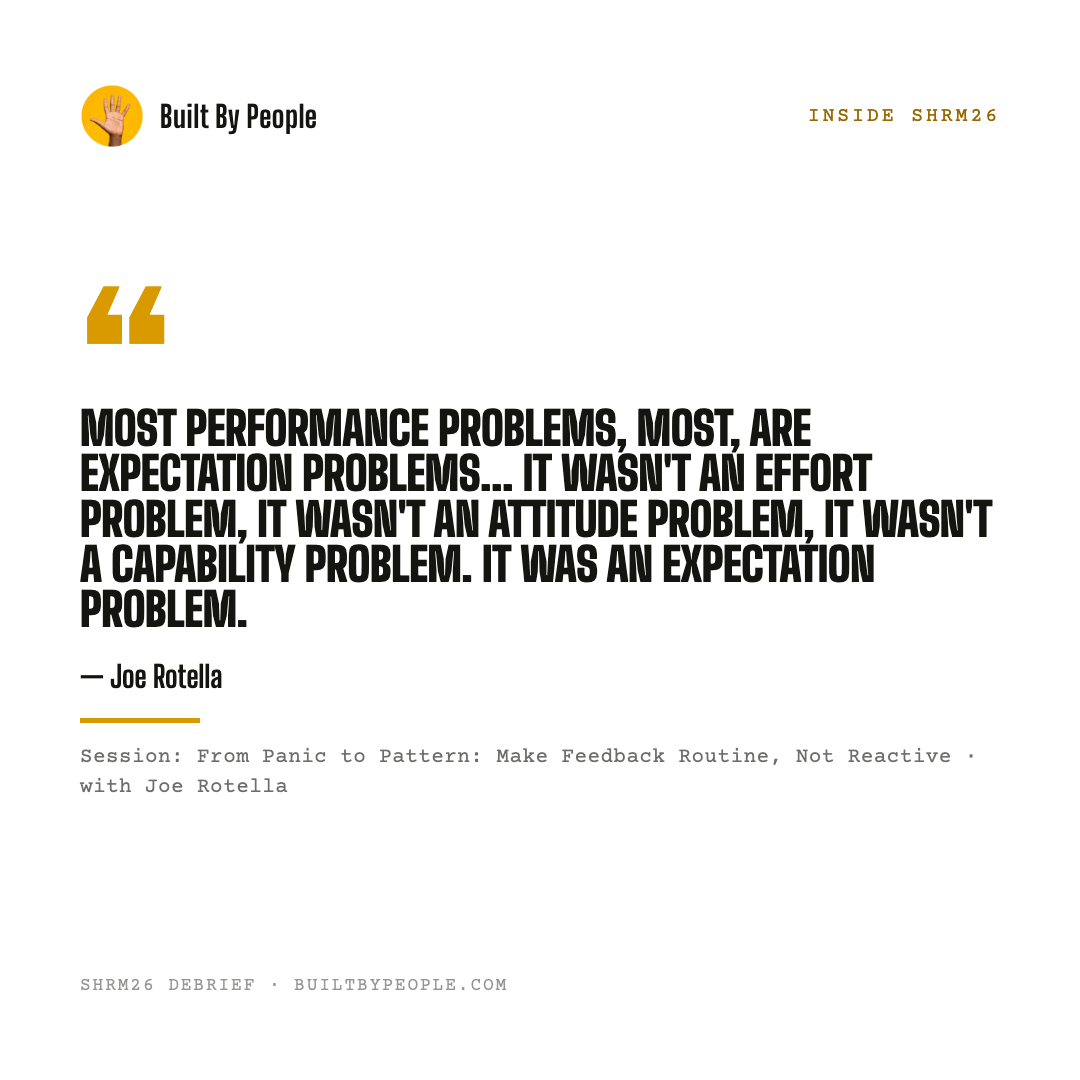
"Most performance problems, most, are expectation problems... It wasn't an effort problem, it wasn't an attitude problem, it wasn't a capability problem. It was an expectation problem."
What it was about
Managers don't avoid feedback because they lack the skill. They avoid it because of timing habits: fear of conflict, need for more evidence, hope, busyness. The fix is building feedback into a repeatable weekly, monthly, quarterly, and annual pattern instead of waiting until a problem becomes a crisis.
By the numbers
Key notes
- Replace annual/mid-year performance reviews with a rhythm: weekly one-on-ones to stay connected, monthly coaching conversations with an agenda, quarterly reviews to refocus goals, and annual documentation as the artifact of the process (not the process itself).
- Use the SBIN framework for every feedback conversation: Situation, Behavior, Impact, Next steps — and never make it about the person's character.
- When setting expectations, ask 'What do you think it means to cross the finish line?' instead of telling people the goal, so both sides define success together before work begins.
Take this back Monday
Swap 'How's it going?' in your next one-on-one for 'What's getting in your way?' and 'What should we celebrate?'
Most performance problems aren't effort or attitude problems, they're expectation problems, so we're building feedback into a weekly rhythm instead of waiting for the annual review.
Watch out for
- Delaying difficult feedback conversations while waiting for more evidence, hoping the problem resolves itself, avoiding conflict, or claiming to be too busy — all of which make the eventual conversation harder, not easier.
- Giving feedback about the person ('you're disruptive,' 'you didn't do a good job') instead of the specific observed behavior, which triggers defensiveness.
- Micromanaging by asking for status updates constantly instead of setting a check-in cadence up front, which signals distrust.
Joe Rotella co-created miviva, a platform reinventing coaching and performance reviews with AI, after 30+ years in HR strategy and tech.