From Onboarding to Everboarding: Redefining Employee Development to Improve Performance and Retention

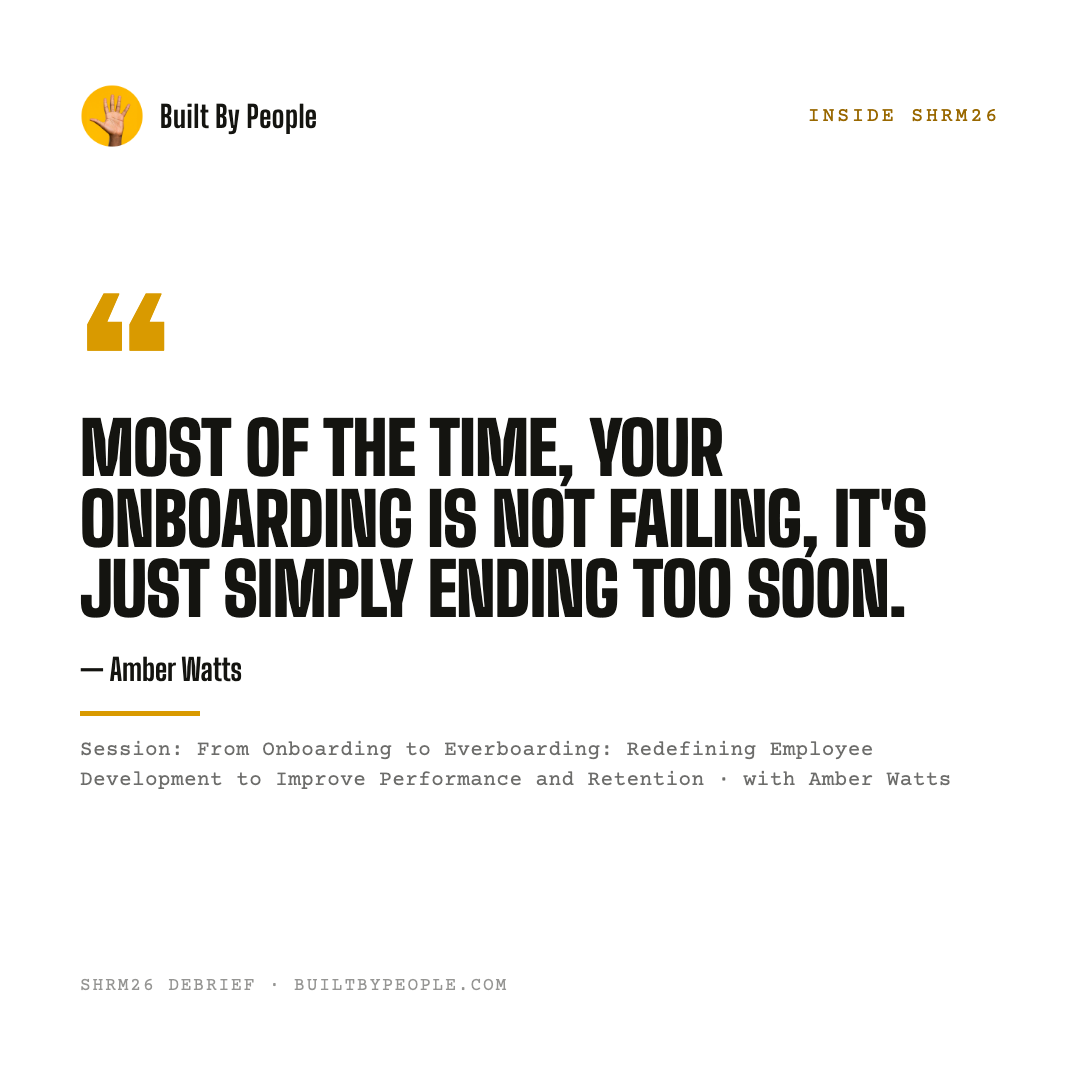
"Most of the time, your onboarding is not failing, it's just simply ending too soon."
What it was about
Traditional onboarding ends too soon and gets treated as a one-time event instead of an ongoing system. Organizations should replace it with 'everboarding': a milestone-based, cross-functional relay that hands employees off from the people team to managers to self-directed growth, across their first year and beyond.
By the numbers
Key notes
- Stop treating onboarding as a fixed 30/60/90-day event and instead design it as a milestone-based system with no hard time constraints.
- Build formal playbooks for managers on how to develop and assess new hires, since managers are the multiplier or the bottleneck for onboarding success.
- Redesign measurement to predict performance and readiness rather than just tracking activity and completion of training modules.
Take this back Monday
Give every manager a written playbook for developing new hires, since managers are the multiplier or the bottleneck for onboarding success.
Only 12% of employees feel ready to do their job after onboarding, per Gallup, because we treat onboarding as an event instead of an ongoing system.
Watch out for
- Assuming that completing onboarding means an employee has the confidence, competence, and ability to actually do the job.
- Treating onboarding as a single event or a checklist to complete rather than an ongoing system.
- Front-loading all resources (time, money, people, technology) into the first week or 30 days and then abandoning support once habits have already formed.
Amber Watts is a former Chief Revenue Officer who pivoted careers to become a talent strategist and published author.