SHRM26 Debrief · AI, Data & Tech · #1098
From Numbers to Narrative: Storytelling With Data
with Karin Rex
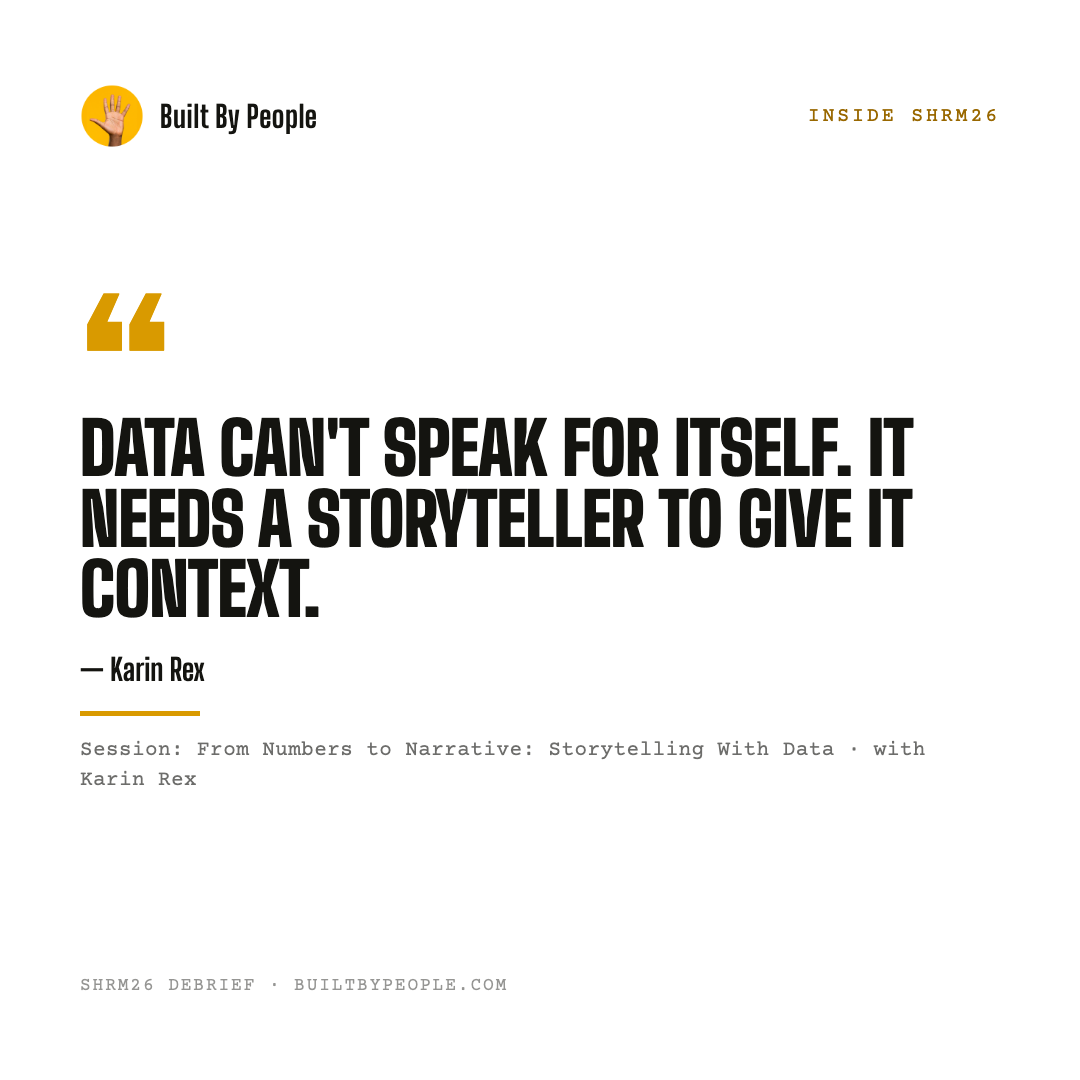
"Data can't speak for itself. It needs a storyteller to give it context."
What it was about
HR data doesn't drive action until it's shaped into a story with emotional contrast, because humans remember and act on narratives far more than raw statistics.
By the numbers
5%
percentage of Stanford students who recalled at least one statistic 45 minutes after hearing data-based presentations (Chip Heath's 'Made to Stick' classroom exercise)
63%
percentage of Stanford students who recalled the stories told during the same presentations
one in 140 million
odds of winning the German national lottery, used to anchor the abstract-large-number example
Key notes
- Run your data through the data-information-knowledge-wisdom progression, using an insight bridge to move from knowledge to wisdom (actionable decisions).
- Use the three-step EX method: examine (what does the data show), expose (what's the risk of doing nothing), and explain (craft a one-sentence data perspective sentence). Apply it to any dataset before you present it.
- Write a single 'data perspective sentence' that combines what the data shows with the risk of inaction; this is the keystone of the whole story.
The contrarian takeMore of us are motivated by emotion than by numbers. That means the conventional HR instinct to lead with hard data and metrics in front of leadership is the wrong default: emotional, narrative framing is the more persuasive lever.
Take this back Monday
Do this for your team
Before your next leadership update, write one data perspective sentence pairing a key metric with the risk of doing nothing.
Say this in your next leadership meeting
Data can't speak for itself — people remember stories, not statistics, so I'm framing our numbers as one.
Watch out for
- Presenting raw or abstract numbers (like large statistical odds) without translating them into a relatable, human-scale story.
- Relying on data alone to persuade, assuming numbers speak for themselves. They don't: they need a storyteller to give them context.
- Overloading slides with color and clutter so nothing stands out ('if everything's in color, nothing will stand out').
Fun fact · Karin Rex
She's spent 30+ years teaching storytelling with data to giants like SAP and ATD, armed with a master's degree in professional writing.
If this landed, see these
↳ Go deeperState of the Workforce 2026: What to Keep, What to Change, and What AI Is Actually Doing to Your EmployeesTen million responses show which numbers are noise and which actually predict engagement.⇄ The counterpointBeyond the Gut Feel: How AI-Powered Structured Interviews Are Transforming Hiring OutcomesStructured, data-first interviewing argues rigor beats a good story in high-stakes hiring calls.✦ The unexpected oneThe Benefit That Quietly Shapes How Work Gets DoneA vision-benefits pitch turns 270 hidden health conditions into its own persuasive data story.