Energizing Change: How to Build a Culture of Adaptability, Trust, and Transformation

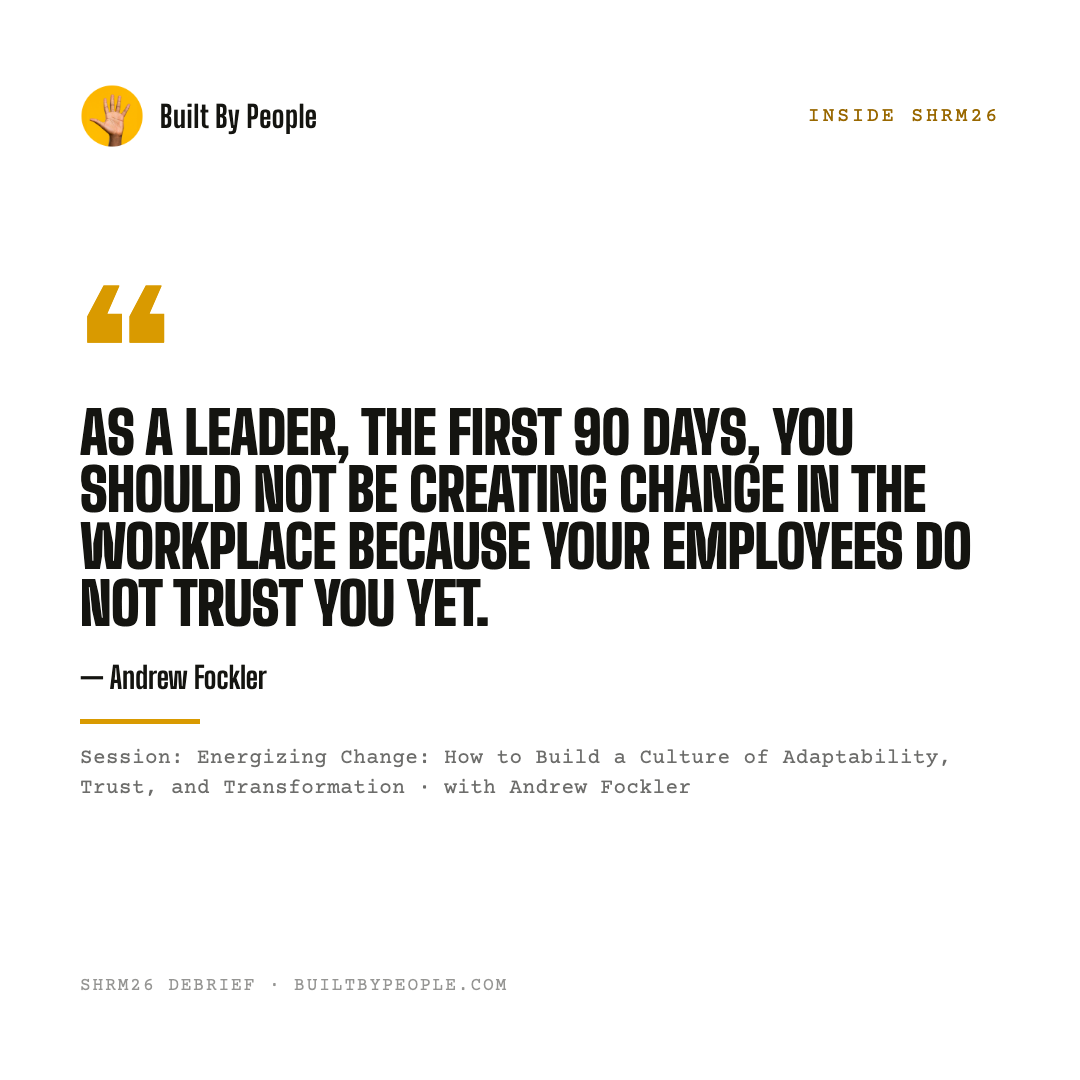
"As a leader, the first 90 days, you should not be creating change in the workplace because your employees do not trust you yet."
What it was about
Change itself is constant, but the energy people bring to it is not. HR leaders need a deliberate framework (LEAD: Listen, Explore, Act, Develop), built on trust and psychological safety, to convert resistance into feedback and turn change fatigue into sustainable, energized transformation.
By the numbers
Key notes
- Use the LEAD framework: Listen (logic), Explore (emotion), Act (micro-steps), Develop (direction), to structure any change initiative instead of pushing changes through all at once.
- Wait at least the first 90 days before making major changes when a new leader or manager is onboarded, since employees have not yet built the know-like-trust needed to accept change from them.
- Treat resistance as feedback, not pushback: acknowledge the emotional root (fear, confusion, misalignment) before trying to move people forward.
Take this back Monday
Run a listening session before rolling out your next change, and hold off on any new-hire-manager changes until day 90.
Resistance isn't opposition, it's feedback — treating it that way is how one company cut turnover 12% while raising trust 19%.
Watch out for
- Rolling out drastic changes immediately after a high-stress period (e.g., right after the holiday season for a retail team) without giving people time to recover.
- Letting leadership's urgency ('we need this done yesterday') override the natural, slower pace at which employees actually process change.
- Making big changes within a new leader's first 90 days, before employees trust them, which breeds fear instead of buy-in.
He's authored an entire book series, The Intuitive Series, including titles like The Intuitive CEO and The Intuitive Entrepreneur.