Elevate Your Game: The Strategic Leadership Shift Every HR Executive Must Master

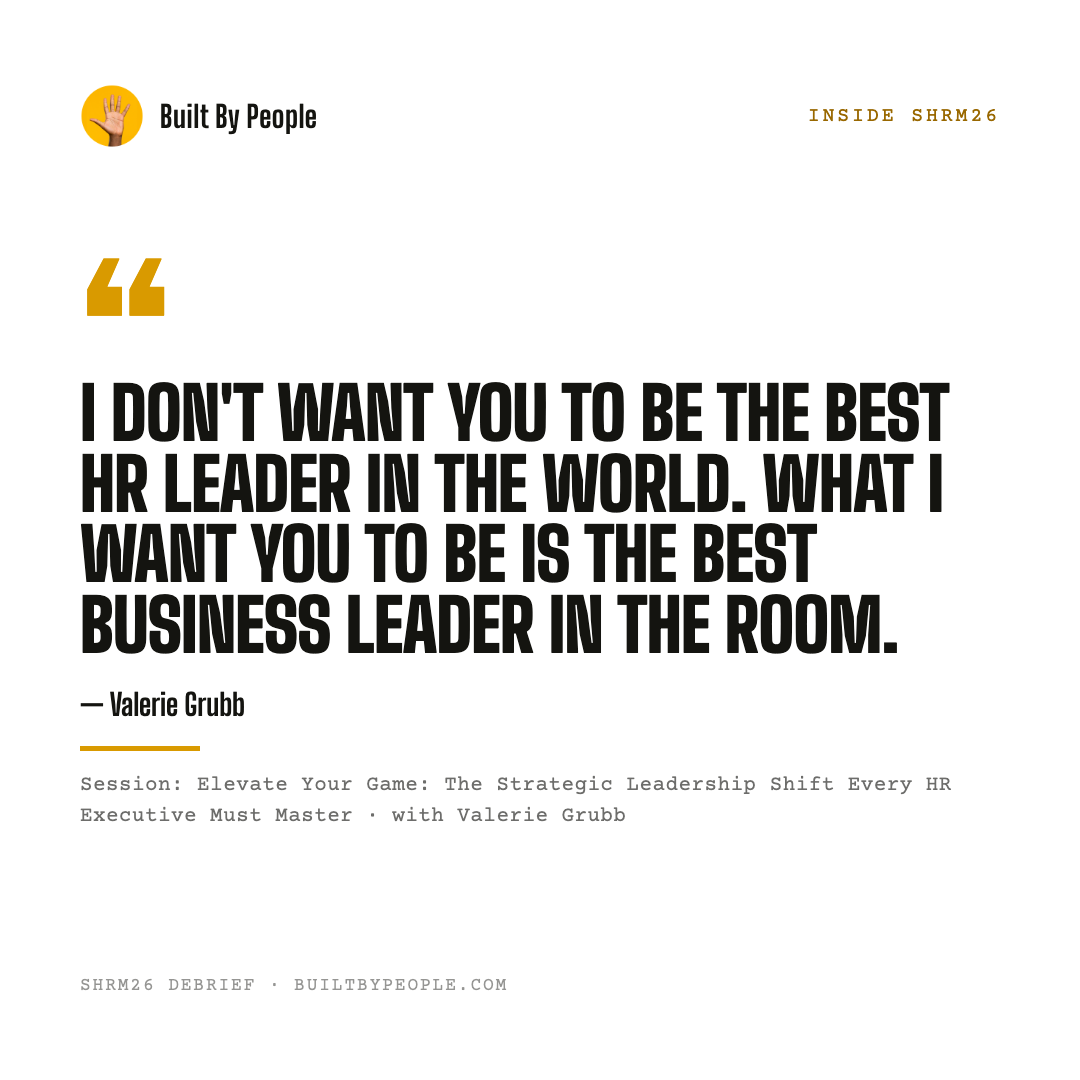
"I don't want you to be the best HR leader in the world. What I want you to be is the best business leader in the room."
What it was about
HR leaders earn a true seat at the table not by being the best HR leader in the room, but by becoming the best business leader in the room. That means mastering seven business levers (customers, competition, revenue, profitability, operations, growth, risk), ruthlessly prioritizing for impact over activity, and leading through influence rather than title.
By the numbers
Key notes
- Study why customers choose your company and why they leave, then use that insight to shape recruiting, training, and workforce priorities.
- Be able to name your organization's top three revenue drivers and tie every people decision (hiring, training, benefits) explicitly to impact on those drivers.
- Learn to read financial statements (P&L) well enough to hold your own in a room with senior leaders, and present budgets by leading with the biggest numbers and their strategic impact rather than burying the ask.
Take this back Monday
Audit your calendar for effort vs. impact and block time so 55-60% goes to high-impact work, not reactive inbox tasks.
My job isn't to be the best HR leader in the room, it's to be the best business leader in the room.
Watch out for
- Thinking from the inside out (headcount, engagement, turnover) instead of the outside in (why customers buy, why they leave, what competitors offer).
- Presenting budgets in a way that invites cuts (e.g., leading with small line items like training or travel) instead of leading with big numbers tied to strategic impact.
- Trying to do it all and assuming you'll eventually get caught up: you never will, and pretending otherwise means the wrong, tactical work crowds out strategic work.
Before consulting on leadership, Val Grubb helped launch two major media brands: Oprah's Oxygen network and Barry Diller's IAC.