Charting the Future of Work: A Fireside Chat
 & Dr. Henry Mack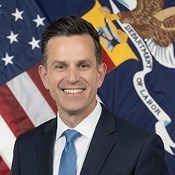
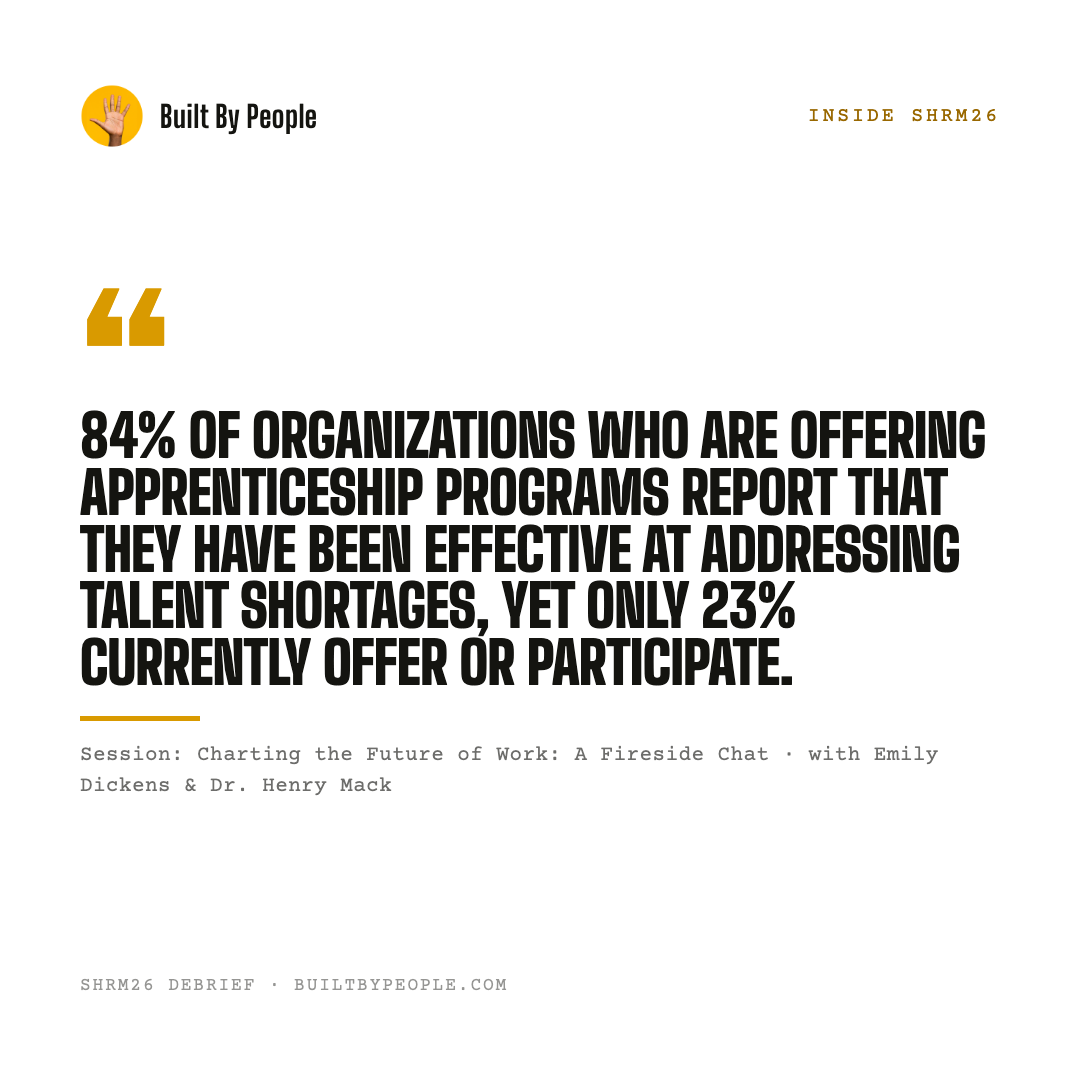
"84% of organizations who are offering apprenticeship programs report that they have been effective at addressing talent shortages, yet only 23% currently offer or participate."
What it was about
The US Department of Labor is trying to fix a broken education-to-employment pipeline by shifting employers and educators away from degree-default hiring toward skills-based hiring, registered apprenticeships, and verified learning-and-employment records. It treats AI as a workforce-transformation issue rather than a pure job-displacement threat.
By the numbers
Key notes
- Push employers toward skills-based hiring and job postings instead of defaulting to degree requirements, since a recent DOJ opinion on Title VII disparate impact liability removed a major legal deterrent to doing so.
- Investigate registered apprenticeships, including degree-connected ones, since they are federally subsidized, offer pay-for-performance funding to employers (cash for hiring, retaining, and completing an apprentice), and reduce paperwork after recent deregulation.
- Use Workforce Pell (available starting July 1) to help even bachelor's-degree holders fund non-loan-based apprenticeship or certificate training.
Take this back Monday
Audit one entry-level job posting and remove the bachelor's-degree requirement if the role doesn't actually need it.
80-90% of entry-level workers are over-credentialed for their jobs, so we're exploring skills-based hiring and apprenticeships instead of defaulting to degree requirements.
Watch out for
- Defaulting to bachelor's-degree requirements for entry-level jobs that don't need them, creating overqualified hires and pipeline mismatch.
- Assuming registered apprenticeships are only for construction trades or take 2,000-3,000 hours, discouraging employer participation despite high reported effectiveness.
- Treating self-reported skills on resumes, LinkedIn, and transcripts as reliable signals ('skill fishing') without verification.
Before joining the Department of Labor, he ran Florida's entire higher-education system as Chancellor, a $3 billion budget covering 1.5 million students.