Behavior Informed Workplace Safety

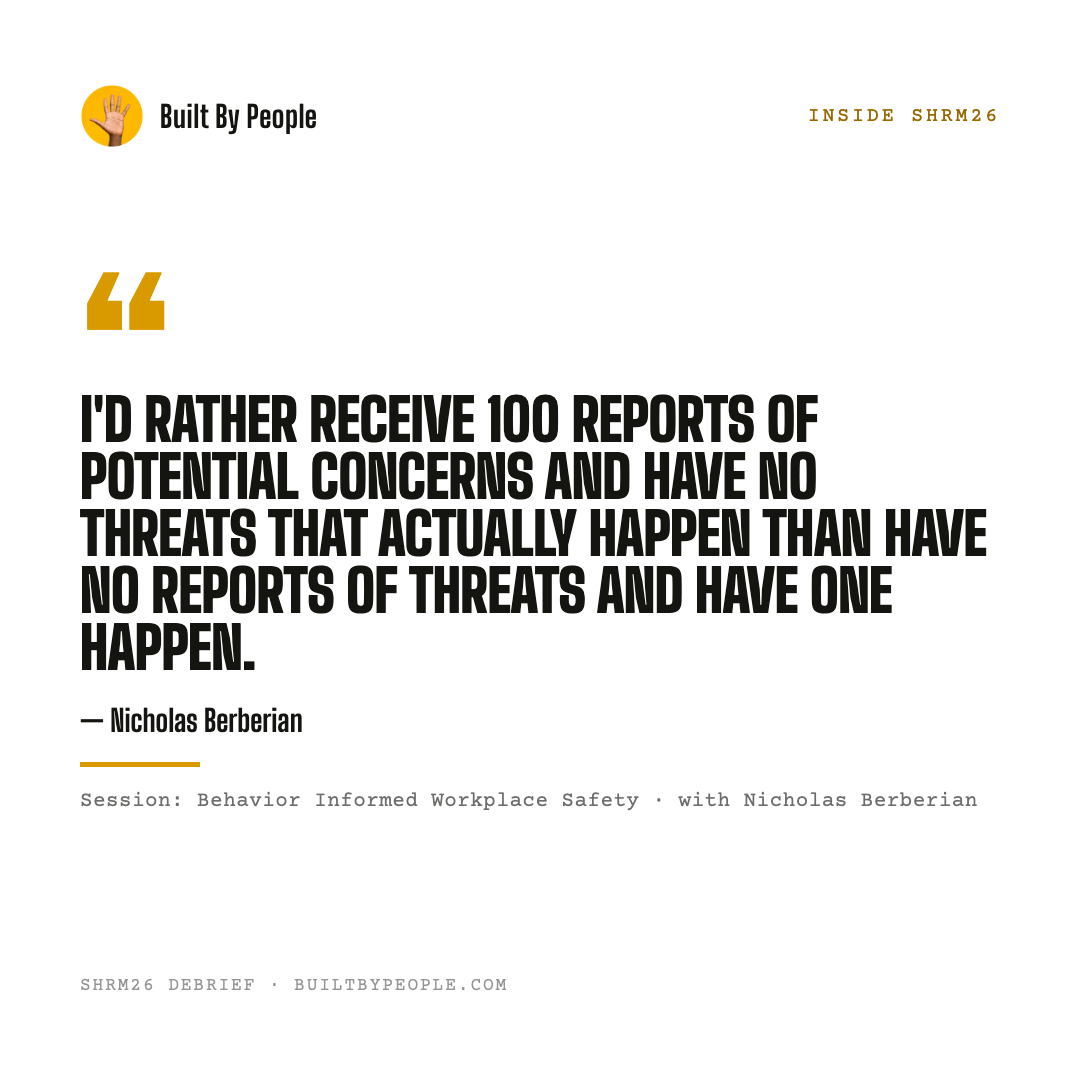
"I'd rather receive 100 reports of potential concerns and have no threats that actually happen than have no reports of threats and have one happen."
What it was about
Acts of targeted violence are not random — they follow a predictable pathway (grievance, ideation, research/planning, breach, attack) with observable behavioral indicators along the way, and HR sits at the front line with repeated opportunities to intervene before it reaches violence.
By the numbers
Key notes
- Build a multidisciplinary threat assessment team that includes HR, security, legal, and mental health input rather than letting any single function handle threats alone.
- Create and communicate a clear, confidential (or anonymous) reporting process so employees know how and where to report concerning behavior without fear of retaliation.
- Use structured professional judgment tools (SPJs) consistently across all cases — inconsistent application of assessment tools creates legal liability for the organization.
Take this back Monday
Publish a clear, confidential channel for employees to report concerning behavior, and tell them over-reporting is welcomed, not punished.
Targeted violence follows a predictable pathway with warning signs — HR's job is catching it at grievance or ideation, long before it reaches attack.
Watch out for
- Treating fit-for-duty evaluations as a default response to mental-health-linked behavior concerns, which can escalate the situation by making the employee feel like the problem.
- Responding to a threat report with immediate action (calling 911, deploying security) before verifying the facts, which can create embarrassment and unnecessary panic if the report is inaccurate.
- Applying threat assessment tools or protocols inconsistently across cases, which undermines legal defensibility.
A Marine Corps veteran turned Stanford Health Care security director, he now protects Fortune 500 companies and heads Northern California's threat assessment professionals chapter.