Bambi Vs. Godzilla: How to Deal with Difficult People

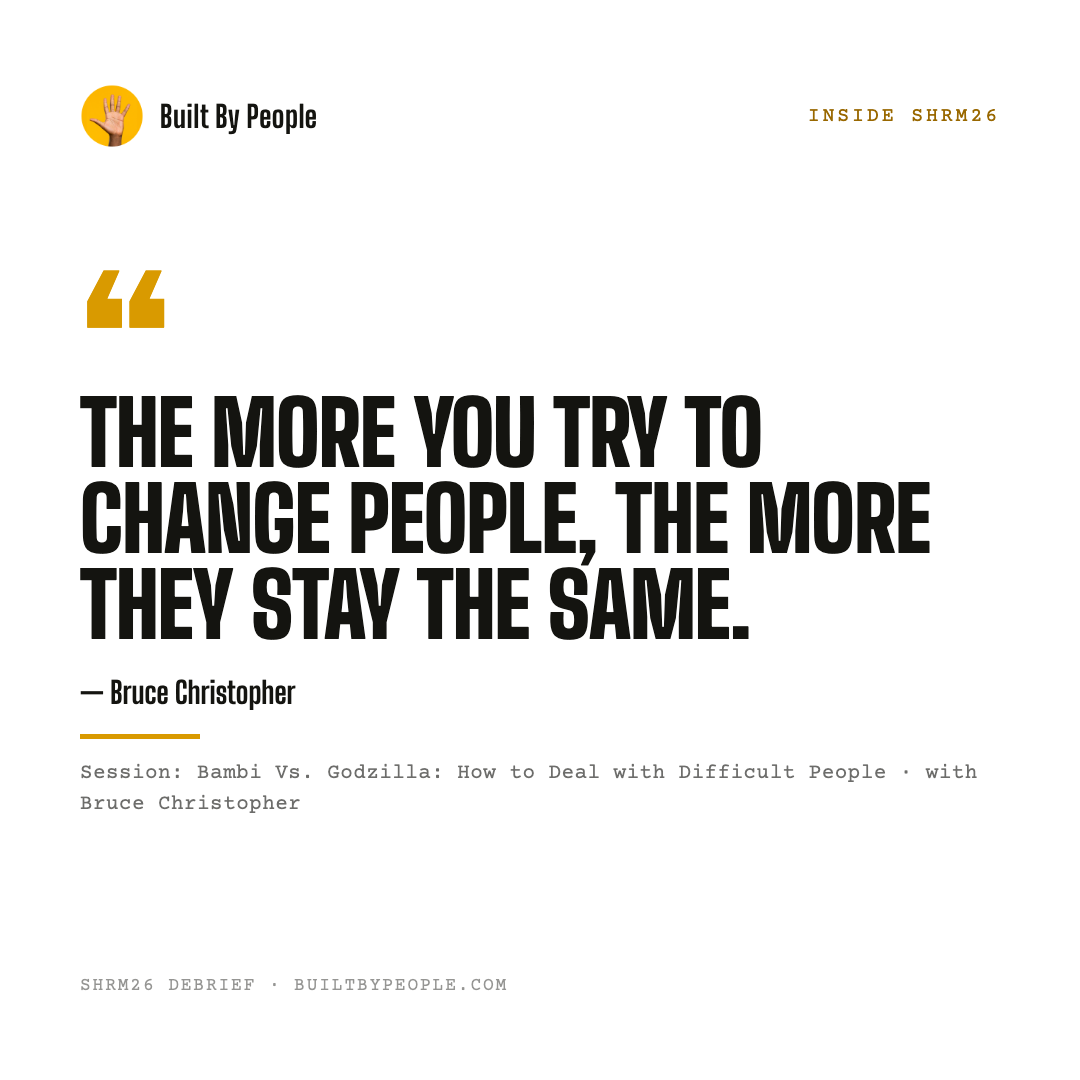
"The more you try to change people, the more they stay the same."
What it was about
Difficult people aren't evil or broken. Their disruptive behaviors (exploding, whining, controlling) are learned-in-childhood strategies that work for them, and the way to stay empowered around them is to surprise them by doing the opposite of what they expect, not by trying to change or control them.
By the numbers
Key notes
- Recognize that difficult behavior persists because it works for the person doing it, not because they are inherently evil or unhappy — reframing this removes the personal sting.
- Apply the 'surprise effect': do the exact opposite of what a difficult person expects (yield instead of fight, use humor instead of resistance) to stay grounded and derail their strategy.
- Take control of your own responses instead of trying to control others. Even when you're right, trying to get someone to do what you want will feel like control to them, and they'll resist.
Take this back Monday
Before reacting to your most difficult employee's next outburst, plan the opposite response in advance — yield or use humor instead of pushing back.
Difficult employees aren't broken or malicious — their behavior persists because it works, so changing my own response, not theirs, is what actually de-escalates conflict.
Watch out for
- Assuming difficult people know they are being difficult — they are often 'behaviorally blind' and believe the problem lies with everyone else (spouse, kids, employer).
- Trying to reason with, nag, or threaten a difficult person to get them to change — nagging and threats escalate rather than de-escalate the behavior.
- Reacting emotionally or predictably to a difficult person's provocation, which is exactly what keeps the 'merry-go-round' or power struggle going.
He holds the Certified Speaking Professional designation, an honor fewer than 12% of speakers worldwide have earned.