AI & HR: Enhancing Opportunities Responsibly in a New Era of Work
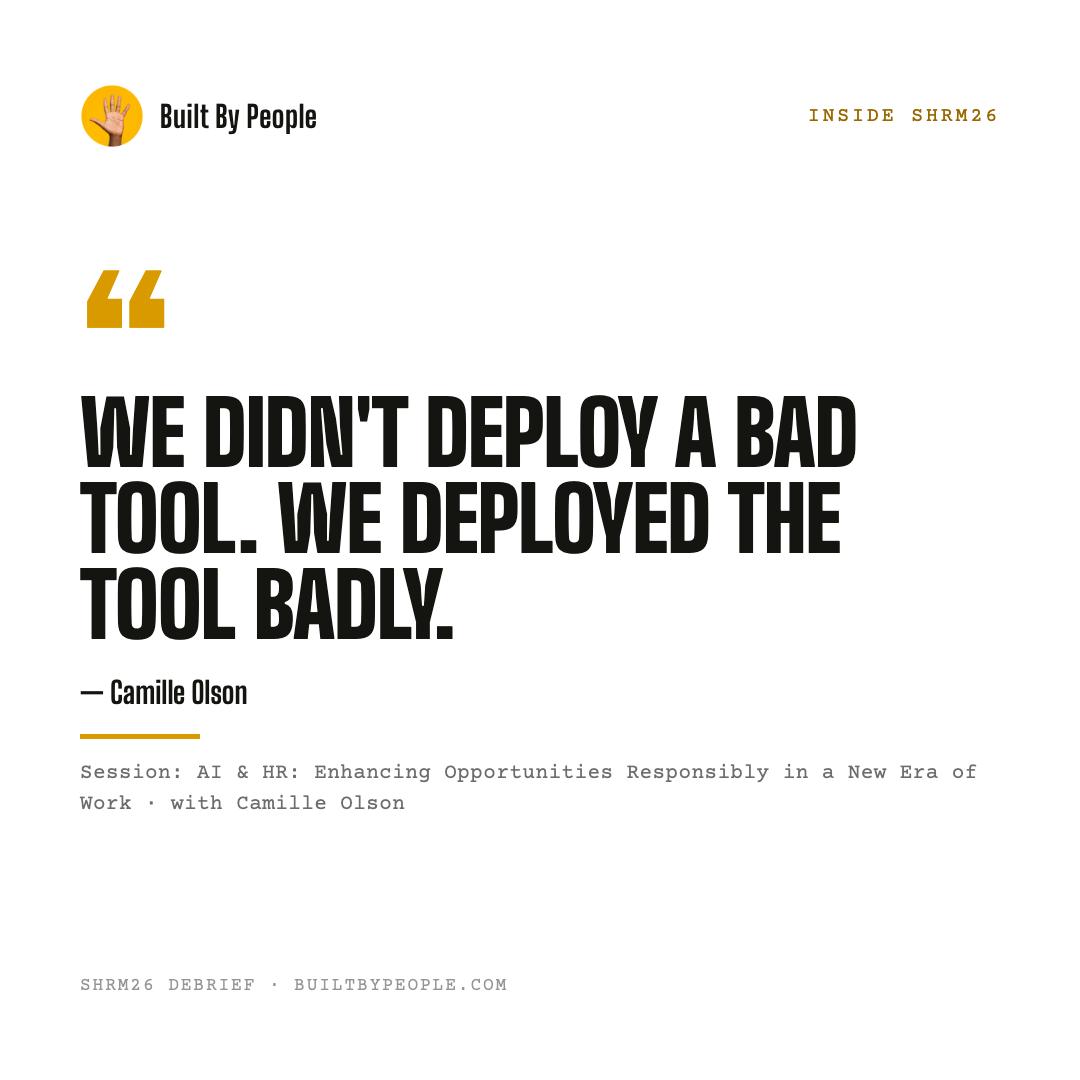
"We didn't deploy a bad tool. We deployed the tool badly."
What it was about
AI adoption in HR is accelerating far faster than governance can keep up, and the law governing it is a patchwork of state and local rules, not federal, built around six recurring legal principles. HR must build shared vocabulary, catalog every AI touchpoint, and layer in human oversight to avoid liability while building employee trust.
By the numbers
Key notes
- Build a compliance matrix that maps every AI tool you use against each jurisdiction's specific legal definition (ADS, ADMT, AEDT, etc.) rather than relying on one summarized term.
- Create an internal AI glossary and put it in your AI policy, vendor RFPs, contracts, and training materials so everyone uses consistent terminology.
- Inventory every AI touchpoint across the full employee life cycle (sourcing through offboarding) because you can't govern what you haven't cataloged.
Take this back Monday
List every AI tool touching hiring, reviews, or promotions, then require a documented human sign-off before any AI-influenced decision is finalized.
AI adoption in HR is growing 209% a year, but only 11% of us have governance mature enough to back it up.
Watch out for
- Trusting a vendor's claim that a tool is 'bias mitigated' without obtaining and reviewing the actual audit ('vendor puffery' is not a legal defense).
- Letting Gen AI hallucinate facts into performance reviews, PIPs, or termination memos that become official, discoverable employment records.
- Treating AI governance as a one-time, 'set it and forget it' audit rather than an ongoing early/middle/periodic re-audit process since models continually change.
She's testified before Congress and the EEOC itself on federal employment law, including the Paycheck Fairness Act.