AI Can’t Lead Under Pressure. But You Must: The Athleadership Edge (Part 1) A neuroscience-backed approach to becoming the leader the moment demands
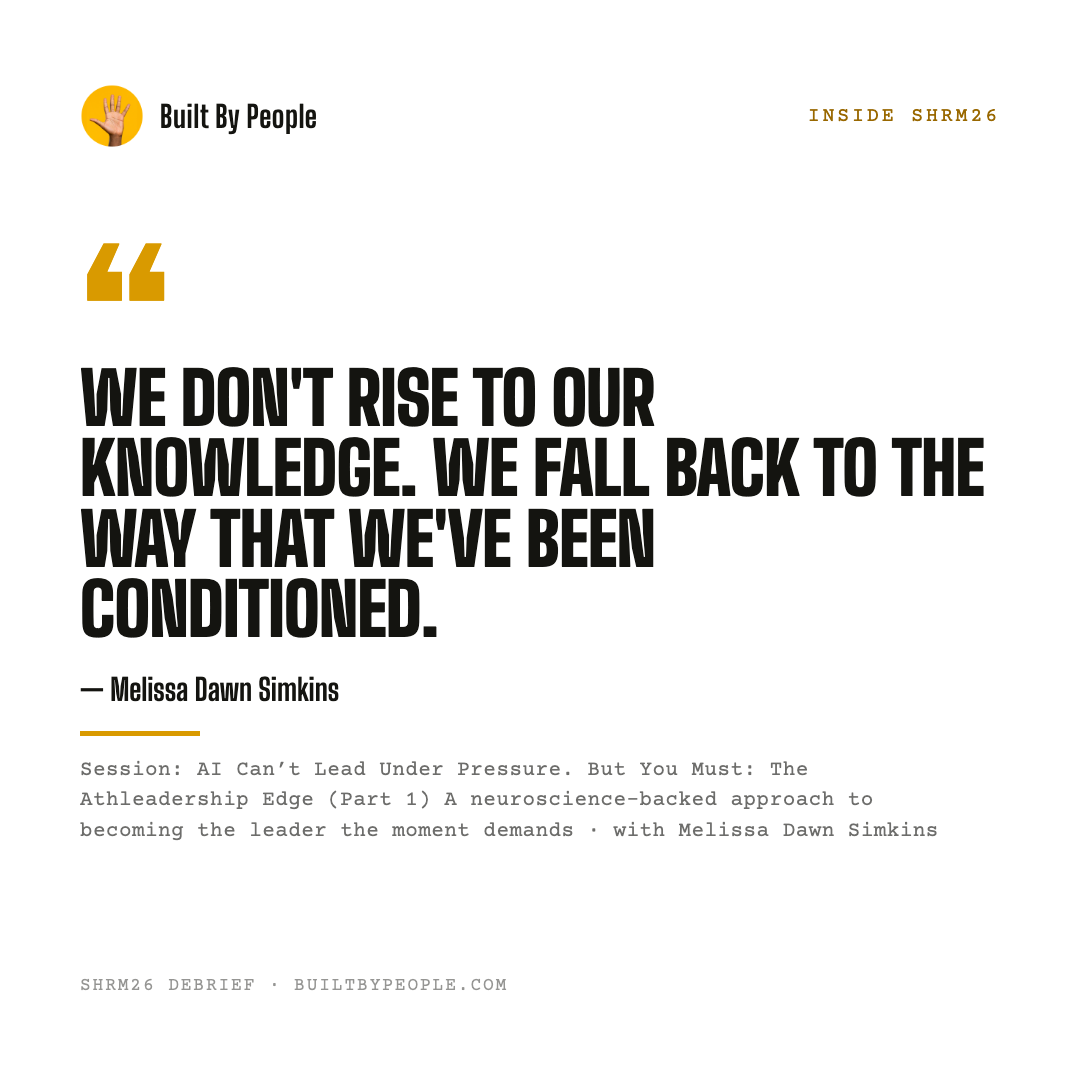
"We don't rise to our knowledge. We fall back to the way that we've been conditioned."
What it was about
AI can provide knowledge and efficiency, but it cannot calm a room, make judgment-based decisions under pressure, or lead through uncertainty. The differentiator for leaders in the AI era is neuroscience-based "conditioning," not just training: building the mental muscle to perform when it counts.
By the numbers
Key notes
- Distinguish training (knowledge, skills, competency) from conditioning (practiced patterns of thinking, feeling, and deciding under stress). Under pressure, people fall back on conditioning, not knowledge.
- Build the "Core Four" muscle set: agility (adapting through change), resilience ("lose no lesson" rather than just bouncing back), alignment (clarity of mission/vision/purpose across individual, team, and organization), and wellbeing (practiced recovery, not just vacations).
- Create and write down a personal and organizational Mission, Vision, Purpose (MVP) statement, since fewer than 20% of leaders have one written down (per Harvard Business Review).
Take this back Monday
Have each team member draft a one-line personal mission/vision/purpose statement — fewer than 20% of leaders have ever written one down.
Training builds knowledge, but under pressure people fall back on conditioning, not knowledge — so resilience needs practiced patterns, not more classes.
Watch out for
- Responding to disruption (AI, restructuring, engagement drops) with more classes and more training alone, without building conditioning/practice for pressure moments.
- Ignoring your own behavioral patterns. Patterns formed in childhood, culture, and past reward systems will win under stress if left unexamined.
- Treating resilience as simply "bouncing back" rather than extracting the lesson from a setback ("lose no lesson").
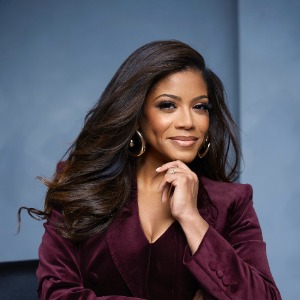
Her leadership methodology, built on elite athletic mindset principles, has reached over 250,000 leaders globally.