Achieving Results: Success Through Purposeful Future-Ready Leadership
 & Sarah Bettman
 & Rachael Marangu
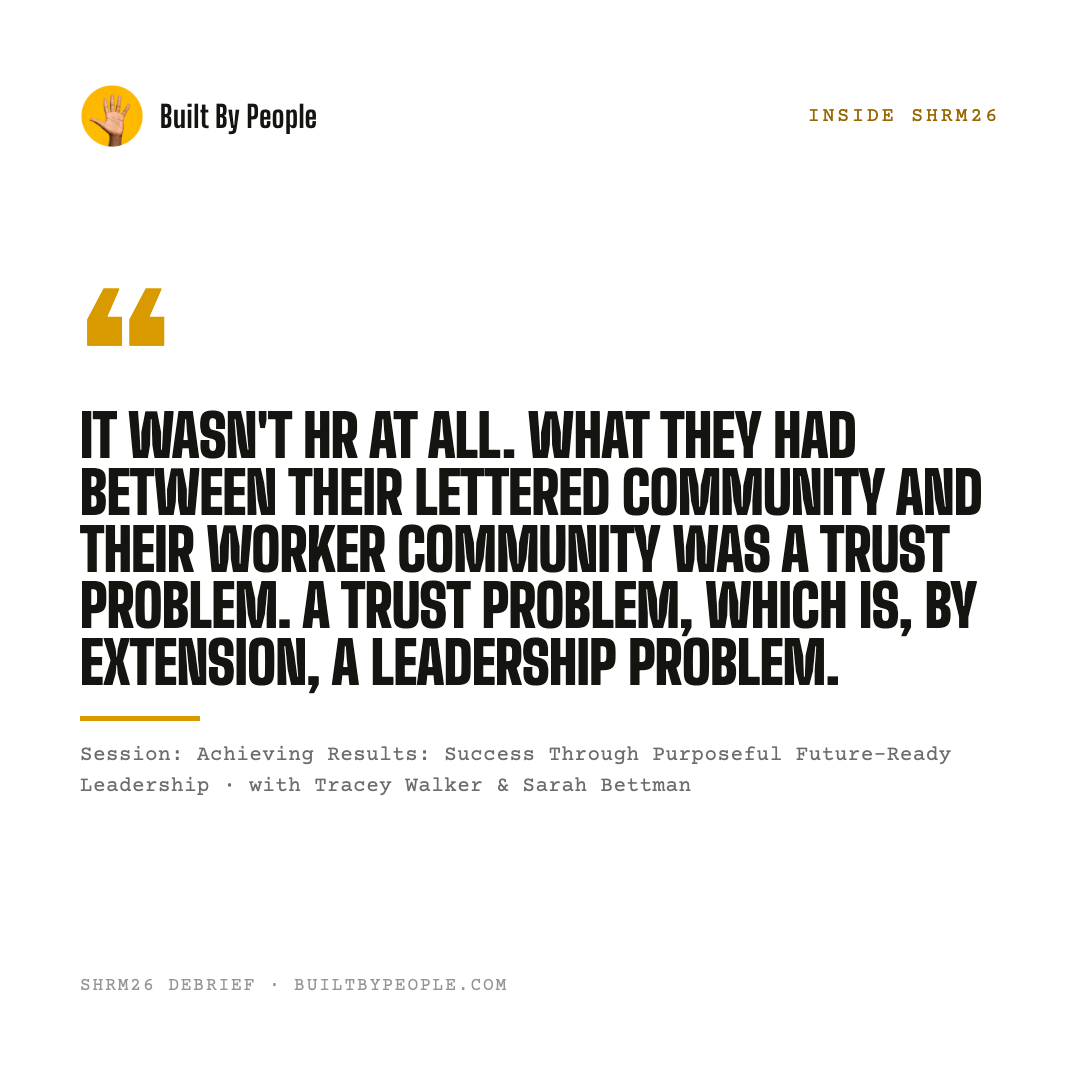
"It wasn't HR at all. What they had between their lettered community and their worker community was a trust problem. A trust problem, which is, by extension, a leadership problem."
What it was about
Leadership excellence comes from a measurable formula, not vague platitudes: EQ (character, earns trust) plus IQ (competency, earns respect) plus XQ (results, earns credibility) equals LQ, your Leadership Quotient. The best leaders learn to balance five commitments, become, inspire, engage, achieve, innovate, rather than relying on competency models alone.
By the numbers
Key notes
- Diagnose organizational conflict as a trust and leadership problem before defaulting to blaming HR. Tension between groups is often a leadership failure, not an HR failure.
- Build leadership currency deliberately across three dimensions: EQ (authenticity, trust), IQ (knowledge, respect), and XQ (results, credibility). Recognize which one you're leaning on at a given career stage and consciously develop the others.
- Use the five-commitments model (become, inspire, engage, achieve, innovate) as a balancing act, not a checklist you complete once. The balance point shifts every time you get promoted.
Take this back Monday
Ask each manager which leadership currency (trust, competency, or results) they're leaning on, and coach the other two.
Culture conflicts we're blaming on HR are usually trust and leadership failures in disguise, not recruiting or rewards problems.
Watch out for
- Assuming organizational culture problems are HR's fault (recruiting, rewards, recognition) when the root cause is actually a leadership/trust deficit.
- Relying only on competency and skills-based models for leadership development: only 7% of CEOs believe their companies build effective global leaders, and only 11% believe their programs deliver sustained results.
- Using command-and-control leadership styles that don't resonate with younger, multigenerational workforces.
Panelist Sarah Bettman is a certified coach who left SHRM Linkage in 2017 only to boomerang back — and unwinds by racing in ultra-endurance events.